
Kadin States Local Ceramic Industry Requires Government Support
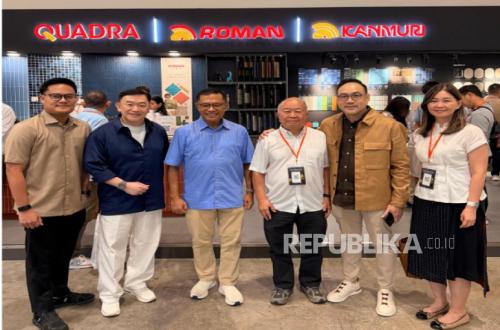
The domestic ceramic industry requires government support, according to the Indonesian Chamber of Commerce and Industry (Kadin). The Vice Chairman of Kadin for Industry, Saleh Husin, attended an Indonesian ceramics exhibition where he observed that the quality, standard, and design of domestic ceramic products are already excellent.
The exhibition, held from 4 to 7 June 2026 at NICE PIK 2, showcased products that Saleh believes are capable of competing with imported ceramics. During the event, he engaged in discussions with owners and directors of various leading domestic ceramic brands, as well as representatives from the Indonesian Ceramic Industry Association (Asaki).
Saleh noted that while the industry is developing well and creating jobs, it requires government backing to sustain growth. He highlighted that ongoing government initiatives, such as the construction of public schools and the planned development of 3 million houses, could provide a significant boost to the domestic ceramic sector. However, he warned that the industry must not be allowed to decline due to the influx of imported products and excessively high energy prices.
Currently, the domestic ceramic industry faces a serious challenge regarding industrial gas prices, which have become unsustainable. Although the ceramic industry is one of the recipients of the Specific Industrial Gas Price (HGBT) set at 7 USD per MMBTU, the reality on the ground is that companies are only allocated 40 per cent of their needs at the HGBT rate, while the remaining 60 per cent must be purchased at the market price of 21 USD per MMBTU.
Saleh emphasised that the high cost of gas threatens to weaken the competitiveness of the national ceramic industry. He warned that such conditions could force businesses to halt production, risking Indonesia’s transition into a ceramic importer despite possessing abundant raw materials. He urged the government to take action to ensure the domestic ceramic industry can remain the primary provider in its own country.