
Kadin Sets Out Three Recommendations to Tackle Global Economic Challenges
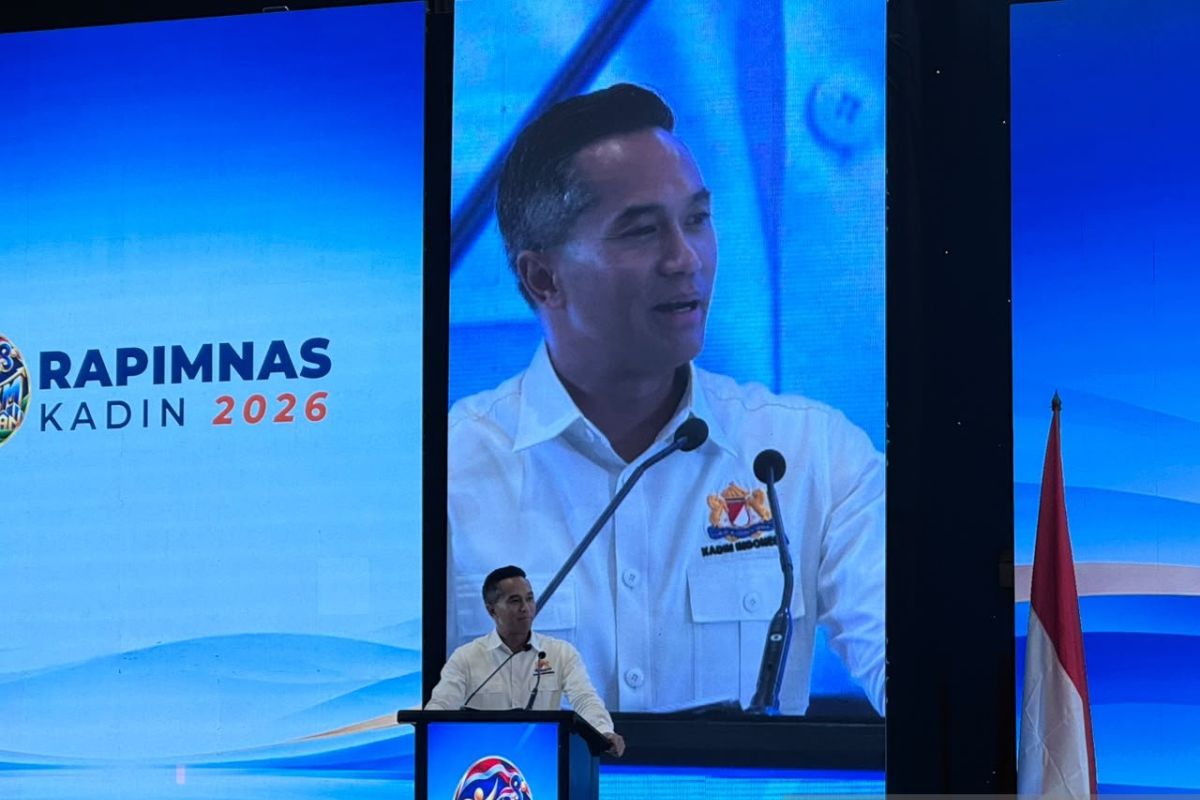
Jakarta (ANTARA) – Indonesian Chamber of Commerce and Industry (Kadin) chairman Anindya Bakrie set out three recommendations from Kadin’s 2026 National Leadership Meeting to strengthen businesses in facing various global economic challenges.
Speaking after the meeting in Jakarta on Friday, he said the recommendations were to strengthen economic buffers against global shocks, maintain the availability of production inputs, and improve business certainty so Indonesia can boost its competitiveness in international markets.
He said the first recommendation was to strengthen economic buffers against global shocks. This would involve safeguarding business cash flows, the fiscal position of central and regional governments, and household purchasing power, so that people’s businesses and industry retain strong demand.
“What do we mean by buffers? First, maintaining the cash flows of businesses and, of course, the state, including regional finances, as well as household purchasing power, so that people’s businesses and industry have strong demand,” he said.
The second recommendation was to ensure the availability of raw materials for production, particularly small-scale and community-based production. He said supply chains needed to be reinforced through an integrated system spanning the entire process, from upstream to downstream, or a “closed loop”.
The third recommendation was to strengthen business certainty so Indonesia can compete more effectively in global markets. Anindya said Indonesia had recorded a trade surplus of US$7 billion so far this year, but should continue to seize opportunities to expand trade by opening new trade agreements.
“Kadin is promoting the slogans ‘Buy from Indonesia’ and ‘Buy Indonesia’ to strengthen trade and investment,” he said.
He said Indonesia’s export potential could still be developed further. Of total exports of around US$300 billion, approximately US$60 billion came from Indonesian resources.
Kadin also introduced its 5D strategy: fiscal discipline and decentralisation, deregulation, debottlenecking, Danantara as an enabler, and support to help micro, small and medium-sized enterprises (MSMEs) move up to the next level.