
Kadin seeks China partnerships to optimise cultural industry development
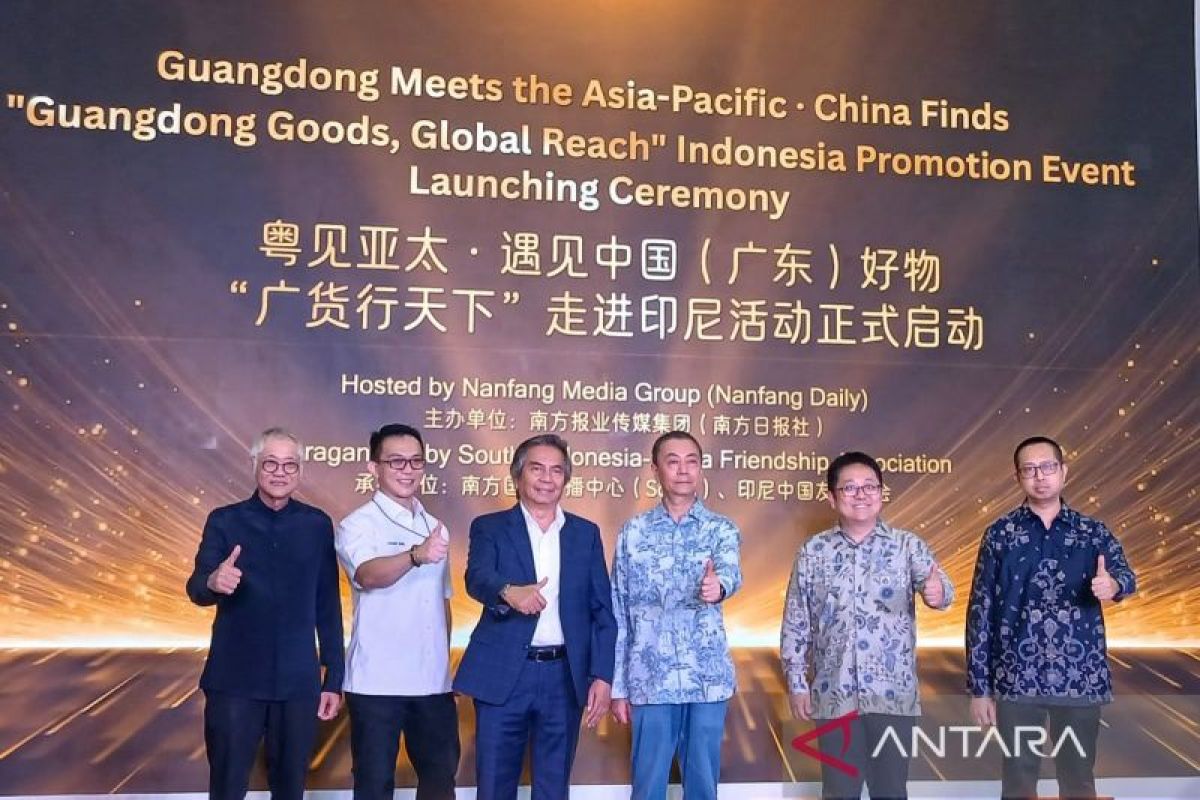
Jakarta (ANTARA) - The Indonesian Chamber of Commerce and Industry (Kadin) plans to discuss partnership opportunities with business players from China to optimise the development of the domestic cultural industry.
Speaking after attending the “Guangdong Meets the Asia‑Pacific – China Finds: Guangdong Goods, Global Reach Indonesia Promotion Event”, the Chairman of the Standing Committee for Cultural Development, Utilisation, and Coaching of Kadin Indonesia, Ivan Chen, stated that they are currently only exploring cultural industry cooperation with Japan and South Korea.
“(Regarding the exploration of cultural industry cooperation) with China has not yet begun. Therefore, perhaps after this event, we will proceed with discussions on how we can encourage cooperation between the two nations,” Ivan Chen told ANTARA in Jakarta on Tuesday afternoon (22/9).
He assessed that the national cultural industry ecosystem has not yet been well-formed, even though many of its products—such as films, music, and games—are already recognised on the international stage.
His organisation is striving to build this ecosystem to compete with the global cultural industry by encouraging production partnerships with industry players from other countries that possess more advanced ecosystems.
Ivan noted that the development of the national cultural industry is currently focused on medium-scale entrepreneurs, considering that this group has lacked adequate coaching programmes over the last 10 years.
As a result, he continued, many medium-sized industries have gone bankrupt, causing the middle-class population to shrink by up to 9 million people over a five-year period between 2019 and 2024.
Ivan mentioned that the trade balance in the cultural industry sector between Indonesia and China currently records a deficit. For example, the gaming sector records total domestic transactions of up to Rp35 trillion per year, with 99 per cent of the market share dominated by products from China.
This is despite the fact that Indonesia has approximately 200 million gamers, and the industry is recorded to be ten times larger than the national film industry.
He urged the government to pay more attention to this sector so that Indonesia does not merely serve as a market for various global cultural products, but is also able to build a strong national cultural industry and open access for domestic works to the global entertainment market.
“As the younger generation, we must not be indifferent (to the potential in the cultural industry), because it will result in an opportunity loss,” said Ivan.
Meanwhile, the Chairman of the Indonesia-China Friendship Association (PPIT), Al Busyra Basnur, emphasised that increasing cooperation between the two countries requires grassroots social involvement, rather than solely relying on the role of the government.
He saw great potential for cooperation at the regional level between China and Indonesia through sister city and sister province programmes, such as with Guangdong Province, which has a Gross Domestic Product (GDP) almost equivalent to that of the entire Southeast Asian region.
“There is actually immense potential in the regions… The regions have much greater potential than Jakarta itself in enhancing relations and cooperation between Indonesia and Guangdong, particularly in economic cooperation,” said Al Busyra Basnur.
Echoing Basnur, the President of Nanfang Media Group (Nanfang Daily), Liu Qiyu—as the event organiser—also emphasised the importance of the role of the wider community and non-governmental groups in supporting cooperation between Indonesia and China.
He expressed hope that the holding of the “Guangdong Meets the Asia‑Pacific – China Finds: Guangdong Goods, Global Reach Indonesia Promotion Event” could create increasingly strong economic and social ties with a positive impact on both nations.