
Kadin Ready to Collaborate with Government to Drive 6% Economic Growth
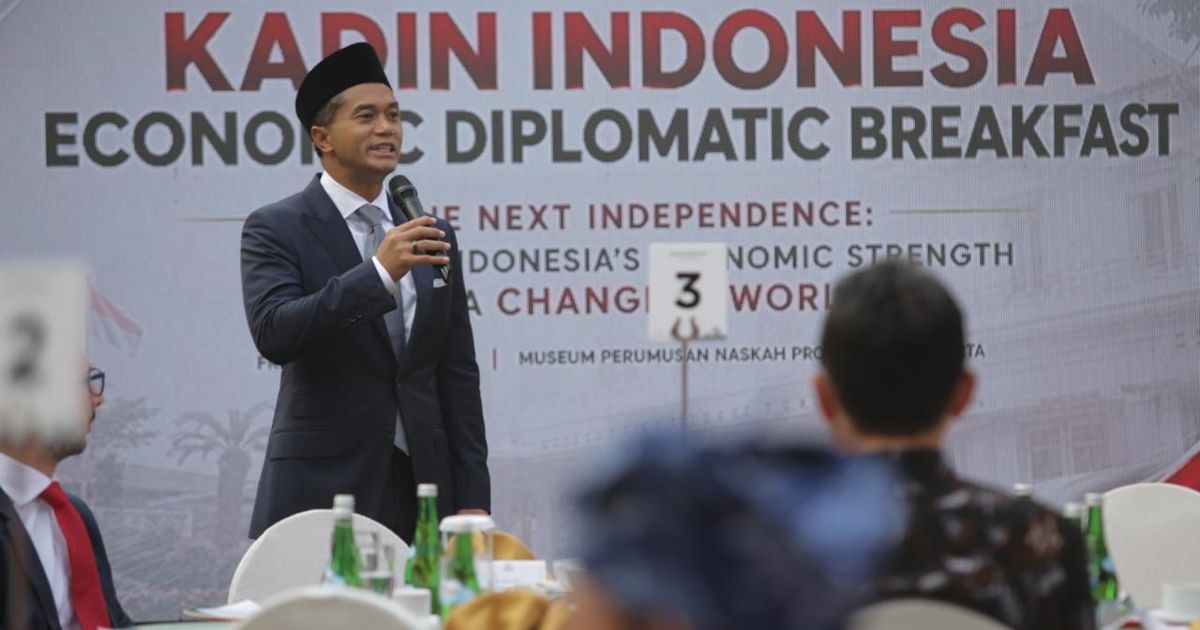
The Indonesian Chamber of Commerce and Industry (Kadin) has welcomed the policy direction of President Prabowo Subianto, outlined in his State Address at the Parliament Complex in Jakarta on Friday. Kadin believes the agenda of bureaucratic reform, human resource development, food and energy self-sufficiency, strengthening the village economy, investment, reform of state-owned enterprises and Danantara, and upholding the rule of law requires close collaboration between the government and the business sector. Kadin Chairman Anindya Novyan Bakrie stated that the chamber encourages this partnership to proceed in the spirit of mutual cooperation and ‘Indonesia Incorporated’. He explained that the government’s role is to provide clear and consistent regulations, the bureaucracy must offer fast services, while the business sector brings investment, technology, innovation, market networks, and jobs. A clear division of roles will help translate government policies into economic activities that boost productivity and public welfare.
In his speech, the President acknowledged that convoluted and inefficient bureaucracy still exists, including the misuse of office for personal or group interests. The President stressed that the state must make things easier for the people, not more difficult. The government has also demonstrated several deregulation steps, including the removal of 145 regulations on fertiliser distribution, the digitalisation of social assistance, the construction of Public Service Malls, and the integration of digital-based government services. Anindya said Kadin supports this reform direction, noting that for the business world, bureaucratic reform is not just an administrative matter but also determines Indonesia’s competitiveness. He added that while investors need fast licensing processes, regulatory certainty, policy consistency, process transparency, and clarity on completion times are considered more important for long-term investment. Kadin urges that deregulation be applied consistently from central to regional governments, and that digitalisation should apply the ‘once only’ principle, where data already submitted to one agency need not be requested again by another.
President Prabowo positioned the Free Nutritious Meals programme as an investment in human development. The programme is considered important because children need adequate nutritional intake to learn and develop optimally. The President also highlighted the risk of corruption in the programme’s implementation, calling for strengthened improvements, efficiency, and oversight to ensure the budget allocated for children’s food truly reaches the recipients. Anindya noted that Kadin sees two strategic benefits of the programme: it can improve the quality of human resources while simultaneously driving the local economy through the food supply chain. The demand for rice, eggs, chicken, fish, milk, vegetables, fruit, spices, packaging, transportation, and logistics services can create extensive business linkages. Kadin encourages farmers, livestock breeders, fishermen, cooperatives, MSMEs, and national companies to enter this ecosystem. The business sector is also ready to help the government build procurement systems, logistics, cold chains, food safety standards, and digital traceability.
Regarding self-sufficiency, the President stated that Indonesia had achieved self-sufficiency in eight commodities by 2026: rice, corn, consumption sugar, chicken meat, chicken eggs, shallots, large chillies, and bird’s eye chillies. The government is next targeting self-sufficiency in garlic and beef/buffalo meat, linking these achievements to policy improvements, including the cutting of fertiliser distribution rules. The independence agenda is also being expanded to the energy sector, with the government stating that the implementation of B50 biodiesel allows Indonesia to stop importing diesel fuel from 1 July 2026. Anindya views food and energy security as the foundation of national economic resilience, but believes self-sufficiency must go hand in hand with productivity and competitiveness. He stated that food production must remain efficient, farmers’ incomes must increase, consumer prices must be affordable, and the processing industry must obtain raw materials sustainably. Kadin is ready to bridge the government, farmers, industry, financing institutions, and investors so that national resources do not stop as raw commodities but develop into value-added products.
President Prabowo also stated that around 10,000 Merah Putih Village/Sub-district Cooperatives had been operating as of 14 August 2026, with approximately 3,300 operating optimally. The government is targeting 30,000 cooperatives to be operating optimally by the end of 2026. Kadin believes these cooperatives need to partner with the private sector to strengthen their capacity and market access.