
Kadin: Indonesia Could Expand Its Role in AI Computing
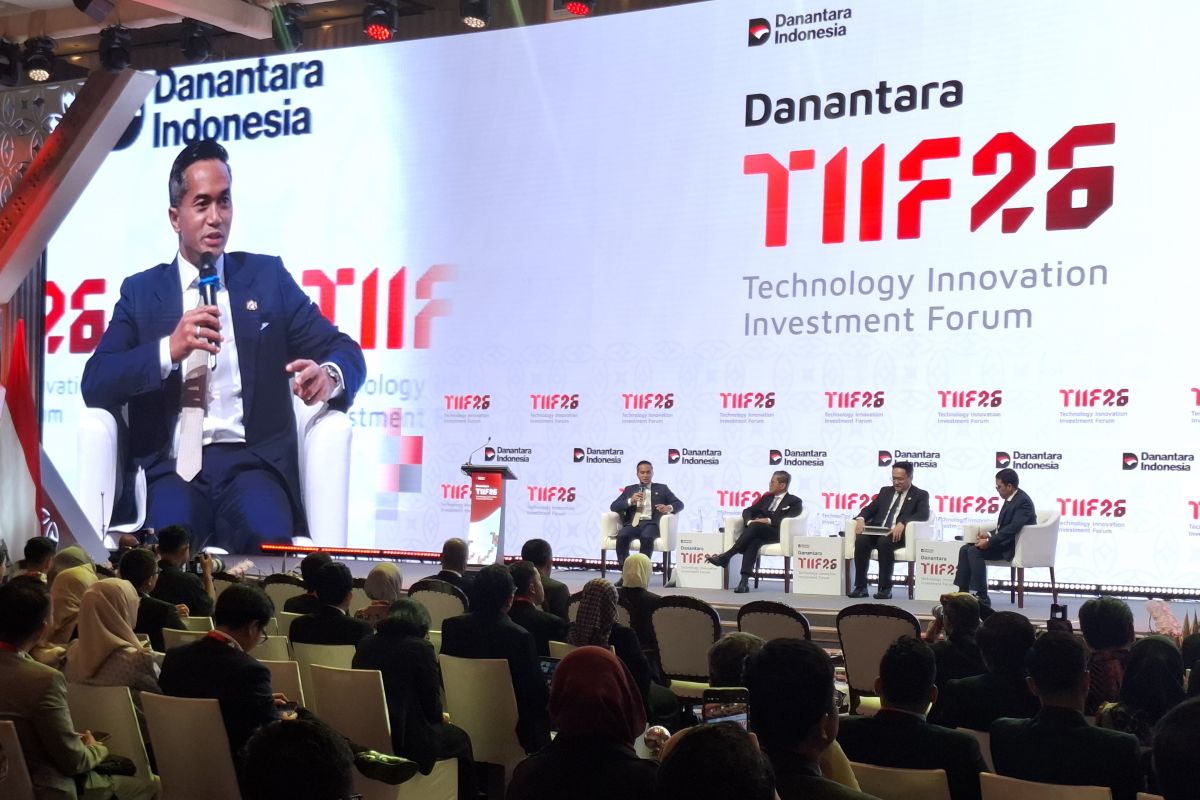
Jakarta (ANTARA) — Indonesian Chamber of Commerce and Industry (Kadin) chairman Anindya Novyan Bakrie says Indonesia could expand its role in the artificial intelligence (AI) industry by developing computing capabilities, rather than simply providing data-centre infrastructure.
“We must not only be a data-centre provider, but also become a computing hub. We need to do more computing,” Anindya said at a panel discussion at the Danantara Technology Innovation Investment Forum (DTIIF) 2026 in Jakarta on Wednesday.
He said AI industry development should be directed towards ensuring Indonesia does not merely provide physical facilities, electricity, water and supporting data-centre infrastructure, but also plays a role in using computing capabilities.
Computing capability refers to processing power used to handle data, train AI models and run various digital applications and services.
By developing these capabilities, Indonesia has an opportunity to expand its technology-based economic activity and capture added value from the growth of the AI industry, he said.
During a panel discussion on using technology to boost the competitiveness of national industries, Anindya also stressed the importance of expanding economic activity from natural-resource and energy use to the provision of computing power.
“We need to move from selling natural resources towards energy, computing power, tokens and so on, and I think we can do it,” he said.
He said technology development could help businesses scale up their economic activity and improve their competitiveness in regional markets.
Alongside strengthening computing capabilities, Anindya highlighted AI’s potential to improve business productivity and efficiency.
“I think AI will help enormously in making things more productive,” he said.
AI could enable a range of tasks to be completed more quickly, to a higher standard and at lower cost, he said.
However, Anindya cautioned that AI’s development could also change workforce requirements, including by replacing some tasks that have traditionally required specialist skills.
He therefore believes that the ability to understand problems comprehensively and anticipate the direction of technological change will become increasingly important for businesses and workers alike.
Anindya also emphasised the importance of communication, collaboration and interpersonal relationships in business decision-making amid technological advances.
“Even though machines can communicate with machines, decisions are still made by people,” he said.
He added that the ability to build relationships with others, along with concern for society and the environment, is also needed to support sustainable business activity.
Kadin Indonesia Institute previously launched the Kadin AI Academy on 20 May 2026 to help businesses, workers and micro, small and medium-sized enterprises (MSMEs) improve their skills in using AI technology.
The importance of strengthening skills is also reflected in the World Economic Forum’s Future of Jobs Report 2025, which estimates that about 39 per cent of workers’ core skills globally will change or become irrelevant between 2025 and 2030.
The report says AI and big-data skills are among those growing rapidly in demand, while analytical thinking, creativity and resilience will remain important in the workplace.
Meanwhile, the Ministry of Communication and Digital Affairs said on 22 October 2026 that Indonesia’s data-centre capacity was estimated at about 580 megawatts, with a target of increasing it to 1.3 gigawatts in 2027–2028.
Deputy Minister of Communication and Digital Affairs Nezar Patria stressed that expanding data-centre capacity must be accompanied by stronger computing capabilities, research, innovation and mastery of strategic technologies if Indonesia is to play a greater role in the global AI ecosystem.