
KADIN Hopes Export Obligations Through State-Owned Enterprises Do Not Create New Barriers
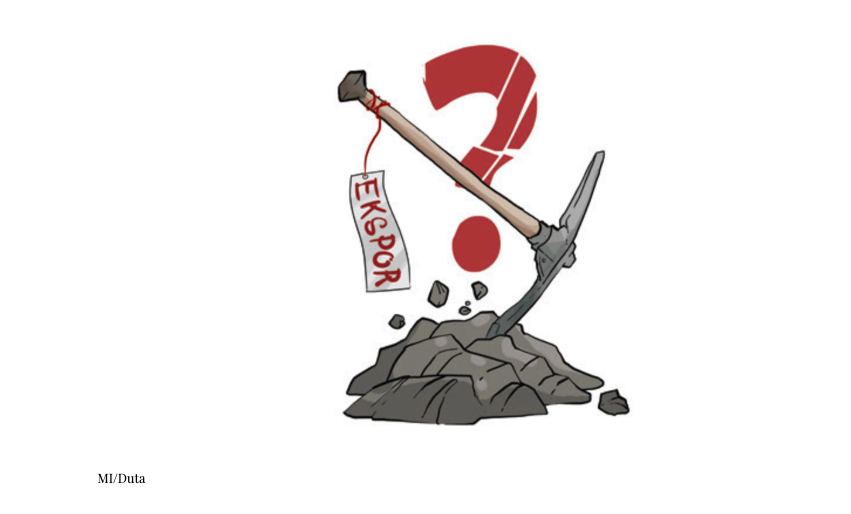
Indonesia’s Chamber of Commerce and Industry (KADIN) has responded to the issuance of a Government Regulation (PP) on the Governance of Export of Natural Resource Commodities that was recently published. Under this PP, every export activity of natural resource commodities such as palm oil, coal, and iron alloy will be required to be sold through a government-designated or assigned state-owned enterprise (BUMN).
Erwin Aksa, Deputy Chairman General Coordinator for Organisation, Communications, and Regional Empowerment of KADIN Indonesia, said the business world understands the government aims to strengthen the governance of export of natural resource commodities, safeguard state revenue, and ensure that export proceeds (Devisa Hasil Ekspor, DHE) enter the domestic economy more optimally.
According to him, the spirit of improving export oversight and reducing under-invoicing or transfer pricing is positive and supported by business players.
However from the business side, Erwin said the plan to require export sales via BUMN needs to be designed very carefully. The aim is not to create new barriers to trade.
“Industry players certainly hope this policy will not reduce exporters’ flexibility in seeking markets, negotiating prices, or conducting international trading contracts that have been ongoing,” he said when contacted on Wednesday (20/5).
According to him, the main concern for the business world is certainty of the business mechanism. He gave examples of how pricing systems, transaction speed, logistics efficiency, payment certainty, and the sustainability of contracts with global buyers are affected. After all, the commodity sector is highly sensitive to timing and efficiency of international trade.
Businesses also hope the implementation of this policy will not add bureaucracy or lengthen the supply chain, which could reduce Indonesia’s export competitiveness compared to other countries.
“Therefore, according to KADIN, strengthening export governance must maintain a balance between government oversight and trade efficiency,” Erwin said.
“Oversight can be strengthened through the digitalisation of export data, integration of cross-ministerial systems, monitoring of export proceeds (DHE), and strengthening risk-based audits without disrupting the flexibility of trade required by business actors,” he added.
“Equally important,” Erwin continued, “is the involvement of the business sector in drafting technical rules and the transition period of the policy. The aim is for implementation to be realistic, not disrupt existing export contracts, and to maintain investor confidence and international buyers’ trust in Indonesia.”
The government’s decision to designate a single state-owned enterprise (BUMN) to strengthen the governance of national natural resource export commodities was conveyed by President Prabowo Subianto in a speech during the DPR plenary meeting on Wednesday (20/5).
“Today the Government of the Republic of Indonesia, which I lead, is issuing the PP on the Governance of Export of Natural Resource Commodities. The issuing of this government regulation is a strategic step to strengthen the governance of our natural resource export commodities,” he said.
The policy’s aim, Prabowo said, is to strengthen oversight while eradicating under-invoicing, transfer pricing, and the leakage of export proceeds (DHE) that have occurred to date. He believes the decision will drive the realisation of state revenue from the management and sale of natural resources.
“With this policy we hope our revenue can be like those of Mexico, the Philippines, and neighbouring countries. We do not want our revenue to be the lowest because we do not want to manage what belongs to us,” Prabowo explained.
The Head of State also believes that the natural resource commodities that are exported are, in fact, national wealth belonging to all the people. Therefore, according to Prabowo, the government has the right to know in detail where and to whom these commodities are sold and at what price.
KADIN regards exchange rate stability as very important to maintaining investor confidence and business certainty.
KADIN, Takeda, and Bio Farma launch SIAP Lawan Dengue to strengthen workplace safety, health, and productivity against dengue fever risk in Indonesia.
The Free Nutritious Meals Program (MBG) is viewed not merely as a social policy but has significant potential as a new engine for the national economy.
According to him, rising energy prices and disruptions to the supply chain are factors weighing on industrial activity.
As many as 11 memoranda of understanding (MoUs) between Indonesia and Japan were officially signed at the Indonesia–Japan Strategic Partnership Forum.