
Kadin Hopes Danantara's New Textile SOE Will Not Stifle Private Investment
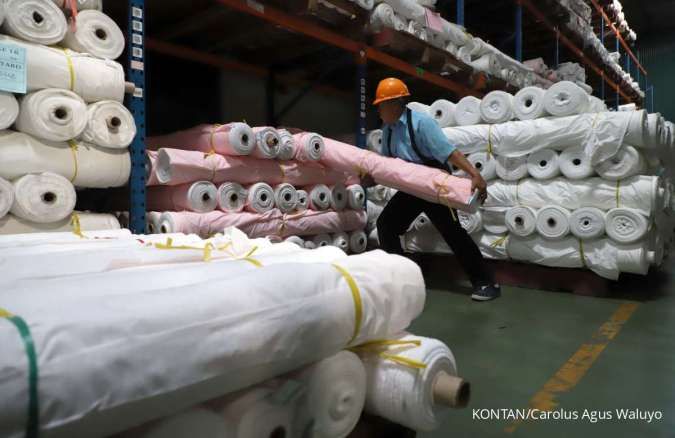
The plan by Danantara to form a new state-owned enterprise (SOE) in the textile sector is seen as a potential momentum to strengthen national textile industry investment. However, the government must ensure that the presence of this state-owned company does not displace the role of private investment, which has long supported the textile industry.
Erwin Aksa, Vice Chairman of the Coordinator for Organisation, Communication, and Regional Empowerment at Kadin Indonesia, stated that large-scale investment in the textile sector can fundamentally provide a positive impact if directed towards strengthening the industrial structure from upstream to downstream.
Previously, the CEO of Danantara, Rosan Roeslani, announced plans to form a new company that will be part of the textile industry’s development. This company is intended to be integrated within a single zone from upstream to downstream and will be open to partnering with existing textile companies.
According to Erwin, this development model should not result in the SOE taking over the entire textile business chain. Instead, Danantara could act as a catalyst and integrator through the development of industrial zones, infrastructure, raw materials, technology, energy, and waste management.
Erwin believes that Danantara’s investment also has the potential to attract new private investment. Indeed, the success of the project should not only be measured by the scale of Danantara’s investment but also by the additional private investment that is able to enter the market.
“If the zone possesses good infrastructure, competitive energy, modern technology, international-standard water and waste treatment, and efficient logistics access, then Danantara’s investment could lower the entry barriers for private investors,” he explained.
He added that new investments should also be directed towards increasing exports and substituting imports of raw materials and intermediate goods. If investments merely increase capacity to compete for the same domestic market, the industry risks facing overcapacity and pressure on existing companies.
On the other hand, Erwin believes that the provision of fiscal incentives must apply the principle of equal treatment between SOEs and the private sector. This aligns with the government’s current consideration of reconsidering tax holidays for the textile industry.
“Incentives should be provided based on the type of investment, investment value, technology, job creation, export orientation, and contribution to the national supply chain, rather than whether the investor is an SOE or private,” he said.
Kadin also encourages that incentives should not only target greenfield investments. Existing textile companies undertaking expansion, machine rejuvenation, digitalisation, energy efficiency, or transformation towards green textiles also need to receive support.
“Danantara should serve as a multiplier for private investment, not as a substitute for it,” Erwin concluded.
Source: jawawa.id (https://jawawa.id/newsitem/kadin-hopes-danantaras-new-textile-soe-will-not-stifle-private-investment-1790182278)
Originally published by industri.kontan.co.id (https://industri.kontan.co.id/news/kadin-harap-bumn-tekstil-danantara-tidak-sampai-matikan-investasi-swasta), translated from Indonesian