
Kadin: High-Complexity Economy Must Be Strengthened to Boost Growth
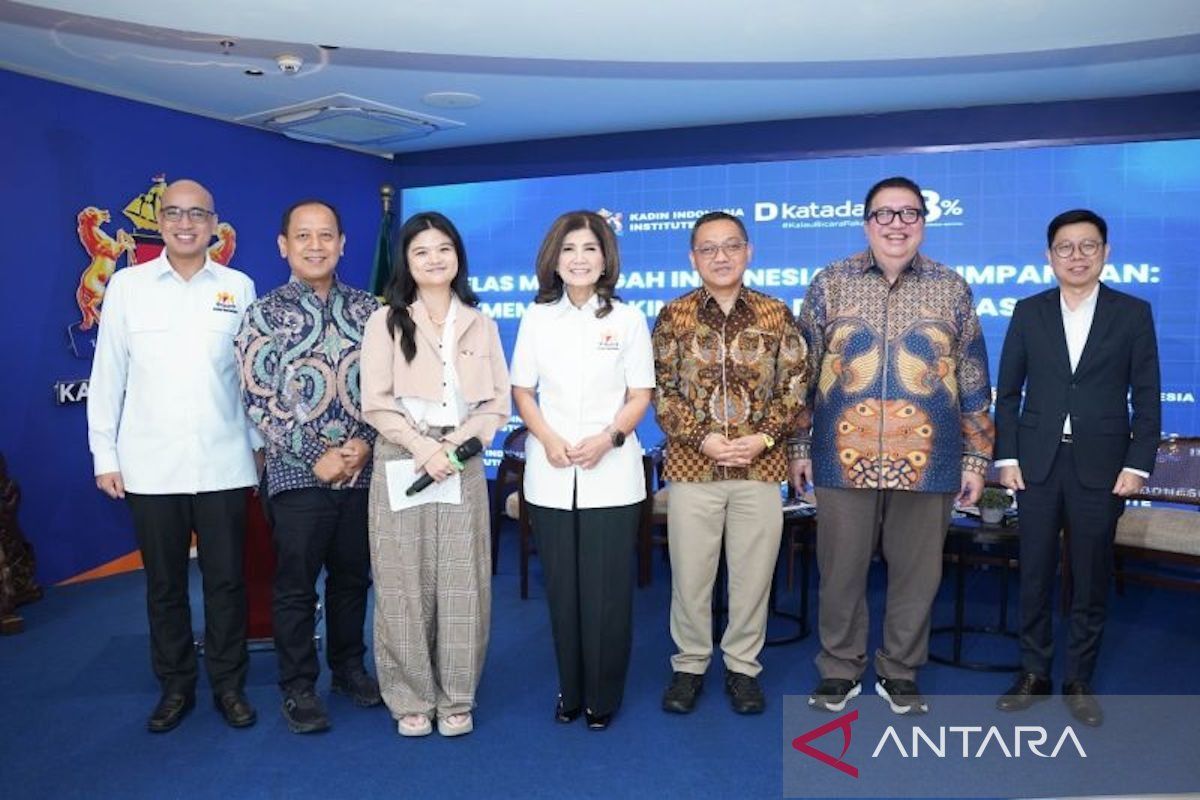
Indonesia is capable of achieving significant economic milestones, much like India and Vietnam, where 8% annual growth is a regular occurrence. The Indonesian Chamber of Commerce and Industry (Kadin) Indonesia Institute stated that high-complexity economic sectors must be strengthened to support the economy in reaching the target economic growth rate of eight per cent.
Mulya Amri, Co-Founder & Executive Director of Kadin Indonesia Institute, noted in a statement received in Jakarta on Thursday that the Kadin Institute regularly holds the ‘8% Club’ discussion forum to support higher national economic growth targets. He emphasised that Indonesia needs to encourage the development of economic sectors with higher levels of complexity. Currently, most of Indonesia’s export products are still dominated by raw materials or products with relatively low added value.
By promoting a high-complexity economy, many job opportunities will be created, as this economic model aligns with efforts to increase productivity within the middle class. In this context, a high-complexity economy is a concept where a nation’s wealth is determined by the accumulation and variation of productive knowledge (capabilities) embedded within social and economic networks. Economic complexity can be measured by the diversity and uniqueness (ubiquity) of a country’s exported products; the higher the variety and uniqueness, the higher the level of economic complexity.
The Indonesian government aims to achieve an economic growth rate of eight per cent by 2029, up from 5.11 per cent projected for 2025.
Concurrently, Ferry Irawan, Deputy for Coordination of Management and Development of State-Owned Enterprises (BUMN) at the Coordinating Ministry for Economic Affairs, stated that to pursue high economic growth, the government is continuously developing the economic capacity of the middle class. The middle-class group contributes significantly to household consumption, the productive workforce, and Indonesia’s overall economic growth. According to the official website of the Coordinating Ministry for Economic Affairs, the middle class and those moving towards the middle class currently comprise approximately 66.35 per cent of the total population, or about 185.35 million people, serving as the primary pillar of national household consumption and purchasing power.