
Kadin Encourages Swedish Investment Opportunities in Indonesia via IEU-CEPA and OECD Accession
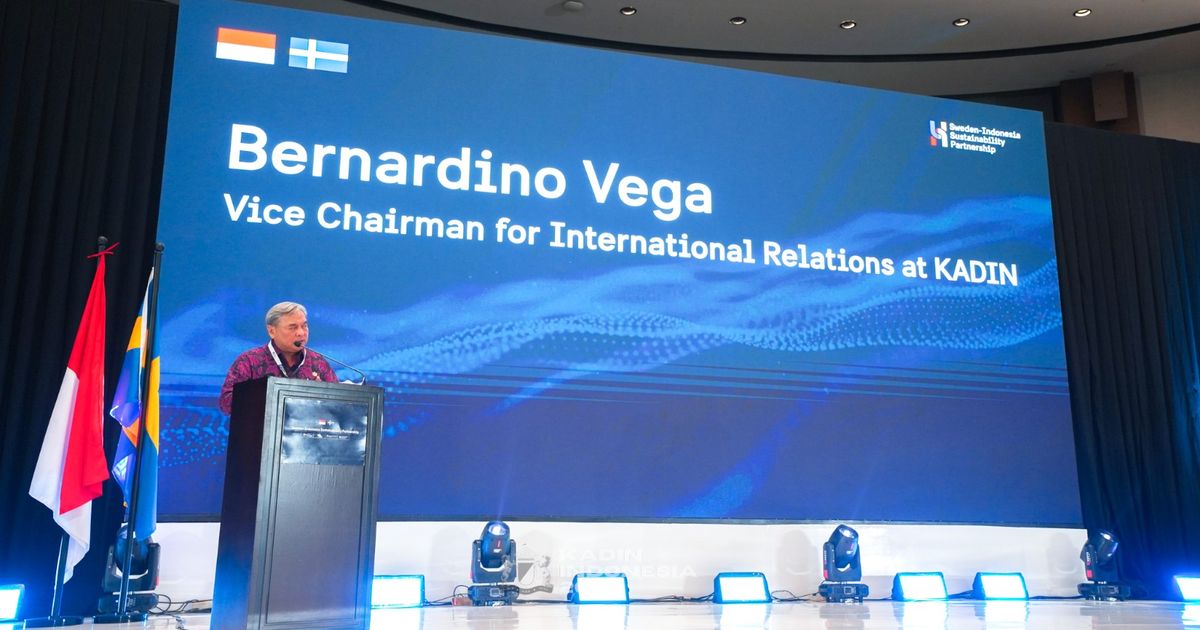
The Indonesian Chamber of Commerce and Industry (Kadin) is pushing for the strengthening of economic partnerships between Indonesia and Sweden through increased cooperation in trade, investment, technology, and sustainable development.
This effort was conveyed by the Vice Chairman of Foreign Relations at Kadin Indonesia, Bernardino M. Vega, during the Sweden-Indonesia Sustainability Partnership (SKSIP) 2026 Business Dinner held in Jakarta on Tuesday (8/9/2026). Bernardino, commonly known as Dino Vega, emphasised that the relationship between the two nations has possessed a strong diplomatic and economic foundation since 1950. For over seven decades, the partnership has expanded into various strategic sectors, ranging from energy, electric vehicles, and sustainability to mining, healthcare, and forestry.
Dino Vega noted that the bilateral relationship possesses significant depth beyond mere ceremonial ties, leaving vast room for further development. Currently, approximately 80 Swedish companies operate in Indonesia, having established business ecosystems alongside local partners, including distributors, suppliers, and service providers. However, bilateral trade between Indonesia and Sweden, which stands at around US$ 825 million, remains relatively small compared to Indonesia’s total trade with the European Union, which reaches approximately US$ 27 billion. This indicates that while Sweden’s presence in Indonesia is substantial, there is significant potential for volume growth.
Prospects for cooperation are further enhanced by Indonesia’s economic growth, which recorded 5.11% in 2025 and is projected to be around 5.2% in 2026. With a population of approximately 283 million and its position as the largest economy in Southeast Asia, Indonesia offers a massive and relatively young market. Dino Vega emphasised that regardless of views on growth speed, the direction of capital formation in Indonesia is clearly increasing and being executed in a planned manner.
During the event, Dino Vega outlined two primary strategic opportunities to strengthen economic ties. The first is the Indonesia-European Union Comprehensive Economic Partnership Agreement (IEU-CA), which will serve as a significant structural change for the Indonesia-Europe market. This agreement includes the removal of approximately 98.5% of Indonesia’s tariffs on EU goods, opening access to computer and telecommunications services, simplifying customs procedures, and strengthening intellectual property rights protection. Surveys show that 66% of Swedish companies in Indonesia expect the CEPA to improve their business prospects, while 54% hope for a reduction in import duties on raw materials and finished products from the EU.
The second strategic opportunity is Indonesia’s accession to the Organisation for Economic Co-operation and Development (OECD). As the first Southeast Asian nation to apply for membership, Indonesia began a comprehensive technical process in July 2026. Twenty-six technical committees are conducting assessments based on OECD standards across various public policy areas, such as trade, investment, governance, competition, and integrity. Kadin Indonesia views OECD accession as a business project rather than just a diplomatic one. To support this, Kadin Indonesia, alongside the Coordinating Ministry for Economic Affairs, launched the OECD Private Sector Playbook in April 2026 as a guide for the private sector.
Dino Vega invited Swedish companies, business organisations, and regulators to build cooperation with Kadin Indonesia through structured knowledge and experience exchange. This cooperation focuses on regulatory impact assessments, competition policy, integrity, and anti-corruption compliance. Swedish support, given their contribution to shaping OECD standards, is believed to create a more conducive business environment for Swedish companies operating in Indonesia.
Beyond these strategic opportunities, Dino Vega emphasised the importance of integrating economic growth with sustainability principles. Indonesia’s future competitiveness will be heavily determined by the business community’s ability to meet global environmental standards. Kadin Indonesia, together with BloombergNEF, estimates that an investment of approximately US$ 3.5 trillion is required to achieve Indonesia’s net-zero target by 2050. For Indonesian exporters to Europe, reducing carbon intensity is crucial to maintaining market access, where Swedish technology can assist local companies in meeting compliance standards while enhancing competitiveness.
Opportunities for cooperation are also wide open in the electric vehicle, mining, healthcare, food, and forestry sectors. The development of the electric vehicle ecosystem and sustainable mineral supply chains can bring together Indonesia’s resource advantages with European technology. In the healthcare sector, Indonesia has a transformation agenda that includes a target of sequencing 400,000 genomes by 2030. Meanwhile, the Free Nutritious Meal programme presents large-scale opportunities for the development of cold chains, packaging, and supporting industries. In the forestry sector, collaboration can unite Indonesia’s natural resource wealth with Sweden’s expertise in sustainable forest management.
Dino Vega concluded that Indonesia and Sweden possess complementary strengths: Indonesia excels in market scale, resources, demography, and economic growth, while Sweden provides high standards, technology, and institutional credibility.
Source: jawawa.id (https://jawawa.id/newsitem/kadin-encourages-swedish-investment-opportunities-in-indonesia-via-ieu-cepa-and-oecd-accession-1789033994)
Originally published by investortrust.id (https://investortrust.id/business/115807/kadin-dorong-peluang-investasi-swedia-di-indonesia-lewat-skema-ieu-cepa-dan-aksesi-oecd), translated from Indonesian