
Kadin Announces Four Quick-Win Programmes to Support Government Economic Agenda
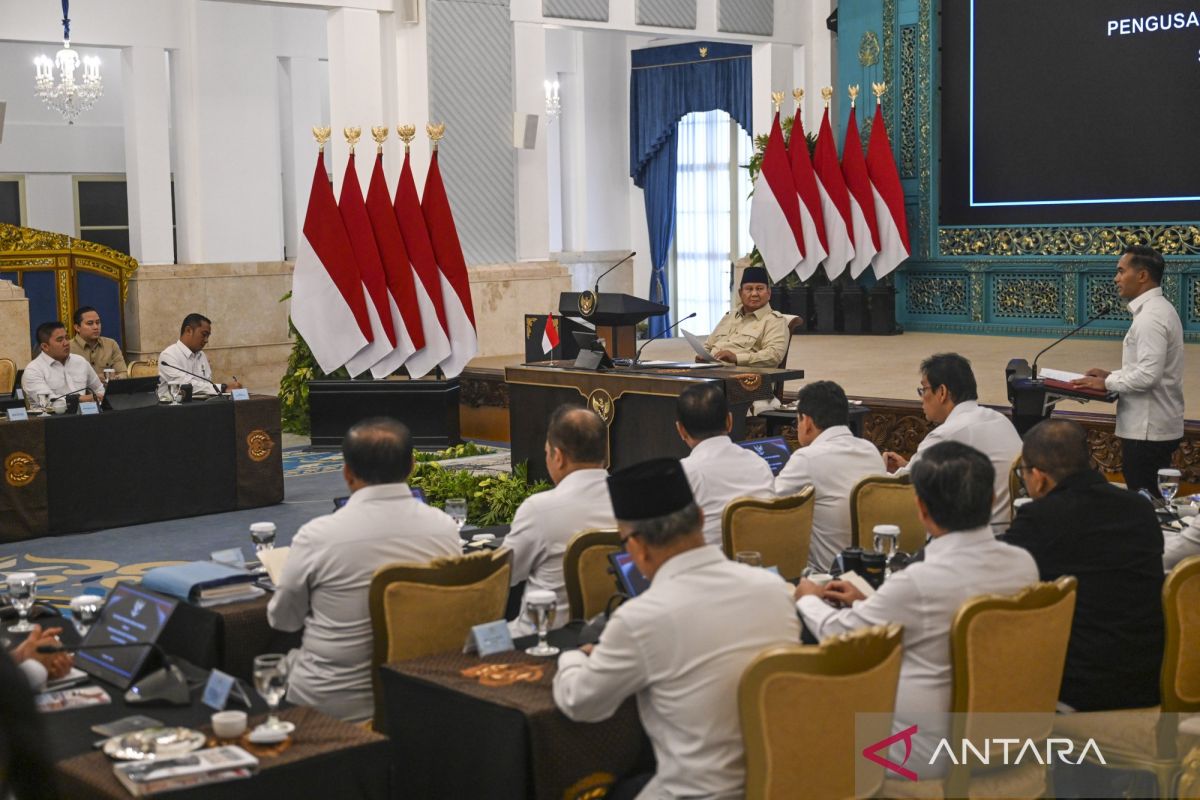
The General Chair of the Indonesian Chamber of Commerce and Industry (Kadin), Anindya Novyan Bakrie, stated that the organisation has implemented four quick-win programmes to support various government priority agendas in the fields of economy, health, employment, and housing.
‘We have immediately consolidated all various strengths within Kadin and launched four quick wins that we believe can boost the economy due to their significant impact,’ said Anindya, commonly known as Anin, during a meeting between Kadin entrepreneurs from central and regional offices across Indonesia with President Prabowo Subianto at the State Palace, Jakarta, on Friday.
Anin explained that the four programmes were selected based on their potential to deliver substantial impacts on the national economy.
The first programme is the ‘Gotong Royong Free Nutritious Meal Task Force’. To date, Kadin has contributed through 866 free nutritious meal kitchens, 128 of which are located in frontier, outermost, and least developed (3T) regions. He noted that Kadin prioritises support for this programme, citing UNICEF research which shows that every US dollar invested in nutrition programmes can generate multiplied economic impacts.
The second programme is the ‘Free Health Check-up Task Force’. In support of this, Kadin has launched a white paper titled ‘Health Is The New Wealth’, which highlights the economic potential of the healthcare sector, estimated at approximately Rp670 trillion. ‘We have identified that health represents Rp670 trillion, and every Rp1 spent can generate Rp2 to Rp3 in returns,’ he added.
Thirdly, Kadin is implementing a programme for the protection and capacity building of Indonesian migrant workers. This initiative targets approximately 208,000 migrant workers through certification and training to enhance their competencies and increase their contribution to the nation’s foreign exchange reserves.
The fourth programme involves the renovation of uninhabitable houses in support of the government’s three-million-house construction programme. According to Anin, the housing sector possesses a significant multiplier effect on the economy and has the potential to create up to 19 million jobs.
Anin concluded by stating that these programmes also create opportunities for businesses and regional authorities to participate in the government’s development agenda. ‘We can feel, even in the remote areas, that they have the opportunity to participate in the economic programmes initiated by the President,’ he said.