
Jusuf Kalla: Mosques Must Empower Congregants and Become Centres of Civilisation
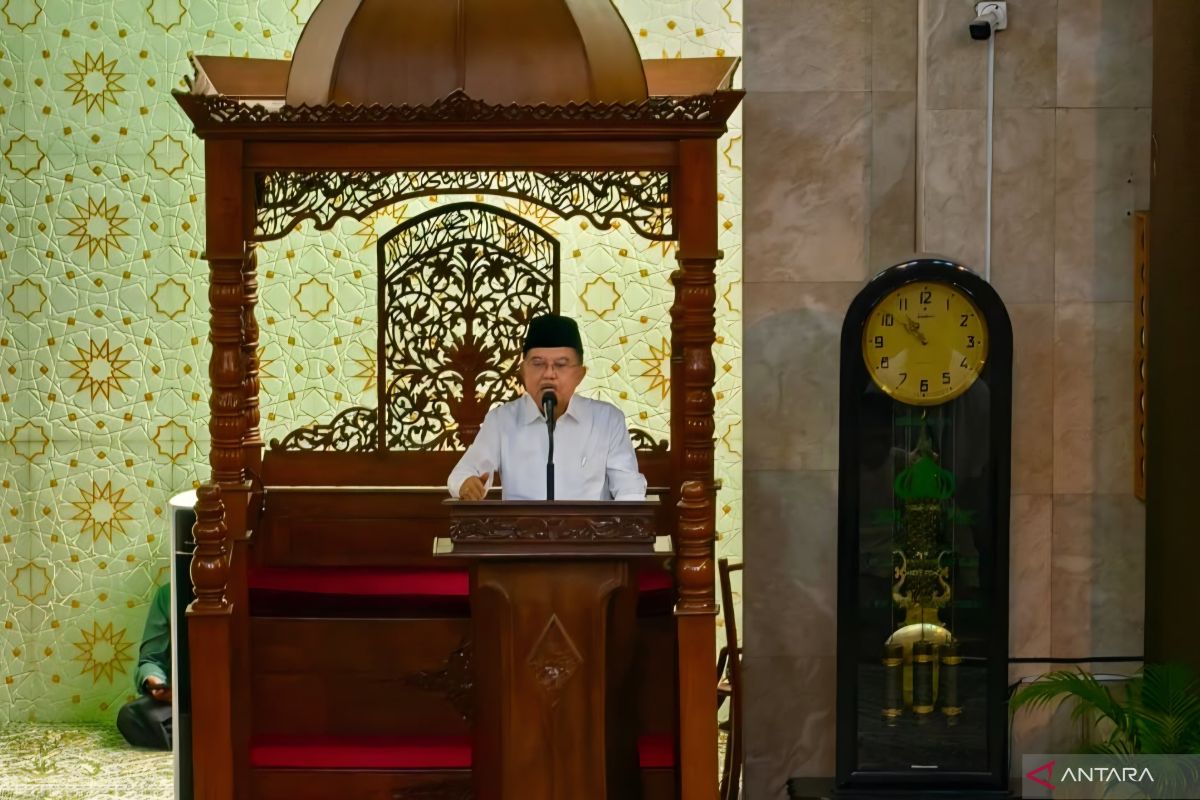
Mosques must not only serve as places of worship but also as centres for education, economic development, and community progress, according to Jusuf Kalla.
Speaking at the 1 Muharram 1448 Hijriah Islamic New Year commemoration at the Grand Mosque of Bandung, West Java, the Chairman of the Indonesian Mosque Council (DMI) stated that the focus should shift from merely prospering the mosque to ensuring the mosque prospers its congregants.
“All this time we have only talked about prospering the mosque. Whereas the mosque must also prosper its congregants. Mosques cannot only be places of worship, but must also become centres of education, economic development, and community progress,” said JK, as he is commonly known, in an official statement in Jakarta on Tuesday.
JK argued that the advancement of civilisation is heavily dependent on the mastery of science, technology, and the economic capacity of the community. Therefore, mosques need to play an active role in promoting education and entrepreneurship.
He cited the example of the Prophet Muhammad, who was a trader before being appointed as a prophet. According to JK, the spirit of enterprise and trade is part of the Prophet Muhammad’s example that needs to be revived within society.
“The Prophet was a trader for longer than his period of prophethood. Therefore, the spirit of striving and working hard is also part of the sunnah that must be emulated,” said the former Vice President of the Republic of Indonesia.
JK also highlighted the role of the Prophet Muhammad’s companion, Siti Khadijah, as an example regarding the role of women.
In his closing remarks, JK emphasised that the meaning of the Hijriah New Year should be a moment for self-evaluation, improving the quality of worship and education, and building the economic independence of the Muslim community.
“The meaning of the Hijriah New Year is not merely a celebration, but a momentum for evaluation and self-improvement so that Muslims become more advanced, knowledgeable, and prosperous,” said Jusuf Kalla.