
Jusuf Kalla: Improvements to Free Nutritious Meals Programme Right for Economic Headwinds
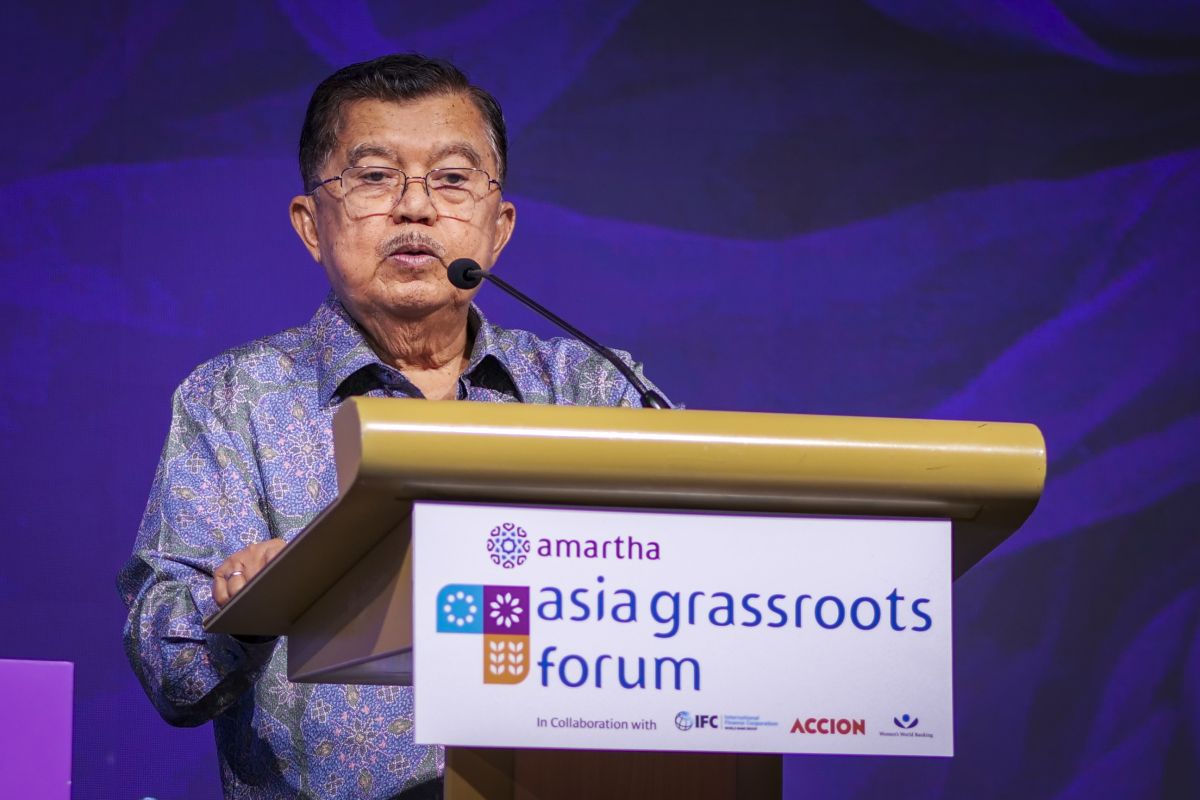
The 10th and 12th Vice President of the Republic of Indonesia, Jusuf Kalla (JK), believes that improving the governance of the Free Nutritious Meal (MBG) programme is a correct step to alleviate budget burdens amidst economic dynamics.
“The MBG [budget] has been trimmed, and that is good,” said JK during a Public Seminar on Economic Policy and Crisis Management, monitored online from Jakarta on Tuesday.
According to JK, improving the governance of the MBG programme is one of the measures the government can take to reduce the fiscal burden. Other steps, JK continued, include reducing budgets for cooperatives, reducing fuel (BBM) subsidies, and reducing the defence equipment (alutsista) budget.
By reducing the budget burden, JK believes the government can strengthen public confidence in the Indonesian economy, particularly in restoring confidence in the rupiah.
“Economic crises are related to fiscal matters. Fiscal involves money, budgets, and so on. Therefore, to overcome that (economic crisis), expenditures must be lowered and revenues increased,” said JK.
Therefore, he welcomed the government’s efforts to lighten the fiscal burden by improving MBG governance.
“Alhamdulillah, the President realises this. He said to reduce costs there (MBG). Finally, it was reduced,” said JK.
The Head of the National Nutrition Agency (BGN), Nanik Sudaryati Deyang, stated that the improvement of the 2026 Free Nutritious Meal (MBG) programme governance begins with optimising budget efficiency.
Nanik explained that the MBG programme will be focused on underdeveloped, frontier, and outermost (3T) regions, as well as groups including pregnant women, breastfeeding mothers, and toddlers (3B), in accordance with the directives of President Prabowo Subianto.
Consequently, Nanik continued, the BGN has issued a circular to Nutrition Fulfilment Service Units (SPPG) stating that those not serving the 3B target groups will be suspended. As for the construction of SPPGs in 3T regions, the BGN will implement several alternative implementation schemes to avoid burdening the State Budget (APBN).
After conducting internal consolidation within the BGN, Nanik stated that her agency has prepared a work plan focused on budget efficiency without reducing the targets or the quality of the MBG menu. The budget allocated for the MBG Programme in 2026 is set at Rp268 trillion.
“In the interest of budget efficiency, what we are doing is, first, refocusing the beneficiaries; second, implementing a moratorium on new kitchen points; and third, renovating existing kitchens that are already operational to ensure they meet standards for producing high-quality food, including the improvement and training of human resources,” she said.