
Jusuf Kalla Discusses the Role of Civil Society in Addressing War to Disasters
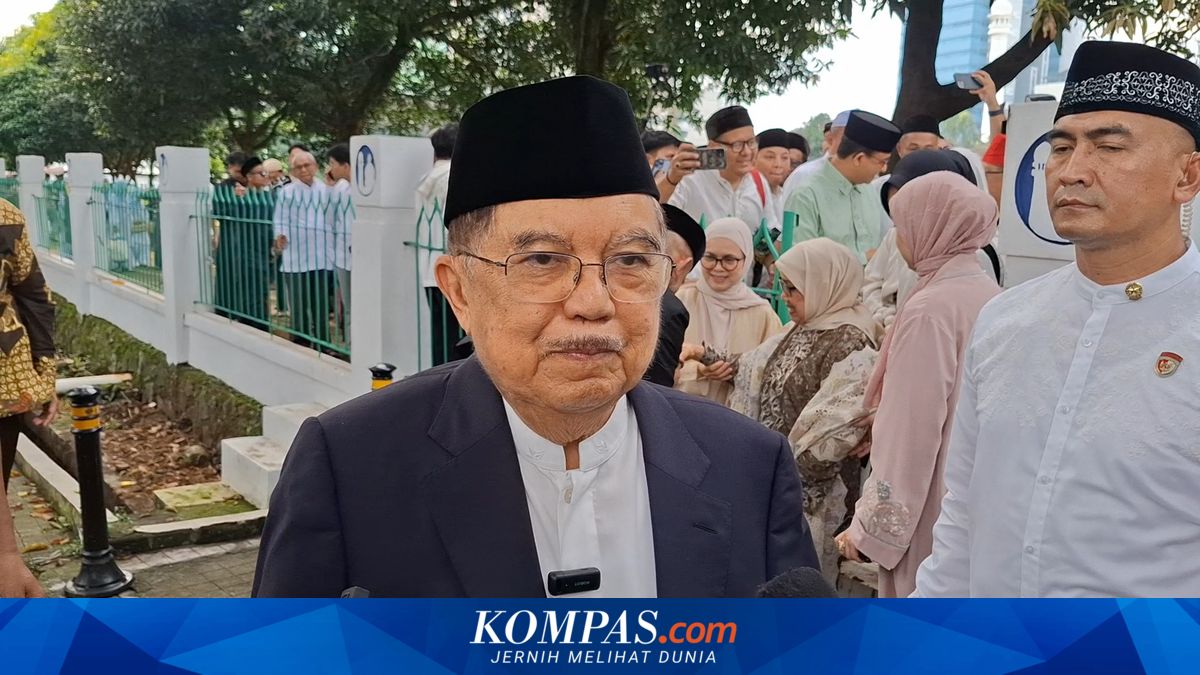
JAKARTA - The 10th and 12th Vice President of Indonesia, Jusuf Kalla or JK, spotlighted the role of civil society in handling humanitarian issues, whether resulting from conflicts or natural disasters.
During a public lecture at the Faculty of Social and Political Sciences, University of Indonesia, Depok, on Tuesday (7/4/2026), JK stressed that trust is a vital asset when engaging in humanitarian activities.
JK initially explained that the main challenges in humanitarian efforts today stem from two sources: conflicts between humans and conflicts with nature.
According to him, humanitarian conflicts are generally triggered by ideological factors, territorial disputes, political interests, and natural resources.
He cited various global and national conflicts that have had widespread impacts on civil society.
According to JK, resolving humanitarian issues cannot be limited to handling refugees; the root of the conflict itself must be addressed.
He also recounted his experiences in managing various conflicts in Indonesia in the early 2000s, such as in Poso, Ambon, and Aceh, which at the time displaced around 1.5 million people.
He emphasised the importance of a logical approach, understanding the root problems, and courage in resolving social conflicts, including those based on religion.
“No religious teaching justifies killing others without reason. This is the approach we used to resolve conflicts in Poso and Ambon,” said JK.
According to him, the involvement of the wider community is key to the success of various humanitarian actions, including during the Aceh tsunami and the Covid-19 pandemic.
The Chairman of the Indonesian Red Cross (PMI) explained that public trust is the primary asset in mobilising aid, making society more enthusiastic about participating as volunteers and even funding humanitarian activities.
“For example, PMI funds come from the public. They trust that the aid provided will be distributed properly,” JK stated.
Kalla also called on universities to join in addressing the causes of the increasing number of natural disasters in Indonesia.
“Here, we hope that campuses can conduct research that directly impacts efforts to avoid natural disasters, including ways to prevent environmental damage,” he said.