
June 2026 Inflation Driven by Rising Production Costs, Say Business Leaders and Economists
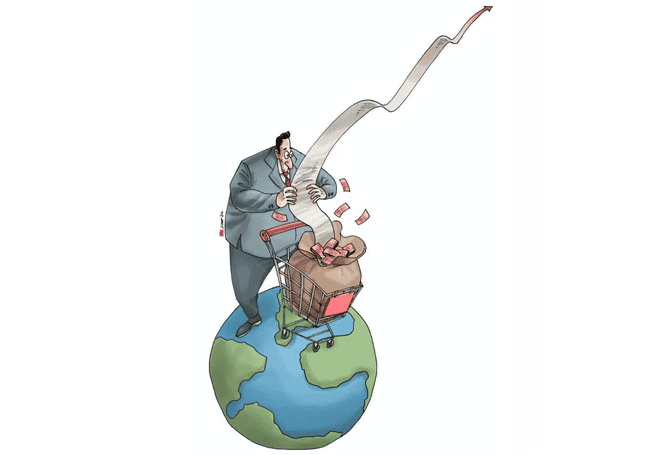
The characteristics of inflation in June 2026 were largely driven by rising costs (cost-push inflation), particularly from the transport component such as increases in petrol prices, air transport fares, and lubricants, rather than a surge in public demand. Statistics Indonesia (BPS) recorded monthly inflation in June 2026 at 0.44%, with the transport group being the largest contributor.
“The business world sees June 2026 inflation as having a different character because it was more triggered by rising production and distribution costs, not by strengthening public purchasing power. This indicates that economic activity is not yet fully supported by strong domestic demand, while on the other hand, businesses face increasing cost pressures,” said Erwin Aksa, Vice Chairman of the Indonesian Chamber of Commerce and Industry (Kadin), when contacted on Wednesday (1/7).
According to him, rising energy, transport, and logistics costs will increase production costs across almost all sectors. In conditions where demand has not yet fully recovered, many businesses do not have the room to immediately pass on these cost increases to selling prices for fear of losing market share. “As a result, business margins are increasingly depressed, especially for labour-intensive industries, MSMEs, manufacturing, and the distribution sector,” said Erwin.
Therefore, he said, the government needs to ensure that cost pressures do not continue to rise. Stability of energy prices, smooth distribution of goods, logistics efficiency, and certainty of raw material supply must be priorities. In addition, various incentives to keep production costs competitive also need to be strengthened so that the business world remains able to expand and maintain employment.
At the same time, efforts to boost public purchasing power remain important. Erwin stated that inflation originating from the cost side without being followed by an increase in consumption will cause the business world to face double pressure, namely rising costs while demand is not yet strong enough. “Therefore, a balance between maintaining price stability and encouraging economic growth must be the main focus of government policy,” he concluded.
A similar sentiment was conveyed by M Rizal Taufikurahman, Head of the Macroeconomics and Finance Centre at the Institute for Development of Economics and Finance (Indef). According to him, June 2026 inflation reflects cost-push inflation rather than demand-pull inflation. Inflationary pressures mainly stem from rising production costs, administered price adjustments, and distribution costs, not from a surge in public consumption. “This shows that purchasing power has not fully recovered, so the current inflation is not yet a signal of strengthening domestic demand,” Rizal told Media Indonesia on Wednesday (1/7). “The challenge is to keep inflation under control without further depressing purchasing power, through strengthening the supply side, distribution efficiency, and more measured government price adjustments,” he added.
Previously, Statistics Indonesia (BPS) announced that in June 2026 there was monthly inflation of 0.44% (m-to-m), or an increase in the Consumer Price Index (CPI) from 111.40 in May 2026 to 111.89 in June 2026. The calendar year inflation (y-to-d) for June 2026 was recorded at 1.79%. Annually (y-on-y), June 2026 inflation was recorded at 3.34%, up from the previous year’s 1.87%.
Ateng Hartono, BPS Deputy for Distribution and Services Statistics, explained that the transport group was the main contributor to monthly inflation in June 2026 with an inflation share of 0.28% and an inflation rate of 2.29%. “The dominant commodities driving inflation in the transport group include petrol, airfares, and engine lubricants. Petrol contributed the highest inflation share at 0.21%. Furthermore, airfares contributed 0.05%, while engine lubricants contributed 0.01%,” Ateng revealed at a press conference in Jakarta on Wednesday (1/7).
Based on expenditure groups, annual inflation was driven by the food, beverages, and tobacco group with an inflation share of 1.36% and an inflation rate of 4.67%, followed by the personal care and other services group with an inflation share of 0.69% and an inflation rate of 10.10%. Based on components, all components experienced annual inflation. The core component contributed an inflation share of 1.77% with an inflation rate of 2.76%, followed by the volatile component with an inflation share of 0.91%, and the administered price component with an inflation share of 0.66%.
Source: jawawa.id (https://jawawa.id/newsitem/june-2026-inflation-driven-by-rising-production-costs-say-business-leaders-and-economists-1782903087)
Originally published by Media Indonesia (https://mediaindonesia.com/ekonomi/906332/inflasi-juni-2026-dipicu-kenaikan-biaya-produksi-ini-kata-pengusaha-dan-ekonom), translated from Indonesian