
Jumhur: Large Nations Must Not Retreat from Environmental Responsibility
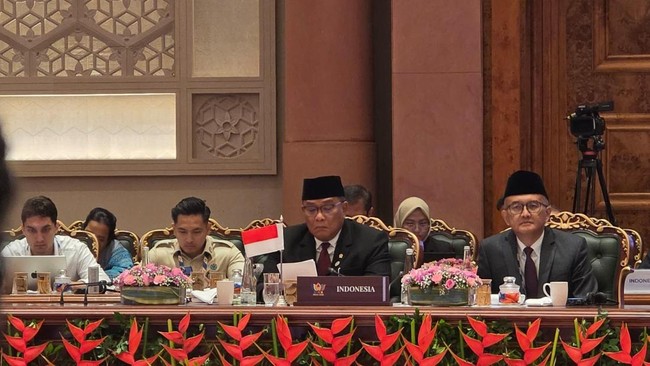
In the global landscape, the presence of BRICS is able to expand more representative and effective global environmental governance. This is because BRICS provides an opportunity for local wisdom to participate in mitigating and addressing increasingly complex environmental challenges.
This was revealed at the Meeting of Environment Ministers of BRICS member countries in New Delhi, India, on Tuesday, 18 August 2026. The event began with a statement from India’s Minister of Environment, Forest and Climate Change, Shri Bhupender Yadav. This was followed by a statement from Indonesian Environment Minister Jumhur Hidayat. The meeting was attended by 10 of the 11 BRICS member countries.
In his presentation, Jumhur expressed concern that developed countries with major economic power are choosing to retreat from their collective responsibility in tackling pollution and climate change. At the same time, their economic weight continues to contribute the majority of global emissions.
According to Jumhur, the way the world manages natural resources, shapes landscapes, prevents environmental degradation, and builds resilience will ultimately shape the sustainability of global development.
Indonesia also underlined the importance of protecting biodiversity, both terrestrial and marine, as a foundation for healthy ecosystems, climate resilience, and long-term sustainable growth.
Indonesia is home to one of the richest biodiversities in the world, with more than 300,000 known species, including 9.7% of the world’s flowering plants, 14% of mammals, and 18.6% of birds. Indonesia’s marine ecosystems, located at the heart of the Coral Triangle, are home to 23% of mangrove forests, 16% of global marine fish species, 10% of the world’s coral species, and some of the highest concentrations of marine reptiles and mammals.
This extraordinary biodiversity supports essential ecosystem services for climate mitigation, adaptation, and the resilience of millions of livelihoods.
As the world’s largest archipelagic nation, spanning more than 17,000 islands, with over 60% of its population living in coastal areas, Indonesia is on the front line of climate change. Rising sea levels, extreme weather events, and climate-related disasters have affected communities across the Indonesian archipelago. These threats can undermine development progress, disrupt livelihoods, and push vulnerable communities back into poverty.
“Therefore, for Indonesia, climate adaptation is not a peripheral agenda. It is a central pillar of sustainable development and a safeguard for our national prosperity. We have enacted the National Adaptation Plan 2026-2030 as a roadmap towards a climate-resilient Indonesia and as support for the Golden Indonesia Vision 2045,” said Jumhur in his statement, written on Wednesday (19/8/2026).
Jumhur also said that sustainable solutions must not only come from advanced science, but also from the wealth of traditional knowledge. Communities are the first to feel the impacts of climate change and possess invaluable insights into local weather patterns and natural resource management.
On that occasion, Jumhur introduced three successful traditional models from Indonesia, namely the Subak irrigation system in Bali, which integrates water management, community cooperation, and spiritual practices. In addition, there is Sasi Lompa in Maluku, a traditional system for sustainable fisheries management, as well as Awig-Awig, a community-driven customary law system in Bali.
“These practices demonstrate that living in harmony with nature is not only cultural heritage, but also a powerful tool for climate adaptation and resilience, particularly by strengthening community-based approaches to managing water, ecosystems, and natural resources in the face of climate impacts,” explained Jumhur.
The two-day event was attended by the Indonesian delegation from the Ministry of Environment, including Deputy for PPI and TKNEK Ary Sudjianto, Director of Land Fires Dasrul, and Ministerial Expert Staff Teguh Santosa, as well as Chargé d’Affaires ad interim of the Indonesian Embassy Yudo Sasongko.