
Jumhur: Indonesia Translates Climate Commitments into Real Cross-Sector Action
The Paris Agreement serves as our compass. However, as the window to maintain a temperature rise of 1.5 degrees Celsius narrows, our task is to bridge global commitments with real results.
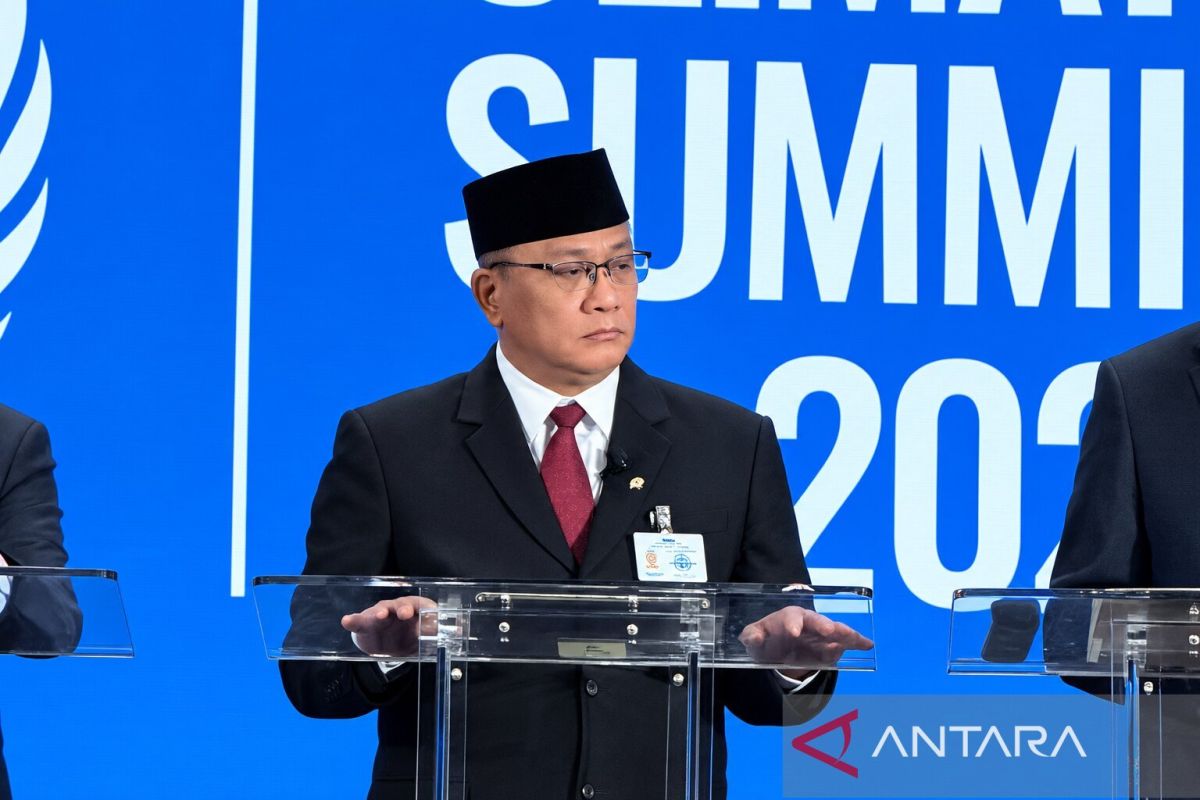
he Minister of Environment/Head of the Environmental Control Agency (BPLH), Moh. Jumhur Hidayat, stated that Indonesia is translating its climate change control commitments into practical cross-sector actions that align with economic growth and environmental protection.These remarks were made by Minister Jumhur during the “Interactive Leaders Dialogue at the Climate Summit 2026 on Climate Action and the Just Transition,” held as part of the 81st UN General Assembly at the UN Headquarters in New York on Wednesday (23/9).
“The Paris Agreement is our compass. However, as the space to maintain a temperature rise of 1.5 degrees Celsius narrows, our task is to bridge global commitments into tangible results,” Minister Jumhur stated in a briefing received in Jakarta on Thursday.
He noted that Indonesia is directing its Nationally Determined Contribution (NDC) towards a net-zero emissions target by 2060 or sooner.
“Indonesia’s development paradigm is clear: growth and environmental protection must advance together,” said Minister Jumhur Hidayat.
Jumhur emphasised that the transition towards a low-carbon economy must be just, orderly, state-led, and community-centred. Its success should not only be measured by technology and investment but also by energy affordability, decent work, local value addition, the protection of vulnerable groups, and environmental benefits.
In addition to the high-level dialogue, Indonesia participated in three Solution Dialogues addressing climate finance, adaptation finance in the era of overshoot (the period when global average temperatures exceed 1.5 degrees Celsius), and methane reduction.
Indonesia is also advocating for climate finance that aligns with the implementation needs of the NDC and the National Adaptation Plan (NAP), including support for technology, capacity building, programme implementation, and transparency systems.
Jumhur also stressed the reduction of methane emissions through improved waste and wastewater management, the circular economy, the strengthening of data and reporting, technology, and the capacity of local governments.
Based on data presented during the forum, methane contributed 18.12 per cent of Indonesia’s total greenhouse gas emissions in 2022.
In the field of adaptation, Indonesia is developing the Giant Sea Wall on the North Coast of Java (Pantura) and protecting and restoring mangroves and coastal ecosystems to face the risks of rising sea levels.
Ahead of COP31 in Antalya, Indonesia is pushing for the implementation and enhancement of global climate finance targets, as well as multilateral cooperation that results in protection and development opportunities for communities and nations vulnerable to climate change.
Source: jawawa.id (https://jawawa.id/newsitem/jumhur-indonesia-translates-climate-commitments-into-real-cross-sector-action-1790258494)
Originally published by Antara (Indonesian) (https://www.antaranews.com/berita/5757155/jumhur-ri-terjemahkan-komitmen-iklim-jadi-aksi-nyata-lintas-sektor), translated from Indonesian