
Jumbo and Pandji’s Comedy Bring WCCE 2026 to Life
JAKARTA — A child named Don wants to be heard, seen and loved. The simple story in the animated film Jumbo sprang from the imagination of an Indonesian creator, but its emotions can be felt by anyone, anywhere in the world, regardless of borders or language barriers.
For director Ryan Adriandhy, that is the power of a story. It need not lose its local identity to be accepted around the world. On the contrary, a work rooted in specific experiences can reveal what is most universal about being human.
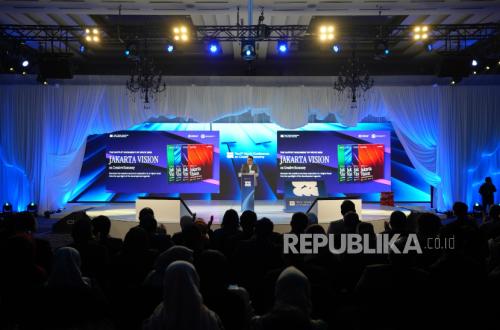
“Beneath it all, Don, the main character, is just a child who wants to be seen and heard, and to feel loved. And I think that emotion does not need translation,” Ryan said during a session at the 2026 World Conference on Creative Economy (WCCE) at the Hotel Indonesia Kempinski on Friday (23 October).
Ryan recalled the Pixar animated films he enjoys. Their characters might be ants, toys or racing cars, yet audiences still connect with them because what they see is not merely the lives of those objects, but emotions familiar from human experience.
In Jumbo, architecture, food and social interactions associated with South-east Asia form part of the story’s world. But no dictionary is needed to understand Don’s longing to be loved.
“A story created in one part of the world can suddenly find someone thousands of kilometres away who says, ‘Oh, I understand that story. I know exactly how that feels.’ And I think that is amazing,” Ryan said.
Jumbo’s experience points to the opportunities available to Indonesia’s creative industry. Digital technology makes it easier to distribute films, translate them using subtitles and bring creative works to international audiences.
At the same forum, comedian Pandji Pragiwaksono said that Indonesia’s social and political experiences can also provide compelling material for audiences in other countries. Pandji has taken his stand-up shows to several European cities, including Oslo, Berlin, Cologne, Rome and Barcelona. The experience taught him that issues that seem uniquely Indonesian are not necessarily unfamiliar to people abroad.
“It turns out Indonesia is interesting to talk about through stand-up comedy. A lot of social issues in Indonesia are actually the same as those in other countries — they resonate. Indonesian politics is interesting to them too, so the opportunity is huge,” Pandji said on Thursday (22 October).
For Pandji, this shows that Indonesian creative professionals have an opportunity to break into international markets. But that opportunity will be difficult to develop if the domestic live-performance industry continues to face inadequate infrastructure and business models that place a heavy burden on organisers.
He highlighted the venue-rental system, which generally requires organisers to pay hire costs upfront. Productions also have to cover various other expenses, including lighting and sound. He said a revenue-sharing model, as used in major global live-performance hubs, could be considered as an alternative.
“I think the government could either provide more performance venues, because I know there is a real shortage, or try to influence a change in the business model for performance venues in Indonesia,” Pandji said.
Another issue is the concentration of opportunities in Jakarta. Comedians from Cirebon, Medan, Lampung and Makassar, Pandji said, often feel they have to move to the capital to build a national career. Yet cities outside Jakarta could also develop their own audiences, communities and live-performance markets.
“We need more stand-up comedy hubs in more cities so comedians can build careers where they live. In other words, they shouldn’t have to move to a faraway city like Jakarta to make a living from their work,” he said.
Source: jawawa.id (https://jawawa.id/newsitem/jumbo-and-pandjis-comedy-bring-wcce-2026-to-life-1792943470)
Originally published by Republika (https://ameera.republika.co.id/berita/tngjk3370/film-jumbo-hingga-komedi-pandji-meriahkan-wcce-2026), translated from Indonesian