
Juliana Ojong, Cideng Resident and Eco Enzyme Nusantara Community Activist
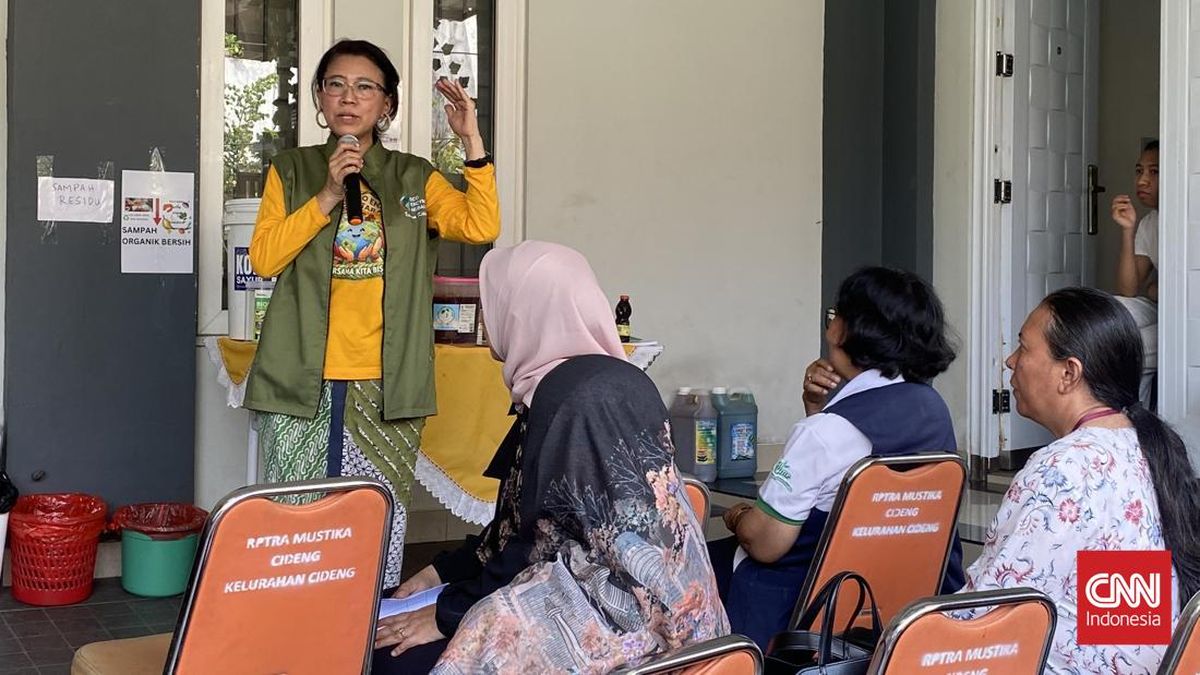
Juliana Ojong, a resident of Cideng sub-district in Gambir, Central Jakarta, has become an active member of the Eco Enzyme Nusantara community, promoting the processing of organic waste into a multi-purpose liquid known as eco enzyme.
“We focus more on sorting and processing organic waste, especially clean organic waste such as fruit peelings or uncooked vegetable peelings, to make a multi-purpose liquid called eco enzyme,” Juliana said on Thursday (5 November).
Juliana was first inspired to process organic waste about seven years ago. As a vegetarian, she realised how much vegetable waste and fruit peelings she generated.
At the time, however, she did not know how to sort or process organic waste, for example through biopore infiltration holes or composting. She eventually heard about a product called eco enzyme.
Juliana then tried making it and using it as a substitute for floor cleaner. She first put it to use after her old house and the Buddhist temple where she worships were affected by flooding.
“I used the eco enzyme to clean my house and the temple, and it was truly remarkable. Without using chemicals or shop-bought soaps, everything became clean and the smells disappeared,” Juliana said.
She said the liquid could be used not only on floors but also for washing dishes, hands and clothes, as well as wiping down the cooker and kitchen.
The ingredients are entirely natural: discarded fruit peelings, water and palm sugar. Juliana explained how to make the eco enzyme.
“The recipe is 1kg of sugar, 3kg of fruit peelings and 10 litres of water in a 20-litre plastic container. You can also use a water gallon. If you use a gallon, there’s a tip: don’t close the lid; cover it with plastic and secure it with a rubber band for one month,” Juliana said.
Juliana said that making 10 litres, or one container, of eco enzyme can process 3kg of organic waste. The waste does not have to come only from households; it can also be collected through collaboration with market vendors or street sellers of fruit-based products.
“This year alone, we’ve processed more than 20 tonnes. The figure across Indonesia is higher, because in Jakarta alone we processed 14 tonnes last April with the DKI Jakarta Environment Agency and Adiwiyata schools. And that’s not counting our own household, which produces 2.4kg in a week,” Juliana said.
Juliana said the Eco Enzyme Nusantara community now has 691 registered members. She estimated that more than 7,000 people also follow its activities through channels such as WhatsApp and Zoom meetings.
Juliana is one of the participants in the 2026 Pilah Olah Sampah Heroes programme, organised by the Jakarta Provincial Government through its Communications, Informatics and Statistics Agency (Diskominfotik).
The programme aims to recognise environmental champions, including community organisers and key opinion leaders, who take practical action and encourage others to care about waste.
The programme is now at the field-verification stage. During this phase, four technical judges will visit participants in person to assess their environmental initiatives.
Source: jawawa.id (https://jawawa.id/newsitem/juliana-ojong-cideng-resident-and-eco-enzyme-nusantara-community-activist-1793875889)
Originally published by CNN Indonesia (https://www.cnnindonesia.com/nasional/20261105161828-20-1423745/juliana-ojong-warga-cideng-pegiat-komunitas-eco-enzyme-nusantara), translated from Indonesian