
Juleha recommends plastic handles for sacrificial knives to prevent disease
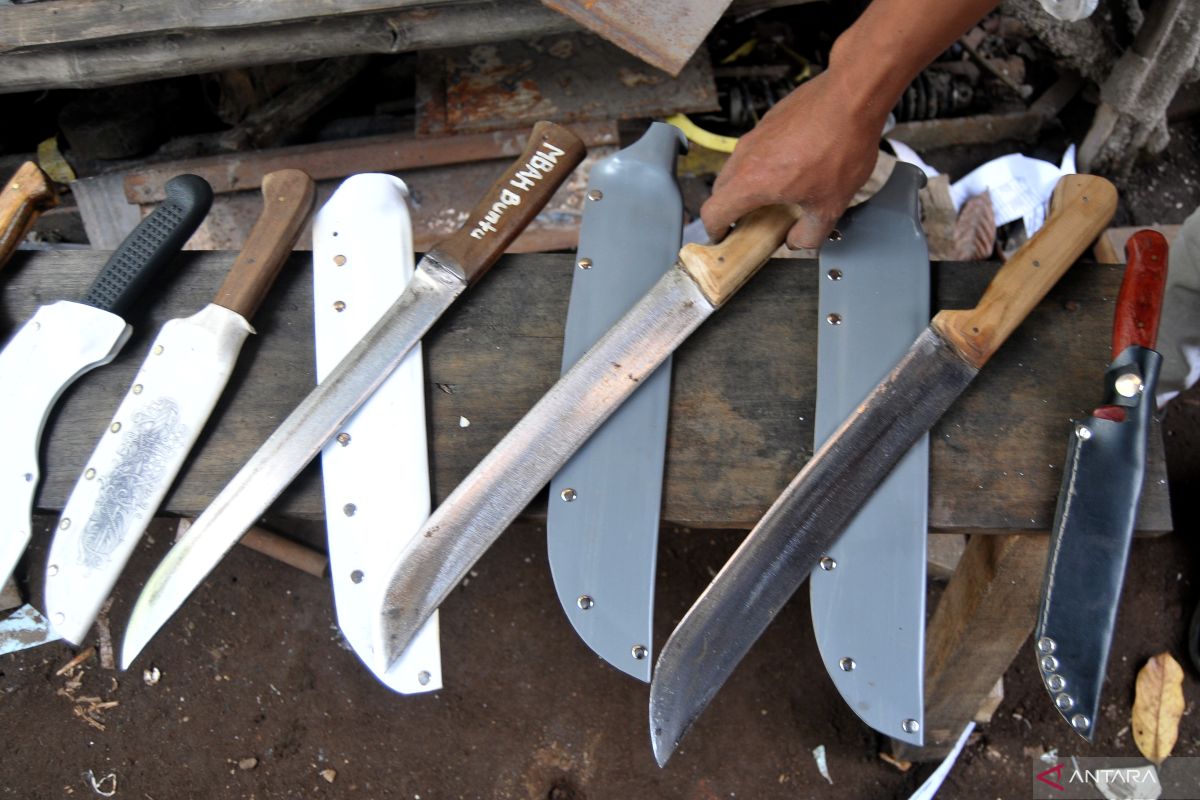
Jakarta (ANTARA) - The Indonesian Halal Slaughterers Association (Juleha) has highlighted the importance of cleanliness and material standards for sacrificial knives to prevent disease transmission between animals.
Fredi Insan Nurfadli from Juleha Indonesia’s Dawah Team in Jakarta, Tuesday, pointed out that one aspect of safety often overlooked by the public during voluntary slaughter is the material of the blade and handle.
‘For example, if we slaughter the first cow and it’s sick, using the same knife for the next cow could lead to disease transmission,’ he said.
To uphold the principle of Safe, Healthy, Whole, and Halal (ASUH), Juleha recommends using waterproof plastic handles and ensuring metal blades are rust-resistant.
‘While traditional knives are still widely used in communities, there’s nothing wrong with traditional knives as it’s part of our culture. However, for Eid al-Adha, it’s hoped that knives with rust-resistant materials are used,’ he added.
Beyond material concerns, knife sharpness must meet the National Work Competency Standard (SKKNI) to ensure swift and humane slaughter.
‘The sharpness standards under SKKNI are set by the government. It must be able to slice paper cleanly. If it cuts ABS paper smoothly, then it’s suitable for slaughter,’ he explained.
Fredi hopes that the hygiene and professionalism of Eid al-Adha committees across regions can be improved to guarantee the quality and halal status of distributed meat.