
Judol Emergency: Asymmetric Warfare, Non-State Actors, and National Sovereignty
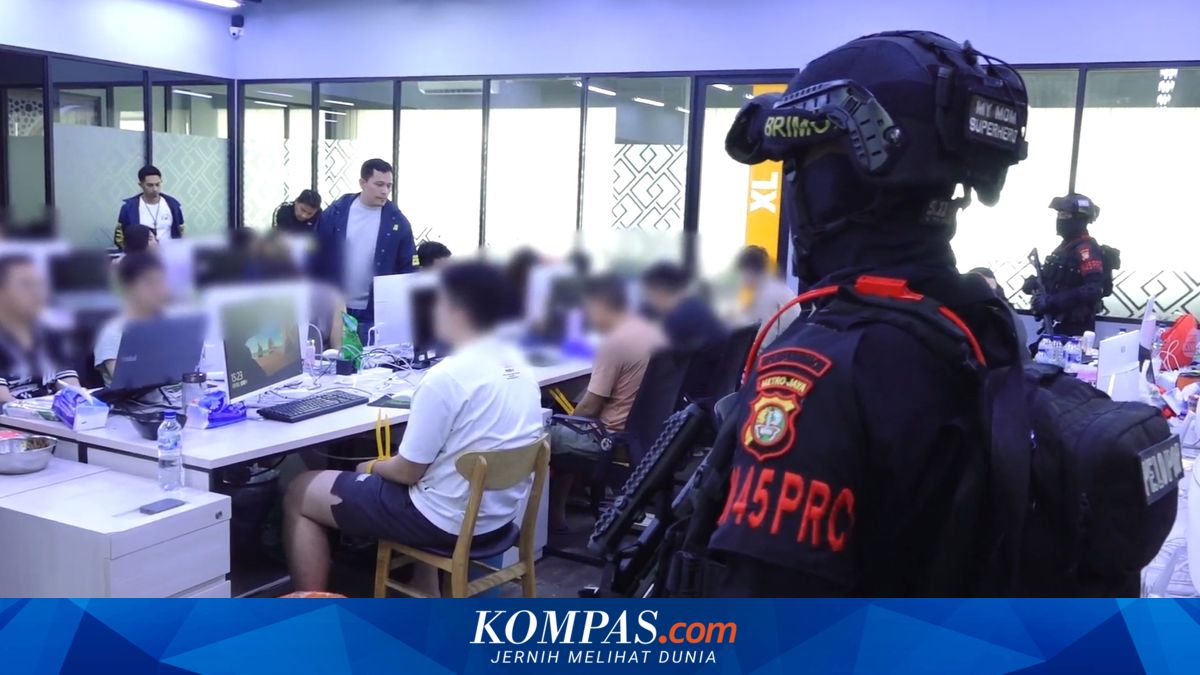
The Indonesian National Police’s (Polri) step in raiding an online gambling (judol) headquarters in Hayam Wuruk, West Jakarta, on Saturday (9/5/2026), further underscores Indonesia’s position as a target for operations by transnational crime syndicates. In the raid, Polri succeeded in apprehending 321 foreign nationals from various countries such as Vietnam, China, Myanmar, Laos, Thailand, and Cambodia. This case must not be taken lightly by the Indonesian Government. National vigilance based on intelligence, law enforcement, and inter-state security diplomacy must be absolutely implemented as a preventive measure to protect national sovereignty. The massive scale of transnational crimes like online gambling is by no means a new phenomenon in the study and practice of international relations. The emergence of non-state actors is an inevitability that cannot be stemmed. However, the existence of these non-state actors creates a paradox due to the absence of the state’s role in oversight. As a result, destructive non-state actors such as transnational crime syndicates dominate so profoundly. Law enforcement using Polri’s instruments in this case is quite appropriate. However, considering the empirical fact that online gambling crime operates in the dimension of transnational or cross-border crime, the government needs to conduct a comprehensive deepening of the case by involving multiple stakeholders such as the Ministry of Communication and Digital Affairs (Komdigi) RI, the State Intelligence Agency (BIN), the National Cyber and Crypto Agency (BSSN), the Ministry of Immigration (Imipas) RI, and the Ministry of Foreign Affairs (Kemenlu) RI. Through the involvement of these multiple stakeholders, the government will more easily map the structure of this transnational crime clearly from upstream to downstream, by eliminating anyone involved and operating within it. It is no longer a secret that the existence of transnational crime never stands alone. There is potential for larger syndicates coordinating, parties providing funding, and insiders providing backing. Transnational crime is structured, organised, and operates systematically. When they operate in a country, there is a motive underlying their operations in that country. Generally, the choice falls on developing countries whose societies are technologically literate, but whose economies and welfare levels are not yet strong enough. The choice of developing countries also becomes the easiest option given that law enforcement processes—not to mention the integrity of law enforcement officials—have not yet run as they should.