
Judicial Review: Majelis Masyayikh Asserts State Obligation to Fund Pesantren
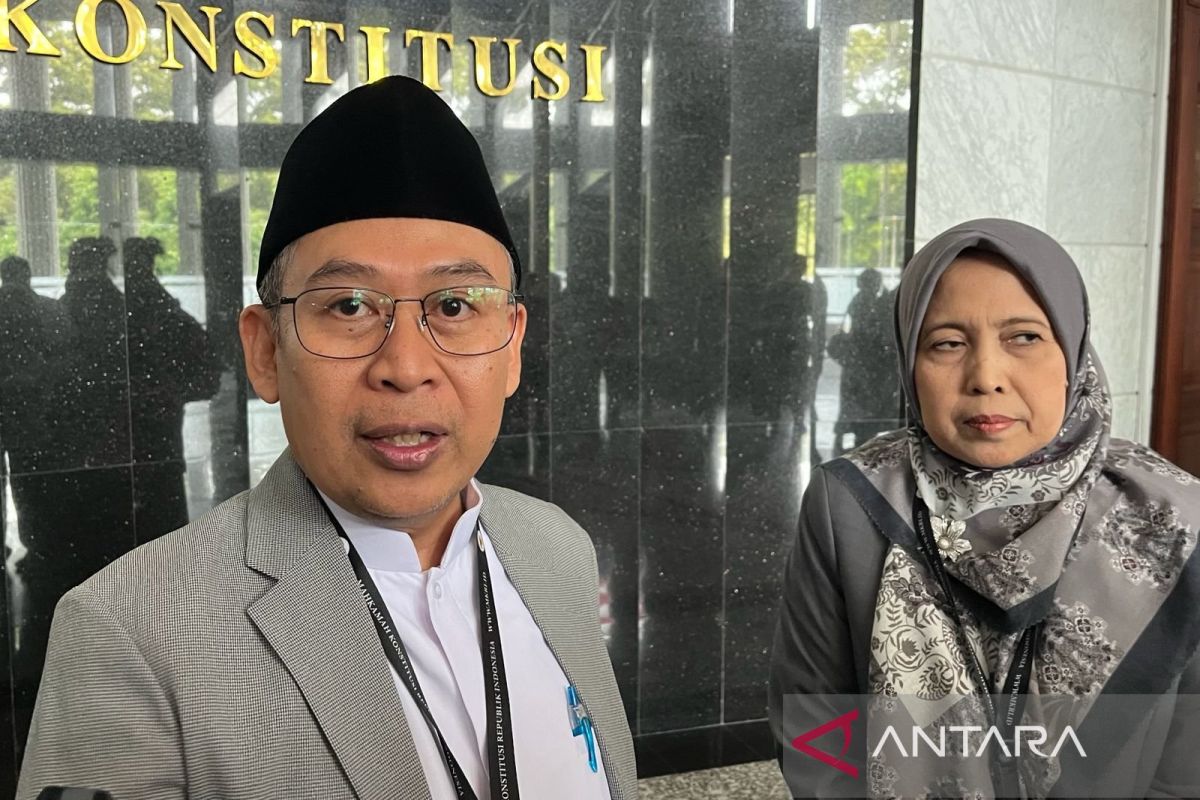
Jakarta (ANTARA) - The Majelis Masyayikh has asserted that the state holds a constitutional obligation to fund pesantren education, given that these Islamic-based educational institutions are an integral part of the national education system.
“Pesantren perform an educational function as part of the national education system. Therefore, the state cannot be positioned merely as a party providing assistance, but rather holds a constitutional responsibility to fund them,” stated the Chairman of the Majelis Masyayikh, Abdul Ghofar Rozin, in Jakarta on Wednesday.
Gus Rozin’s statement was delivered during the fourth hearing of the judicial review regarding Article 48, paragraphs (2) and (3) of Law Number 18 of 2019 concerning Pesantren at the Constitutional Court in Jakarta.
The Majelis Masyayikh maintains that the fundamental issue in Article 48 of the Pesantren Law lies not only in the phrase “in accordance with the state’s financial capacity,” but also in the use of the phrase “assisting the funding of pesantren operations.”
According to him, since the state recognised pesantren as part of the national education system through the Pesantren Law, all constitutional consequences within the field of education must also apply to pesantren. This view is based on a comprehensive reading of Article 31 of the 1945 Constitution. The Majelis Masyayikh argues that the constitution mandates the state not only to organise education but also to develop a national education system that enhances faith, piety, noble character, as well as scientific and technological competence.
From this perspective, pesantren serve as institutions closely aligned with the national educational objectives formulated by the constitution. Since their inception, pesantren have placed the cultivation of faith, character building, moral development, and the mastery of science as the primary foundations of education. “Therefore, the Majelis Masyayikh believes there is no constitutional reason to place pesantren outside the scope of state funding responsibility,” he said.
However, the Majelis Masyayikh emphasised that the recognition of community participation should not be interpreted as an abdication of state responsibility. According to the institution, community participation and state obligation are two complementary instruments, not substitutes for one another. The state retains the primary responsibility because pesantren are recognised as part of the national education delivery.
In the arguments presented to the Constitutional Court, the Majelis Masyayikh also revealed the history behind the formation of Article 48 of the Pesantren Law. Based on the direct experience of the law’s drafters, the original construction being fought for was that the state must fund pesantren. However, because the available budgeting scheme at the time relied on a grant mechanism, the phrase “assisting the funding of pesantren operations” was used.
In other words, he noted, the use of the word “assisting” was not an ideological or constitutional choice, but rather a technical compromise within the fiscal system prevailing during the law’s discussion. “The state remains obliged to fund pesantren education as mandated by the construction of Article 31 of the 1945 Constitution; thus, the phrase ‘assisting the funding of pesantren operations’ deviates from the constitutional mandate,” concluded Gus Rozin.