
Judicial Commission Urges Public to Monitor Judicial Processes
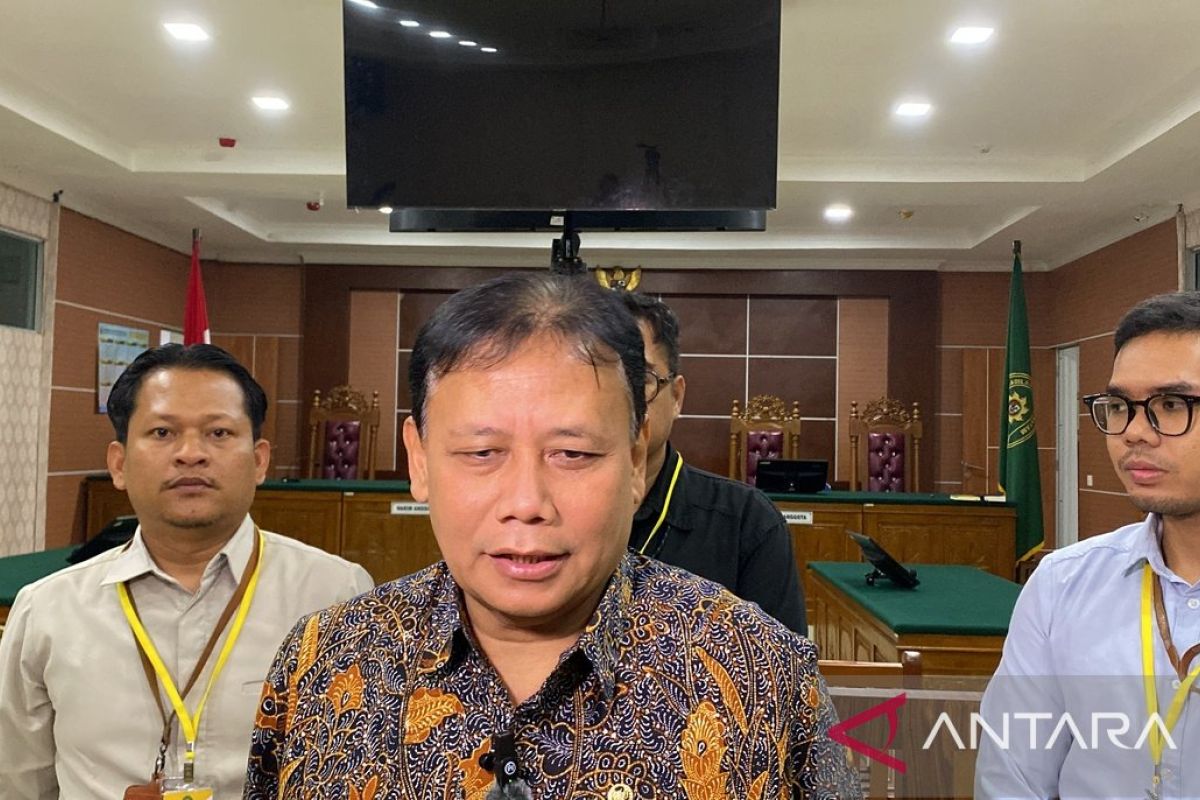
Palu (ANTARA) - The Judicial Commission (KY) is promoting public participation in monitoring judicial processes and judges’ behaviour in Indonesia.
“We are opening two complaint channels for the public in supervising the judiciary and judges’ behaviour,” said Abhan, Head of the Judge Supervision and Investigation Division of the KY, in Palu, Central Sulawesi, on Thursday.
He explained that the two channels are complaints of alleged ethical code violations and requests for session monitoring.
Complaints can be submitted directly or through the KY’s official online channels, namely the Call Centre: 187 or email to pengaduan@komisiyudisial.go.id, the website pelaporan.komisiyudisial.go.id, or the KY Mobile app (Android).
“In certain conditions, we can conduct further investigations based on initial suspicions of violations,” he stated.
He mentioned that there are still public reports from previous periods that have not been optimally followed up.
To address this, internal improvements are underway, including accelerating the handling of reports to avoid them being left unresolved without certainty.
The Judicial Commission is an independent state institution established to safeguard judicial integrity by proposing candidates for Supreme Court justices and enforcing the ethical code of judges’ behaviour.
He stated that supervision of the judiciary and judges’ behaviour requires broad participation, given the many aspects that need monitoring, especially cases directly related to public interests.
“This is important, considering the government has raised judges’ salaries by up to 280 percent,” he said.
He added that with such high salaries for judges, the public naturally demands that judges be even more professional, independent, and integrous.
If judges are proven to violate the ethical code and behavioural guidelines, it is the KY’s duty to follow up and process them in accordance with applicable provisions.
In addition to awaiting public reports, said Abhan, his institution can take proactive action based on media information or internal findings.
According to him, it is important to build synergy and collaboration with various parties because the KY does not yet have representatives or contacts in all provinces.
“Currently, KY contacts are only available in around 20 provinces,” he revealed during a discussion at the Central Sulawesi Legal Aid Institute (LBH Sulteng).
He added that the KY’s authority is limited to supervising judges’ behaviour and alleged ethical violations, not to technical judicial matters, such as legal considerations in decisions.