
Judicial Commission proposes bill to make decisions final and binding
Jakarta (ANTARA) - The Chairman of the Judicial Commission, Abdul Chair Ramadhan, has proposed that the Draft Law on the Judicial Commission regulate the decisions of the institution in imposing sanctions on judges to be final and binding.
Currently, he said that the regulations issued by the KY to sanction judges are only in the form of recommendations.
With this regulation, according to Abdul Chair in Jakarta on Monday, the position of the KY will be stronger for the mechanism of checks and balances in the judicial sector.
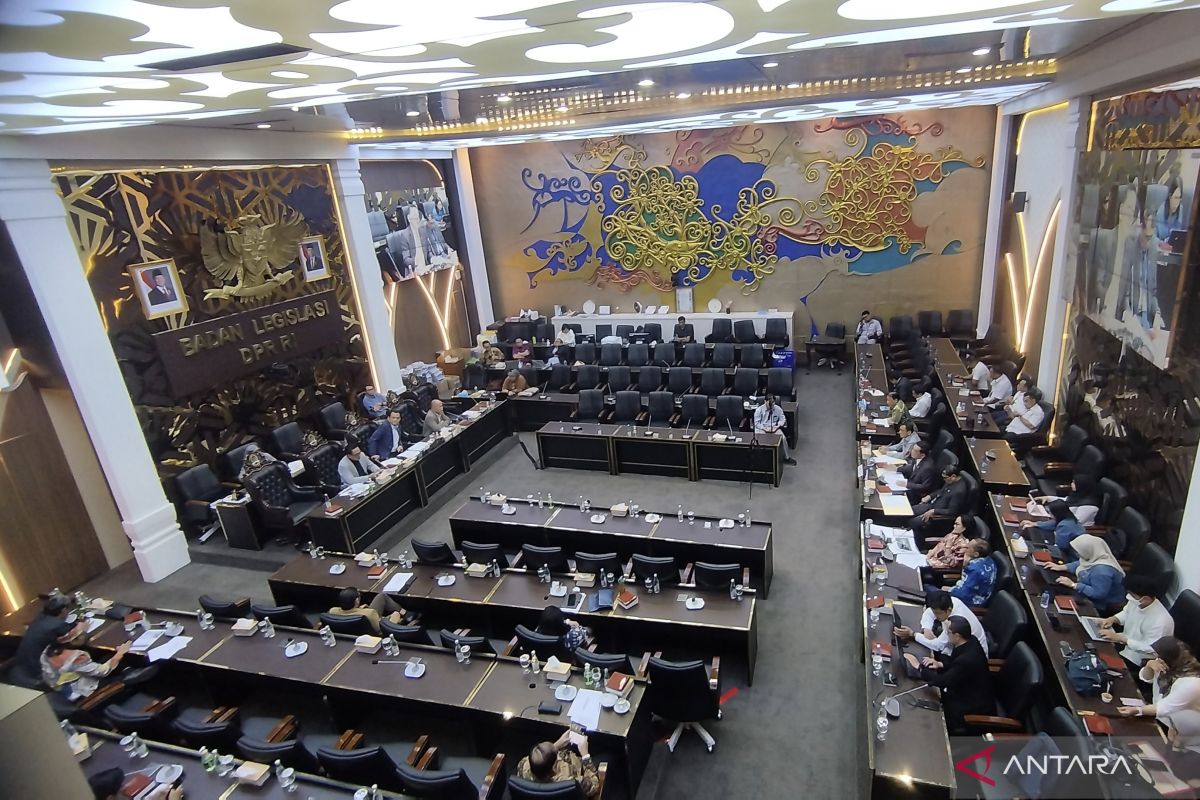
“The decision must be final and binding and therefore, if the alleged violation is proven, the imposition of light or moderate sanctions by the KY must be binding,” said Abdul Chair during a meeting with the DPR RI Legislation Body at the parliamentary complex in Jakarta.
In terms of the effectiveness of imposing sanctions, according to him, there must be regulations for light, moderate, and severe sanctions, formulated in the revision of the Law on the Judicial Commission.
Specifically for severe sanctions against judges, he said there must be joint handling through the Judges’ Honour Council forum as per the applicable rules, connected to the Integrated Judges’ Examination Forum.
In addition, the bill also needs to regulate so that there is no dualism of supervision between the Judicial Commission and the Supreme Court Supervisory Body.
According to Abdul, there must be a model formation referring to strengthening collaboration between the Supreme Court and the Judicial Commission.
“We propose that there must be joint examinations between Birowaskim and Bawas MA so that there is no more dualism of overlapping supervision. Then Birowaskim and Bawas MA are positioned as guarantors of quality for the implementation of the joint examination forum,” he said.
He added that the joint supervisory forum is very useful if there is an intersection or meeting involving criminal matters, up to related to violations of the code of ethics and judges’ behaviour guidelines.
“If that happens, then it must certainly be submitted and forwarded to the authorised parties,” he said.