
Judicial Commission Flags Dual Oversight of Judges with Supreme Court
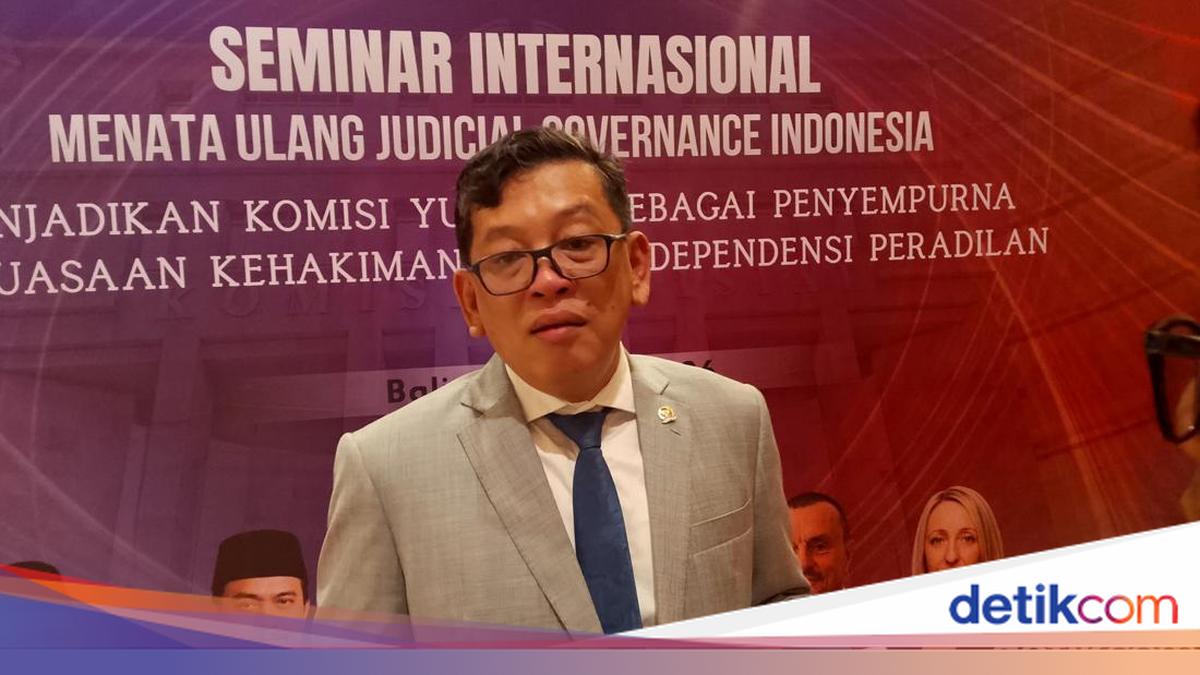
The Judicial Commission (KY) has raised concerns about the dual system for overseeing judges’ conduct, which it operates alongside the Supreme Court (MA). The division between internal and external oversight could lead to discord between the institutions and uncertainty over how alleged judicial misconduct is handled.
KY chair Abdul Chair Ramadhan said the Supreme Court has an internal oversight mechanism through its Supervisory Body, while the KY conducts external oversight of judges’ conduct. However, he said, the division of responsibilities has not been entirely harmonious.
“This dual oversight system has caused discord and a lack of direction, resulting in uncertainty in how oversight is carried out,” Abdul Chair said at an international seminar titled ‘Reorganising Indonesia’s Judicial Governance’ at The Trans Resort Bali in Badung, Bali, on Thursday (15 October 2026).
Abdul Chair said strengthening external oversight was not intended to take over the Supreme Court’s authority. Rather, it was aimed at ensuring effective oversight of judges’ conduct and maintaining judicial accountability.
He referred to Law No. 48/2009 on Judicial Power, saying Article 39 provides for internal oversight by the Supreme Court, while Article 40 provides for external oversight of judges’ conduct by the KY.
He said problems arise when the KY’s oversight findings do not lead to the expected follow-up. The commission’s recommendations for sanctions are not final or binding, as they remain recommendations or proposals submitted to the Supreme Court.
“The KY’s recommendations are not final and binding. They remain recommendations or proposals to the Supreme Court,” he added.
Abdul Chair said this meant the external oversight function was not operating optimally. He also referred to Constitutional Court Decision No. 004/PUU-2006, which, in his interpretation, had weakened the KY’s position within the constitutional system.
He argued that the KY’s status as a supporting institution meant its oversight role and the checks and balances on judicial power were not functioning as intended. In response, he called for revisions to the Judicial Commission Law to clarify and strengthen the commission’s duties, functions and powers.
“Revising the Judicial Commission Law is a necessity and an imperative,” Abdul Chair said.
He said strengthening the KY was not intended to set it against the Supreme Court. Instead, he said, the two institutions should build a collaborative relationship to safeguard the integrity of the judiciary.
“This is not a conflict, but a friendship,” Abdul Chair said.
He said judicial independence must go hand in hand with accountability. Oversight was not intended to interfere with judges’ authority to decide cases, but to ensure that their conduct remained consistent with the principles of integrity and ethics.
“Judicial independence must be accompanied by accountability. Without oversight, the goal of good and clean governance cannot be achieved,” he said.
Abdul Chair acknowledged that, in addition to regulatory issues, the KY faced constraints in its institutional structure, facilities and budget. He therefore hoped that revisions to the law would provide an opportunity to overhaul the system for overseeing judges.
Source: jawawa.id (https://jawawa.id/newsitem/judicial-commission-flags-dual-oversight-of-judges-with-supreme-court-1792065045)
Originally published by detikBali (https://www.detik.com/bali/berita/d-8708808/komisi-yudisial-soroti-dualisme-pengawasan-hakim-dengan-ma), translated from Indonesian