
Judicial Commission Ensures Transparent and Equitable Recruitment of Supreme Court Judge Candidates
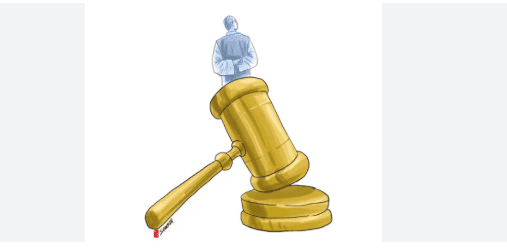
The Judicial Commission (KY) has assured that the recruitment process for Supreme Court judge candidates will proceed transparently and uphold the principle of equality for all participants, whether from career or non-career paths.
The Judicial Commission (KY) has emphasised its commitment to opening the selection for Supreme Court judges widely to the public. Head of the Judge Recruitment Division of the KY, Andi M. Asrun, stated that registration information has been disseminated to various groups.
“The announcement of the Supreme Court judge candidate selection intake has been widely distributed and shared with advocate organisations, judges, prosecutors, as well as NGOs monitoring the judiciary and anti-corruption activities. It is extremely open,” Andi said during a press conference in Jakarta on Monday (30/3).
He emphasised that the main principle in this recruitment is equality or equal recruitment without distinguishing participants’ backgrounds.
“The principle upheld is equality. Judges from career or non-career paths receive the same treatment. They simply follow the selection to become Supreme Court judges or ad hoc judges,” he said.
The KY hopes that this open recruitment system can attract the best candidates while enhancing public confidence in the selection process at the highest judicial institution.
Meanwhile, KY member Anita Kadir explained that based on a letter from the Deputy Chief Justice of the Supreme Court for non-judicial affairs, the needs for Supreme Court judges are distributed across several chambers.
“For the civil chamber, two people are needed; criminal chamber four people; religious chamber two people; and the administrative state/tax chamber specifically three people,” Anita clarified.
In addition, the Supreme Court has also proposed needs for ad hoc judges. The selection announcement was made online on 26 March 2026 and will end on 16 April 2026.
“For ad hoc judges at the Supreme Court, three people are needed, consisting of two ad hoc human rights judges and one ad hoc corruption judge,” she said.
In response to this request, she added that the selection is conducted through several strict and transparent stages.
“The selection stages include receiving proposals or registrations, administrative selection, eligibility tests such as quality, health, and personality selection, up to open interviews,” she explained.
After the entire process is complete, the KY will also determine the successful candidates and submit them to the House of Representatives for the next process. “We will determine the passing candidates and convey those proposals to the DPR RI,” she concluded.