
Judicial Commission develops ruling analysis instrument to strengthen sexual violence law implementation
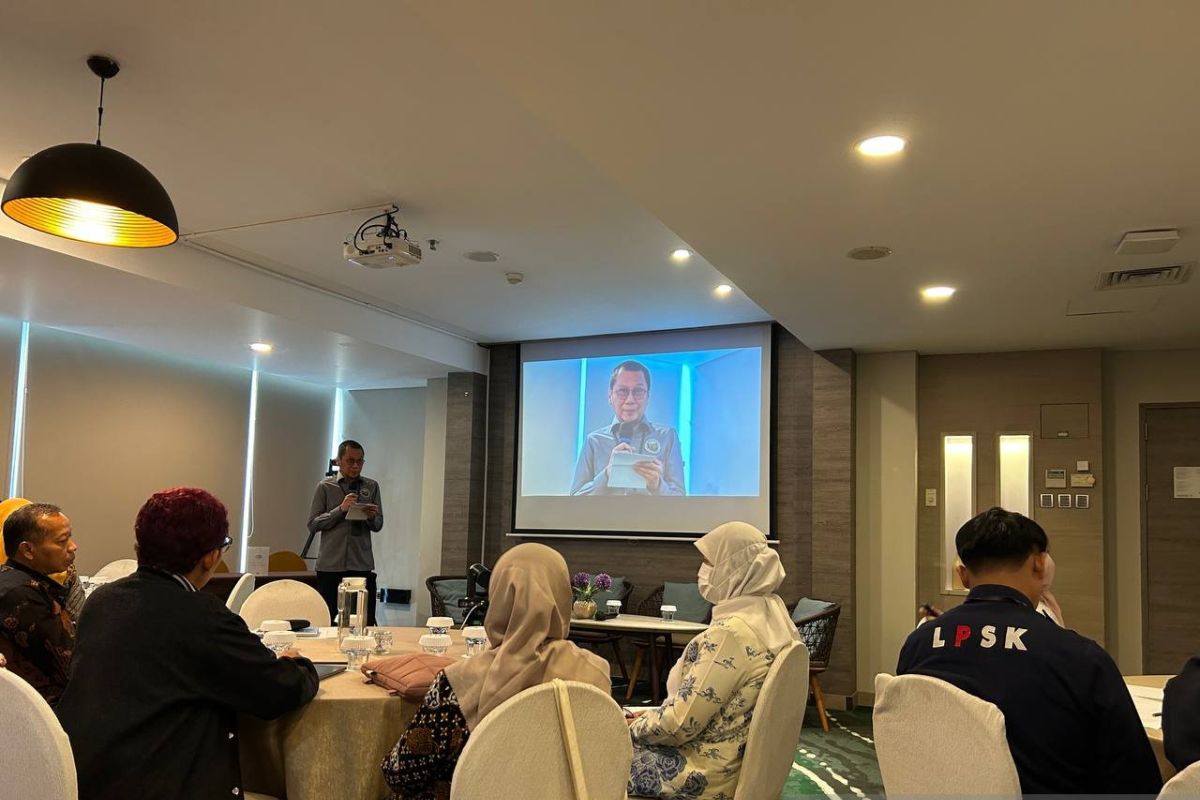
The Judicial Commission (KY) is developing an instrument to analyse judges’ rulings to strengthen the implementation of Law Number 12 of 2022 concerning the Crime of Sexual Violence (UU TPKS). KY Secretary-General Arie Sudihar stated during a workshop in Jakarta on Wednesday that the implementation of the UU TPKS continues to face various challenges, from the investigation and prosecution stages to court examinations. “This data serves as a reminder that efforts to prevent and handle sexual violence require the attention and continuous involvement of all stakeholders,” Arie said. He noted that according to Komnas Perempuan data, 376,526 cases of gender-based violence against women were recorded throughout 2025, an increase of 14.07 percent compared to the previous year. Arie explained that the development of the ruling analysis instrument is part of the KY’s authority to analyse court rulings that have permanent legal force, as stipulated in Article 42 of Law Number 48 of 2009 concerning Judicial Power. “This analysis is not intended to change or reassess the verdict, but to obtain a more complete picture of the application of the law in sexual violence crime cases,” he said. The results of the analysis will also serve as material for knowledge development and improving the quality of the judiciary. Therefore, the instrument must be objective, systematic, measurable, and accommodate the perspective of protecting and fulfilling victims’ rights. In developing the instrument, the KY is collaborating with the Australia Indonesia Partnership for Justice Phase 3 (AIPJ3) and held a workshop attended by representatives from the Indonesian Child Protection Commission (KPAI), the Witness and Victim Protection Agency (LPSK), the Supreme Court, civil society organisations, and academics. The KY hopes the activity will produce inputs and recommendations for refining the ruling analysis instrument, a matrix of discussion results from each group, and a final refined version of the instrument. The workshop featured three speakers: KY Member for Prevention and Judge Capacity Building for the 2020-2025 period Suka Violetta, Dr Niken Savitri, a lecturer at the Faculty of Law of Parahyangan University Bandung, and Head of the KY Analysis and Information Service Centre Juma’in. Responding to the presentations were KPAI Commissioner Dian Sasmita, Astriyani from the Supreme Court, and Ninik Rahayu. Head of the KY Analysis and Information Service Centre Juma’in said the workshop was a continuation of a cross-sector discussion on the supervision and implementation of the UU TPKS within the criminal justice system held on 30 June 2026. “The KY’s role regarding the UU TPKS is to monitor trials and analyse judges’ rulings that have permanent legal force,” he said. Meanwhile, KY Member for Prevention and Judge Capacity Building for the 2020-2025 period Suka Violetta emphasised the importance of each institution’s role in implementing the UU TPKS, particularly the KY as a supervisor of judges. She stated that judges must uphold justice without discriminating based on gender, while strengthening the perspective of protecting women as a group vulnerable to becoming victims of sexual violence. “The presence of the UU TPKS clarifies the protection of victims as the main objective,” she said. Suka also stressed the role of civil society as a strategic partner in protecting victims and overseeing the implementation of the UU TPKS to ensure it runs more effectively.