
Judicial Commission commits to overseeing implementation of Sexual Violence Law through trial monitoring
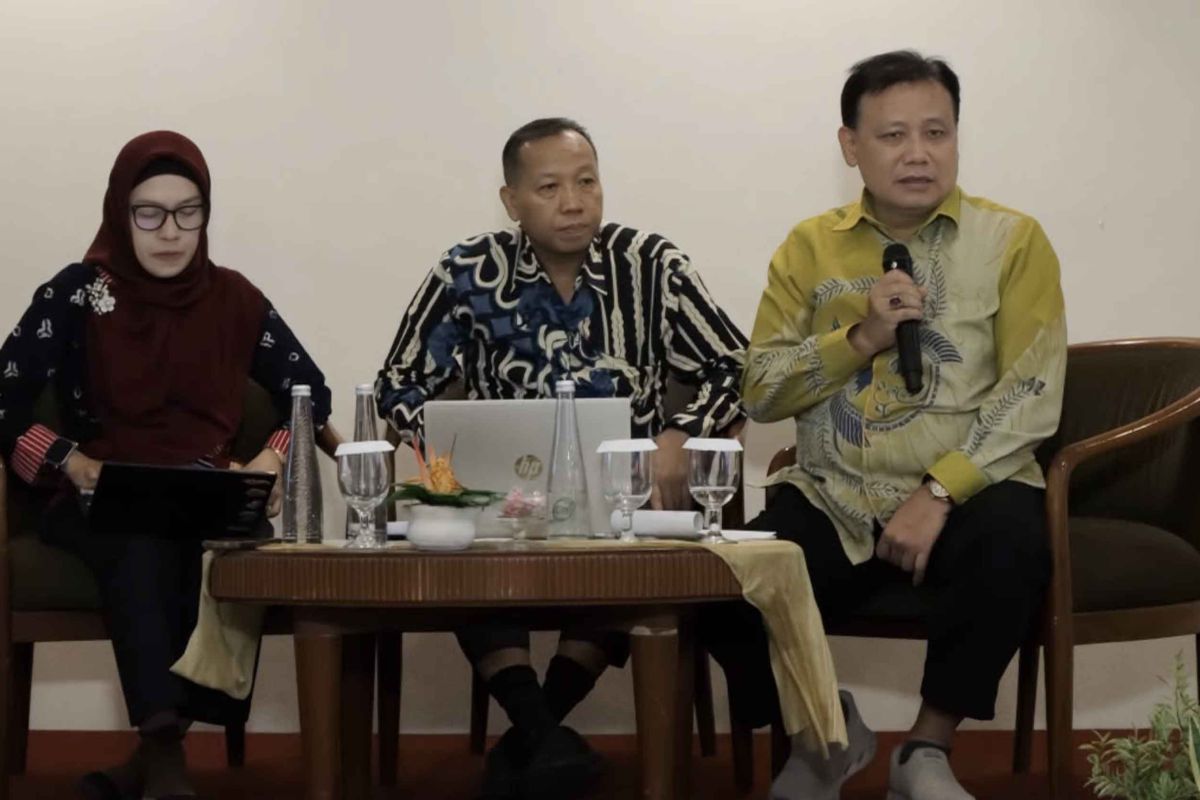
Jakarta (ANTARA) - The Judicial Commission has reaffirmed its commitment to overseeing the implementation of Law Number 1s of 2022 concerning Sexual Violence Crimes (TPKS) through the monitoring of court trials.
Abhan, a Commissioner for Judicial Supervision and Investigation at the Judicial Commission (KY), stated that trial monitoring aims to ensure that judicial power is exercised with integrity, professionalism, independence, and impartiality, while respecting human dignity in TPKS cases.
“The protection of victims must be a priority without sacrificing the principle of a fair trial (the legal principle that everyone has the right to justice),” Abund said in a statement confirmed in Jakarta on Thursday.
As a step towards optimising the supervision of the TPKS Law’s implementation within the judicial sphere, the KY is collaborating with civil society to conduct joint monitoring.
This collaboration was discussed in a limited discussion forum titled “The Role of Civil Society and the Judicial Commission Network in Supervising the Effectiveness of the Implementation of the Sexual Violence Crimes Law” in Semarang, Central Java, on Tuesday (15/9).
During the forum, the KY invited networks and civil society in Central Java to synergise and build collaborations to ensure the optimal application of the TPKS Law.
“Civil society is a strategic partner for the KY in building an ecosystem of judicial integrity,” said Abhan.
He explained that in monitoring trials, the KY focuses on three main aspects: the fulfilment of victims’ rights, judges’ compliance with the code of ethics, and the application of non-discrimination and gender justice principles during proceedings.
“Collaboration with civil society networks is key to strengthening the effectiveness of such supervision, given that civil society possesses extensive networks and field understanding regarding sexual violence issues across various regions,” he added.
Abhan further noted that there are three specific TPKS cases currently under the KY’s attention as a concrete form of the institution’s interest in regional law enforcement dynamics: monitoring pre-trial proceedings in Pekalongan, trials in Jepara, and cases still in the investigation stage in Pati.
He also expressed appreciation for the vital role of civil society in assisting victims and monitoring the progress of TPKS trials.
“This step is an important part of our collective effort to realise a fair legal process,” he said.
Findings from the discussion forum in Central Java revealed that the implementation of the TPKS Law in the field still overlaps with the Child Protection Law and the new Criminal Code (KUHP). Specifically, Article 6 of the TPKS Law appears to dominate, meaning the consistency of indictments, proof of elements, and proven articles still require further testing.
Furthermore, the fulfilment of victims’ rights and recovery has not been consistently reflected, as aspects such as restitution, psychological assistance, and victim recovery do not always appear explicitly in judicial considerations or verdicts.
Additionally, judges’ considerations regarding the victim’s perspective remain varied; power dynamics, vulnerability, disability, and victim trauma are not always analysed in depth, while responses to victim-blaming remain inconsistent.
Source: jawawa.id (https://jawawa.id/newsitem/judicial-commission-commits-to-overseeing-implementation-of-sexual-violence-law-through-trial-monitoring-1789654575)
Originally published by Antara (Indonesian) (https://www.antaranews.com/berita/5745885/ky-komitmen-kawal-implementasi-uu-tpks-melalui-pemantauan-persidangan), translated from Indonesian