
Judges Urge Attorney General's Office to Investigate Nadiem's Rp 4.87 Trillion Assets via Money Laundering
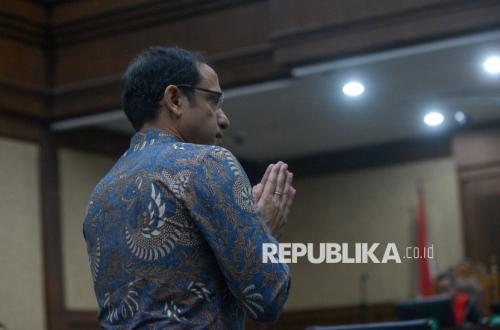
The panel of judges at the Jakarta Central District Court’s Corruption Court has urged the Attorney General’s Office to investigate the increase in assets belonging to former Minister of Education and Culture, Nadiem Anwar Makarim, amounting to Rp 4.87 trillion, through the mechanism of money laundering. This request is linked to the Chromebook corruption case.
Judge Eryusman stated that the public prosecutor’s request regarding Nadiem’s asset increase could not be granted as a replacement payment in the current case. This was in response to the demands submitted in the prosecutor’s sentencing request.
“The request for a replacement payment of Rp 4.87 trillion cannot be granted in the a quo case, not because the existence of disproportionate assets is denied, but because the chosen legal avenue is incorrect,” Eryusman said while reading the legal considerations during the verdict hearing at the Jakarta Central District Corruption Court on Tuesday (30/6/2026).
In the prosecutor’s sentencing demands, Nadiem was requested to be sentenced to an additional penalty of paying a replacement sum totalling Rp 5.67 trillion. This figure comprises Rp 809.59 billion and Rp 4.87 trillion.
The follow-up step of tracing these assets through a money laundering investigation, Judge Eryusman noted, could be carried out with the predicate offence under Article 3 of the Corruption Eradication Law, which has been proven in Nadiem’s case verdict.
Judge Eryusman revealed that the Rp 4.87 trillion was argued as a disproportionate increase in wealth based on the 2022 State Administrators’ Wealth Report and the reversal of the burden of proof mechanism under Articles 37 and 37a of the Corruption Eradication Law.
It was stated that the panel of judges understands the spirit of maximising state financial recovery that underpins the Attorney General’s Office’s actions. “However, that spirit must operate within the corridors of legality, legal certainty, and proportionality,” Eryusman said.