
Judge's Decision Not to Allow Nadiem to Speak After Verdict Considered Discretion, Not a Violation
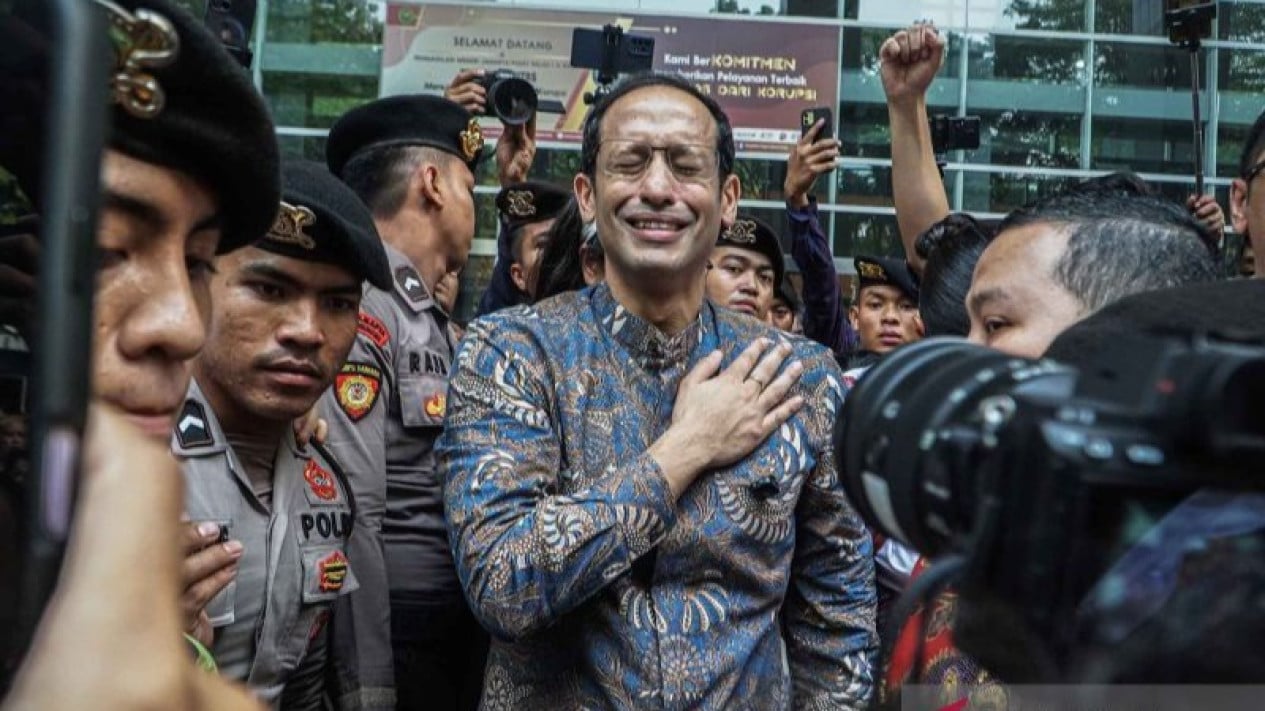
The controversy regarding the denial of an opportunity for defendant Nadiem Makarim to respond after the verdict was read at the Jakarta Central District Court continues to be a topic of discussion. Amidst the scrutiny, observers assess that the panel of judges’ action was part of their discretion in managing the trial proceedings, rather than a procedural violation.
Previously, the Spokesperson for the Jakarta Central District Court, M. Firman Akbar, explained that the absence of a question to the defendant regarding their stance on the verdict cannot automatically be considered an error in judicial practice.
Prosecutorial and judicial observer Fajar Trio opined that the panel of judges’ decision to immediately adjourn the trial after reading the verdict was understandable given the situation in the courtroom at the time. According to him, the courtroom conditions, which were packed with supporters, had the potential to escalate if the defendant were given the opportunity to respond directly.
‘We must look at the reality on the ground objectively. When the courtroom is already filled with emotional supporters, giving the defendant a stage to respond to the verdict spontaneously is actually very dangerous. The judge’s action to immediately close the trial was a precise preventive measure to maintain public order and prevent contempt of court,’ Fajar Trio told reporters, as quoted on Saturday, 4 July 2026.
He assessed that, from a trial management perspective, the judge has the authority to take steps deemed necessary to maintain order and prevent the situation from becoming unconducive.
Beyond the security aspect, Fajar also highlighted the psychological condition of a person who has just received a criminal sentence. He noted that the defendant needs space to digest the verdict without being under the pressure of the courtroom atmosphere.
‘There is a humanist aspect that often escapes the attention of observers. A person who has just heard a judge’s verdict is in a very vulnerable psychological condition or a state of shock. Forcing the defendant to immediately speak or make a crucial legal decision under the gaze of hundreds of emotional supporters is actually inhumane. That is not a healthy space for thinking,’ he said.
Fajar stated that the judge’s decision can instead be viewed as an effort to spare the defendant from psychological pressure and the urge to make statements influenced by the situation in the courtroom.