
Judge reveals defendant's role in Indramayu family massacre
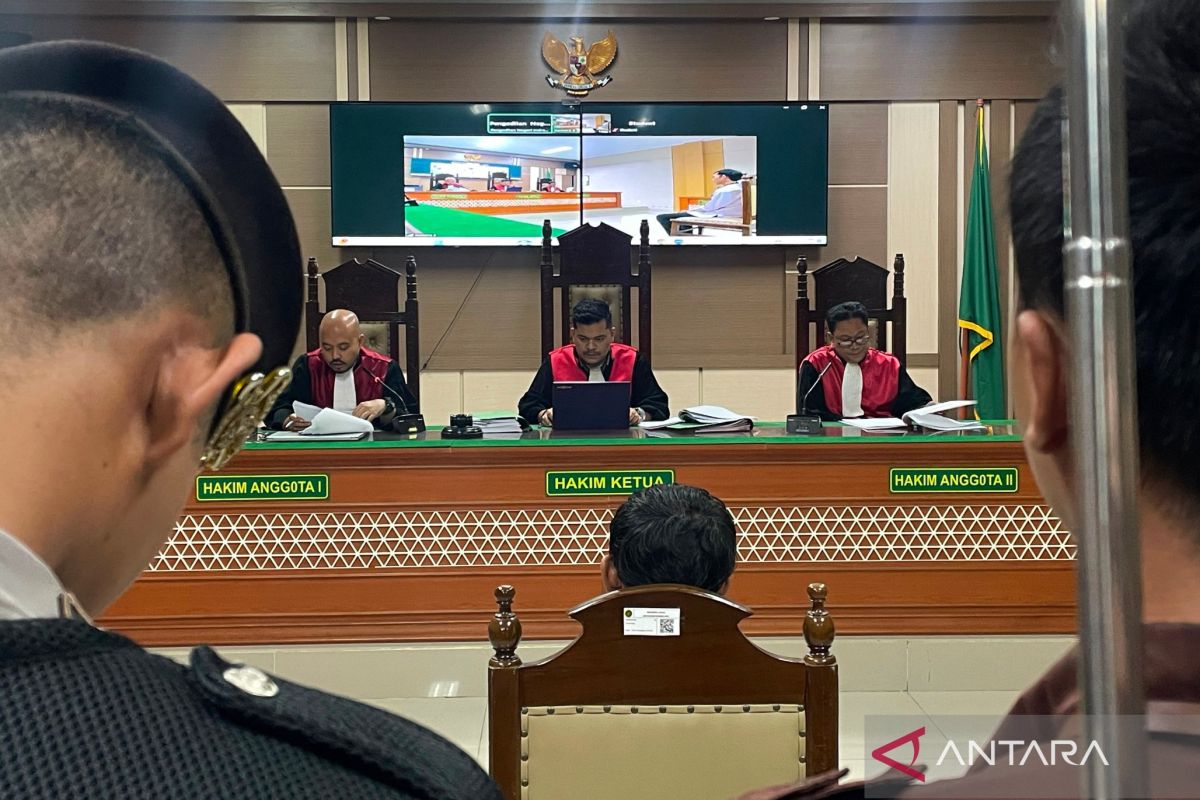
The panel of judges at the Indramayu District Court stated that defendant Ririn Rifanto played a direct role in the premeditated murder of five members of a family in Paoman Village, Indramayu Regency, West Java. Presiding Judge Wimmy D. Simarmata, while reading the verdict in Indramayu on Wednesday, said the conclusion was based on witness testimony, evidence, and legal facts revealed during the trial. “The defendant’s actions were not spontaneous or the result of an uncontrollable situation, but rather a series of actions carried out consciously, purposefully, and prepared in advance,” he said. According to the judge, the two suspects prepared an iron hammer as the crime weapon, determined the method of execution, visited the victims’ house together, and then carried out their respective roles during the murder. Based on trial data, the panel of judges stated that the two defendants visited the victims’ house in Paoman Village, Indramayu, on 29 August 2025. The judge said Priyo took the hammer from the vehicle and handed it to Ririn to be used in carrying out the killings. “From this series of actions, a close cooperative relationship and unity of will between the defendant and Priyo Bagus Setiawan is evident,” he stated. The judge said Ririn struck Budi Awaludin with the hammer. The same was done to Sahroni, Euis Juwitasari, and the victims’ child with the initials RK (7) until they were incapacitated. “Meanwhile, Priyo Bagus Setiawan took the victims’ child (an eight-month-old baby) to the bathroom and drowned them,” he said. He explained that after the victims were incapacitated, Ririn and Priyo took two mobile phones, a laptop, the victims’ gold jewellery, and an ID card in the name of Budi Awaludin. The panel of judges rejected the defendant’s defence claiming a lack of malicious intent, as intent must be proven through the series of actions before, during, and after the crime occurred. “The element of participation is not only seen from who carried out the physical act directly against the victim, but also the close cooperation, unity of will, and contribution of each party,” the judge said. On this basis, the judge declared that all evidence had met the provisions of Article 183 of the Criminal Procedure Code, rendering the defence counsel’s arguments unfounded and set aside. In the trial, the panel of judges sentenced Ririn to death with a 10-year probation period, while Priyo was sentenced to life imprisonment.