
JTA International Flags Shift in Investment to Vietnam, Saying Indonesia Must Strengthen Competitiveness
JAKARTA – Project economics, regulatory certainty and investment protection are among the factors foreign investors consider when choosing a destination for investment in the mining sector, including the nickel industry.
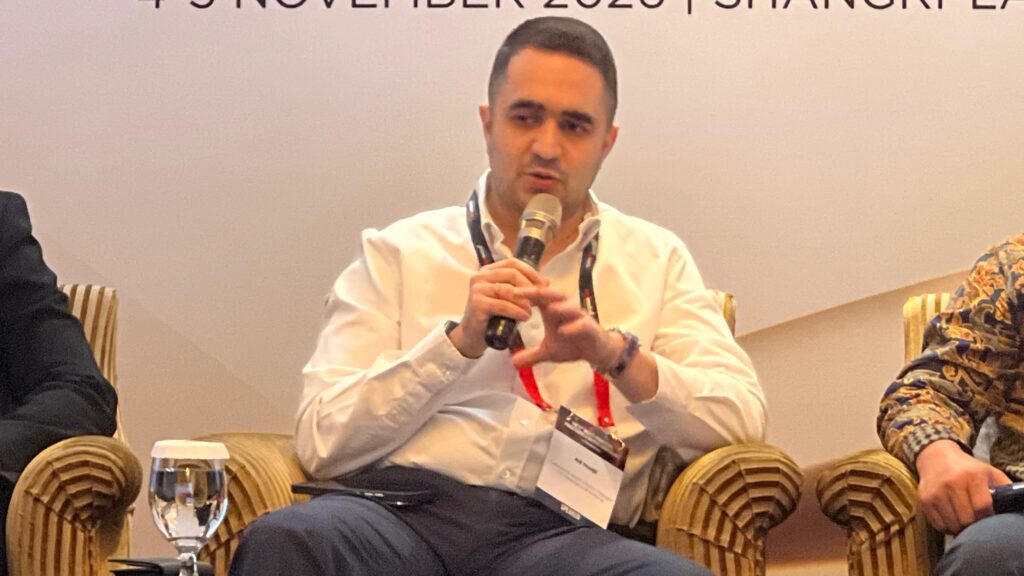
Ali Hadji, Investment and Portfolio Manager at JTA International Holdings, highlighted the importance of Indonesia strengthening its investment competitiveness amid regional competition. He questioned what was driving the shift in investment towards Vietnam, even though Indonesia has substantial nickel resources and significant potential to develop its industry.
Ali made the remarks during a discussion at the 5th Nickel Producers, Processors and Buyers Conference, organised by Petromindo at the Shangri-La Hotel in Jakarta on Wednesday and Thursday (4–5 November 2026).
According to Ali, investors’ decisions to enter a country are based on more than the availability of mineral resources or processing technology. They also consider policy, regulation, operating costs and a project’s ability to deliver competitive returns.
“When preparing a profit and loss statement, the question is whether the project is economically more competitive than those in neighbouring countries such as Malaysia, Singapore and others. At the same time, we are seeing a considerable shift in investment towards Vietnam. Why is that happening?” he said, as quoted by nikel.co.id on Friday (6 November 2026).
He questioned whether the change in investment flows was related to policy and regulation, or whether there were other fundamental issues that needed to be addressed to make Indonesia more attractive to investors.
“Is the issue policy and regulation, or is there a fundamental problem that needs to be fixed? These are the things foreign investors consider when entering a new market,” he said.
Ali explained that foreign investors generally conduct a thorough assessment of a project’s viability before deciding to invest. This includes evaluating its ability to generate cash flow, its return on investment (ROI) and its internal rate of return (IRR).
He said investment certainty and guarantees were even more fundamental concerns than the availability of funding.
“From a foreign investor’s perspective, money is not the main issue. Investment is not the main issue. The main issue is always guarantees. What can guarantee that investment?” he said.
He added that government regulations and policies played an important role in providing protection and certainty for investors, particularly when projects faced market pressures or instability in the industry.
Ali said investors needed a business environment in which they could operate rationally, with calculable risks and a clear value proposition.
“As long as that value proposition is clear, money is not a problem,” he said.
Product advantages and policy certainty
Alongside regulation and project economics, Ali highlighted the importance of nickel products having a competitive edge as technology develops and market needs change.
He said the development of the nickel industry should take account of end-use applications and products’ ability to compete with other materials. This matters because investors assess the sustainability of demand and the long-term relevance of nickel.
“What is the actual application? When you have something better, you choose it. When something is more cost-efficient, you use it,” he said.
He cited competition among battery technologies, including nickel-cadmium, lithium and graphite batteries. In this context, the industry needs to explain the advantages of using nickel over alternative materials in terms of cost, efficiency and technological sustainability.
“Why nickel? What is its competitive advantage, in the short and long term? Can that advantage be sustained? How will it develop in the future?” he said.
Ali said that, from the perspective of investors and financiers, projects with clear product applications, such as electric vehicle batteries, could be considered for investment because their potential uses could be assessed through economic analysis.
However, product advantages need to be backed by policies and regulations that provide stability and certainty for businesses.
“How regulations, policies and other supporting factors work is the responsibility of the Government of the Republic of Indonesia, to ensure stability and create certainty for investors,” he said.
He said he hoped such certainty would help investors make sound decisions and maintain their interest in Indonesia, preventing opportunities to develop the industry from shifting to neighbouring countries. Ali’s comments underscore that Indonesia’s substantial nickel resources need to be matched by a competitive investment climate. Reliable supply, cash-generating capacity, product advantages and investment protection are all important to building investor confidence in the sustainability of Indonesia’s nickel projects.
Source: jawawa.id (https://jawawa.id/newsitem/jta-international-flags-shift-in-investment-to-vietnam-saying-indonesia-must-strengthen-competitiveness-1793965821)
Originally published by nikel.co.id (https://nikel.co.id/2026/11/06/jta-international-soroti-pergeseran-investasi-ke-vietnam-indonesia-perlu-perkuat-daya-saing/), translated from Indonesian