
JPPI Urges Government to Review Plan to Hold Pupils Back a Year
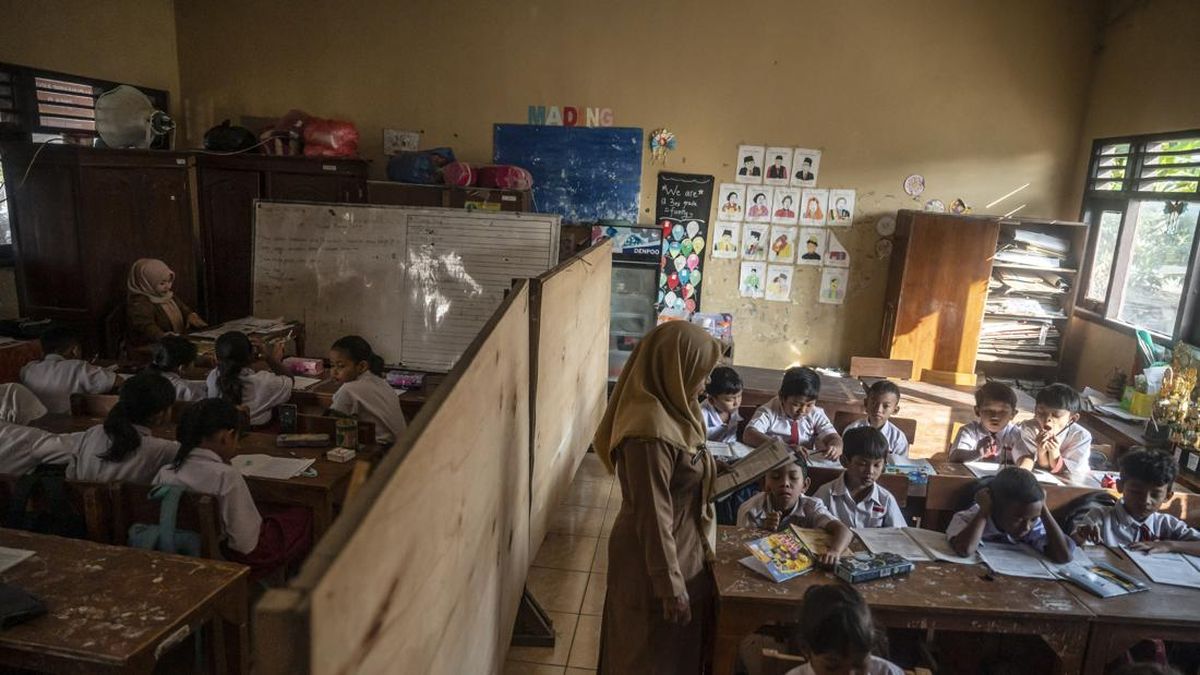
The Indonesian Education Monitoring Network (JPPI) has urged the government to review plans for a policy under which pupils would be held back a year, scheduled to take effect in the 2027/2028 academic year.
“ We are asking the government to examine the policy’s effectiveness in depth before it is implemented nationally,” JPPI National Coordinator Ubaid Matraji said in a text message on Tuesday (20 October).
Ubaid stressed that educational institutions should measure success not by the number of pupils held back, but by how many children improve their reading, writing, numeracy and other basic skills.
He said the threat of being held back would not resolve the problem immediately, and warned the government against misdiagnosing its underlying causes. Pupils who cannot yet read or do basic arithmetic are not necessarily unmotivated or lazy, he said.
“It may be that they did not receive quality teaching from the outset, teachers are overwhelmed, teaching methods do not meet their needs, or schools lack supporting facilities,” he said.
If children fail to attain the required competencies, Ubaid said, evaluations should not focus solely on the pupils themselves, but also on teachers, schools and the state education system. He warned that children should not be made to bear the consequences of systemic failures through a policy of repeating a year.
Repeating a year, he added, does not automatically improve a pupil’s abilities. “If the teaching methods, teacher quality and learning environment remain the same, what guarantees that a child will be more capable after repeating a year?” he said.
Ubaid said pupils should not be promoted automatically, but neither should they be held back without proper consideration. “The Ministry of Primary and Secondary Education’s task is not to punish children for falling behind, but to ensure that every child has the opportunity and support to catch up,” he said.
He said providing quality education for every child was the government’s responsibility. JPPI warned that the policy must not become a way for the government to shift responsibility for poor education standards onto pupils.
Ubaid offered several recommendations. First, the government should ensure there is an early-warning system and learning support. It should not wait until the end of the academic year to decide that a child is not ready to move up. Teachers should identify pupils who are falling behind from the start of the semester and provide extra lessons, remedial teaching and individual support where necessary.
Second, the government must provide sufficient funding, teachers and facilities. It should not impose stricter rules on children without improving the quality of education services. Teachers, meanwhile, should not simply be given new targets and administrative duties without adequate support.
Third, promotion criteria should be transparent, objective and fair, and assessment should not rely solely on exam scores. “We must ensure that children from poor families, children with disabilities, or children with learning difficulties do not become the groups most likely to repeat a year because they have not received support suited to their needs,” Ubaid said.
Fourth, he highlighted the importance of communication with and involvement of parents from the outset. Parents should be kept regularly informed about their children’s learning progress, he said, while cautioning that the policy must not shift the responsibility for education back onto families. Not all parents have the time, academic ability or resources to provide their children with extra tuition.
Source: jawawa.id (https://jawawa.id/newsitem/jppi-urges-government-to-review-plan-to-hold-pupils-back-a-year-1792543865)
Originally published by CNN Indonesia (https://www.cnnindonesia.com/nasional/20261021065104-20-1417743/jppi-minta-pemerintah-kaji-ulang-wacana-tak-naik-kelas-di-sekolah), translated from Indonesian