
Journeying Through the Savannah Towards 'Pearl of Maghreb' in Algeria
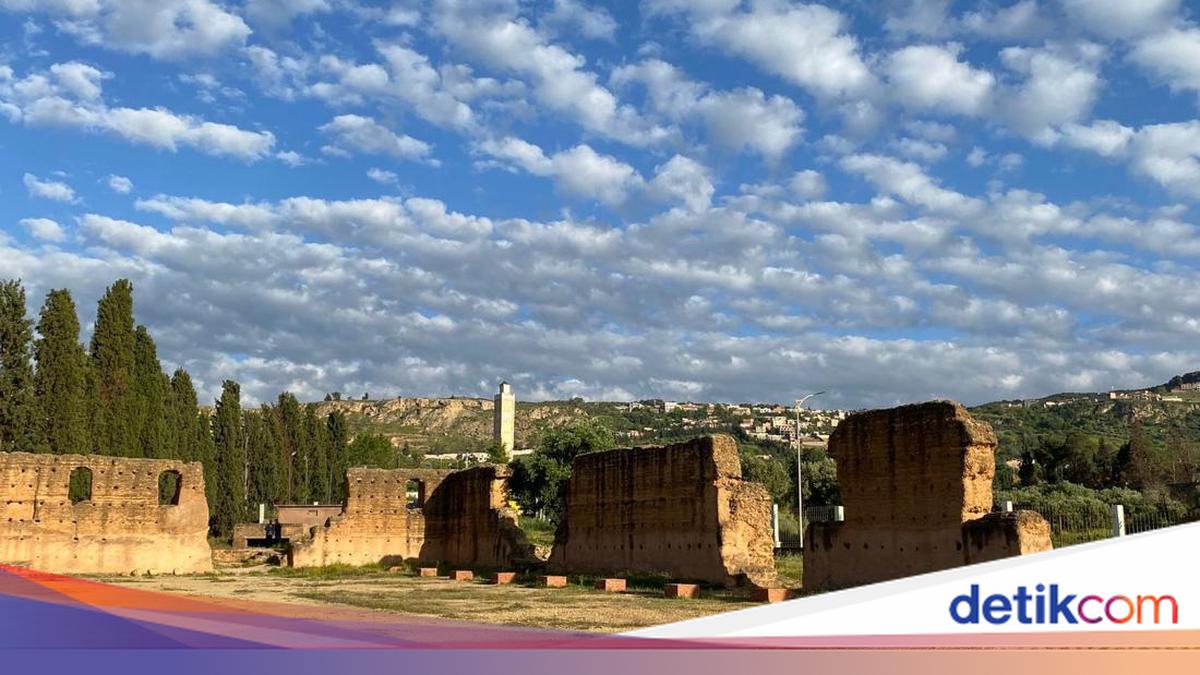
Tlemcen, one of the cities in Algeria, is located in North Africa and boasts a wealth of beauty at every turn. Tlemcen was built on the highest plain and once served as a place to observe enemy movements during wartime.
detikcom visited Tlemcen, which is located in the northwestern region of Algeria on Friday, May 15, 2026. This visit was part of the activities for the 25th International Tourism and Travel Fair or Salon International du Tourisme et des Voyages (SITEV).
The journey began at 9:00 a.m. local time from the center of Oran City, using a bus with dozens of journalists from other countries. The journey took more than three hours. This was because the trip to Tlemcen from Oran had to ‘cross’ the vast savannah.
The group’s bus had to pass through the East-West Highway, a toll-free highway that stretches approximately 1,500 km from the Tunisian border to the Moroccan border. Traffic on this road appeared light, with only savannah on either side, but occasionally small settlements of local residents could be seen.
“It is about 1,500 kilometers long because its coastline is about 1,200 kilometers long, but this highway goes up and down and winds around, it is not straight, which is why the distance is longer. And of course, this highway is free; we don’t have to pay anything to use any highway here,” said the guide.
The journey ended at the first destination, namely the Tlemcen City Government office at 12:30 p.m. local time. Here, the sun appeared brighter, but the weather was cool with strong winds. The streets in downtown Tlemcen were quiet, perhaps because Friday and Saturday are weekends in Algeria.
The group was greeted directly by the Mayor of Tlemcen, Youcef Bechlaoui. A warm greeting from Youcef, a brief conversation explained more or less about the city nicknamed ‘Pearl of Maghreb’.
This nickname is given because of its magnificent Islamic-Andalusian architecture and its role as a cultural and intellectual center in North Africa. The city holds about 70 percent of all of Algeria’s historical and architectural heritage.
During the Roman Empire, the city of Tlemcen was known as Pomaria. The name of the city then changed to Agadir, which in Berber means wall or fortress that protects the city.
“So, there are three cities that have ever been called Agadir. There is Tlemcen, which used to be called Agadir, there is the city of Agadir in Morocco, and there is Agadir in Spain, namely Cádiz,” explained the guide.
Because of its very high location, Tlemcen offers a 360-degree panoramic view. During wartime, guards could see up to a radius of more than 25 kilometers. They could monitor the entire valley, lowlands, and border towards Morocco. Enemy forces approaching from a distance would be immediately detected before they reached the city.
The journey continued to the Beni Add Cave, which is about 10 to 17 kilometers from downtown Tlemcen. This cave is one of the underground natural wonders because it combines ancient geological beauty with the dramatic history of Algeria’s independence struggle.
The limestone formations inside this cave are estimated to have formed over 65,000 years ago. The cave is 700 meters long and has a temperature of around 13 degrees Celsius. The cave itself is located at an altitude of 1,200 meters above sea level.
“According to many geologists, this is the second-largest cave in the world, after the one in Mexico,” he said.
The journey continued to Mansourah Castle, one of the archaeological relics of Islamic military architecture from the Middle Ages in North Africa. This site was built at the end of the 13th century, around 1299, by Sultan Marinid named Abu Yaqub Yusuf. This place was initially established not as a palace but as a giant military fortress to accommodate troops during a long siege of Tlemcen. The most famous relic on this site is its towering mosque minaret, which reaches 38 meters in height.
Today, visitors can still see the remains of defense walls made of compacted soil that surround the archaeological site. At its peak, these walls were reinforced by dozens of watchtowers to monitor enemy movements from a distance.
The detikcom journey continued until it ended in the Village of El-eubad, an ancient historical village, about 2 kilometers southeast of Tlemcen City. In the long history of North Africa, El-eubad is known as a spiritual center and the epicenter of Sufism in the Maghreb region.
In this village complex, there is a tomb of Sidi Boumediene or Shu’ayb Abu Madyan, a scholar, thinker, and great mystic born in Andalusia who was nicknamed the ‘Father of Sufism’ in North Africa. In 1198 AD, while on his way to Marrakech to fulfill the call of the Almohad Sultan, Shu’ayb fell ill and died on the outskirts of Tlemcen, then was buried on the slopes of El-eubad.
In addition, there is also the Sidi Boumediene Mosque with its distinctive Moorish-Andalusian architecture. This mosque has a 7-meter high main gate with ceramic mosaics and plaster carvings, onyx stone stairs.