
Journalistic Works Could Earn Royalties from AI, but Journalists May Not Get a Share
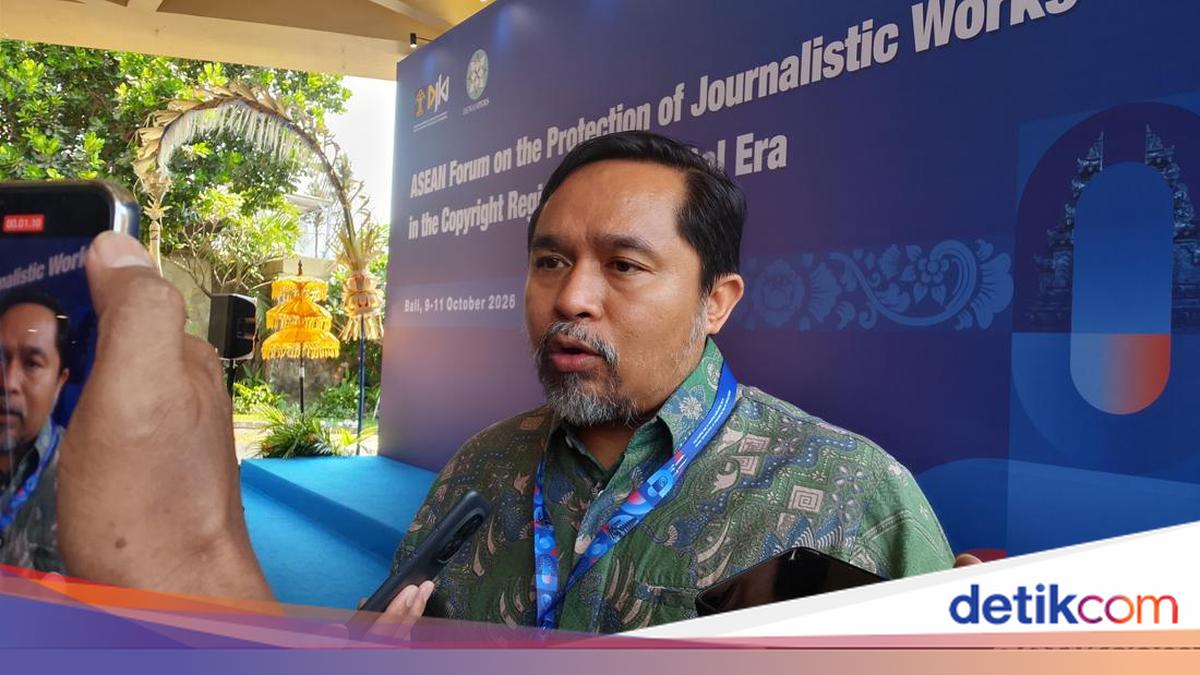
Journalistic works could generate royalties when used by digital platforms, including artificial intelligence (AI) services. However, journalists will not automatically receive a share, as the ownership arrangements and distribution of economic rights still need to be regulated.
The opportunity has emerged alongside plans to revise the Copyright Law. The government is pushing for journalistic works to be explicitly included in the copyright protection regime.
Law Minister Supratman Andi Agtas said the government had discussed the plan with the House of Representatives, the Press Council, media companies and relevant ministries.
“We want journalistic works to be brought under the copyright regime as soon as possible. If journalistic work is used, there will naturally be consequences for its economic rights,” was the substance of Supratman’s remarks at the forum.
Supratman said input from journalists and media industry participants was needed to formulate rules that address the challenges of using journalistic works in the digital era. The government is also encouraging consultation and cross-border cooperation, including within ASEAN.
Supratman also highlighted the imbalance in the global distribution of royalties. Of the 15 billion euros in royalties across various copyright sectors worldwide, around 80 per cent goes to Europe and North America. Asia receives about 12 per cent, while Africa gets around 1 per cent.
That figure represents Asia’s share of global royalty distribution, not Indonesia’s income from AI platforms’ use of journalistic works.
News Used by AI
Wahyu Dhyatmika, chairman of the Indonesian Cyber Media Association (AMSI), said AI platforms had been using information from news websites, but no clear compensation mechanism for publishers was in place.
“AI platforms use up-to-date information sourced from news websites, but there has been no communication with or compensation for news publishers,” Wahyu said.
In Wahyu’s view, recognising journalistic works under copyright law could create new business models for the media industry. Platforms using journalistic content are expected to provide compensation through a royalty mechanism.
“We hope this revision of the Copyright Law can create a new business model for the media, in which compensation or royalties are paid when AI platforms use news,” he said.
He said the issue was becoming more pressing because users could now obtain news summaries through AI without visiting the media websites that produced the information. This could reduce traffic and advertising revenue for media outlets.
Yet producing news entails costs, from reporting and verifying information to editing. AMSI believes the use of journalistic works by digital platforms should be accompanied by a clear compensation mechanism.
AMSI Plans Royalty-Management Body
Wahyu said AMSI planned to promote the establishment of a Collective Management Organisation (LMK) to administer royalties for journalistic works. The body is expected to help media outlets assert their economic rights over work used by digital platforms, particularly small and local outlets.
AMSI also wants to build a database assigning a unique identifier to each journalistic work. The data could be used to track how works are used and provide a basis for calculating royalties.
However, the division of royalties between media companies and journalists still needs to be worked out. Recognising journalistic works as copyright-protected subject matter will not automatically mean that every journalist receives payment directly.
Wahyu said the revision of the Copyright Law was an initiative of the House of Representatives. He said the government team, comprising the Ministry of Law, the Ministry of Communication and Digital Affairs, and the Ministry of Creative Economy, had completed its part. He hoped parliamentary deliberations could be completed this year.
Press Council Highlights Digital Economy
Press Council chairman Komaruddin Hidayat highlighted how digital platforms and AI were changing the flow of information. Much of the information circulating online, he said, originated from journalistic work, but the economic benefits did not necessarily return to media outlets and journalists.
“Information is initially produced by journalists. But when it circulates and is used by digital platforms, the advertising revenue does not necessarily return to the media outlets that produced it,” was the substance of Komaruddin’s remarks.
Komaruddin said the Press Council did not oppose technological developments or social media. However, these developments needed to be matched by a fairer ecosystem for media companies and journalists.
He said the sustainability of the press industry was linked to the quality of information received by the public. If media outlets struggled to maintain their business models, newsrooms’ ability to fund reporting and uphold journalistic standards could be affected.
Protecting the economic rights attached to journalistic works is therefore an important issue in shaping the digital ecosystem.
Although the Copyright Law revision is expected to pave the way for royalty payments, several matters still need clarification. These include the definition of protected journalistic works, who holds the economic rights, the use of news to train AI, and licensing and payment mechanisms.
If the proposed rules are agreed, journalistic works could receive stronger economic protection. But who receives royalties, how they are divided and how platforms are required to pay will depend on the final provisions.