
Jordan Hunts Church Shooting Suspects After Attack Kills Nine
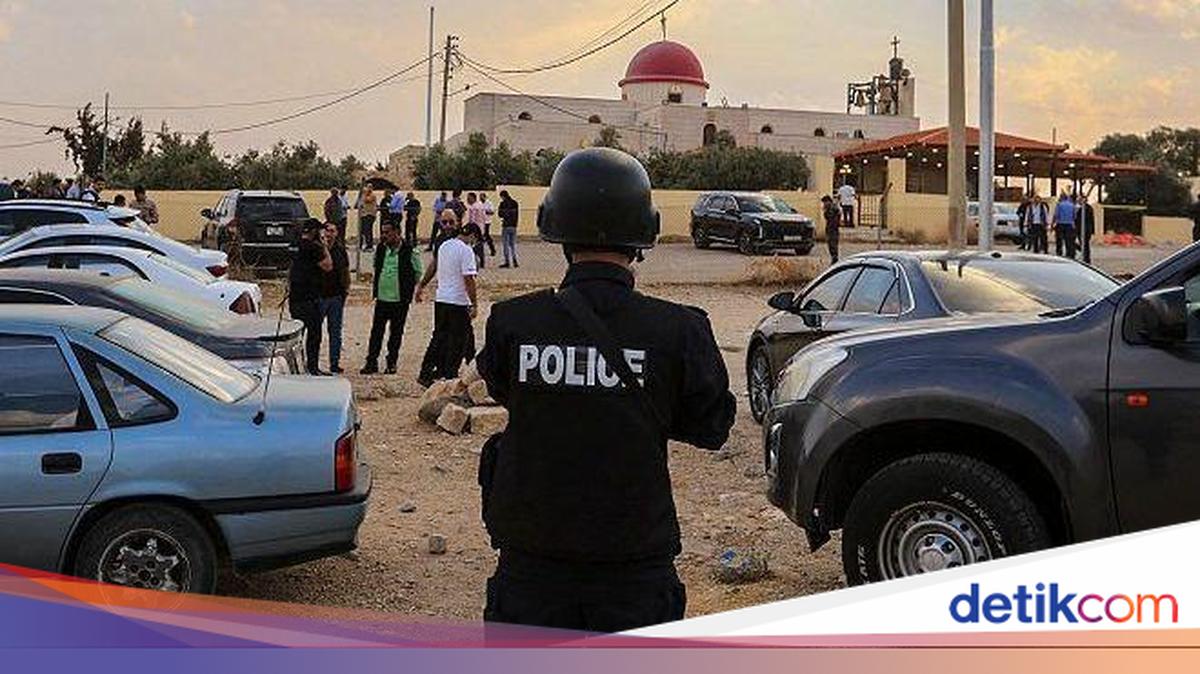
Jordan’s King Abdullah II has ordered security forces to act decisively and hunt down those responsible for an attack on a church in Karak province that killed nine people and injured 40.
The Greek Orthodox Patriarchate of Jerusalem condemned the attack, saying it would not undermine unity between Muslims and Christians in Jordan. It said that if the aim was to drive the Christian community from its land, the attack would only strengthen their attachment to it.
Separately, King Abdullah II said there could be “no room for leniency when it comes to the lives of Jordanian citizens”. He promised to pursue those behind the armed attack, speaking at a meeting of the National Security Council.
The attack targeted mourners at a funeral service at a Greek Orthodox church on Friday, 23 October. The King described it as a “shameful act of terror, alien to Jordan’s values of chivalry and harmony”.
“The security and safety of Jordanians is a red line,” he said, adding that “the hand of justice will reach every terrorist”.
Residents and security forces gathered outside a Greek Orthodox church in Hammoud village, Karak province, Jordan, following the shooting on Friday, 23 October. (AFP via Getty Images)
He also stressed that the attack would not intimidate Jordanians or undermine national unity. The King ordered security forces to hunt down and hold the perpetrators accountable, and to counter rumours and misleading information that could fuel fear and division.
As of Sunday, 26 October, security forces were still searching for the attackers. BBC Arabic journalist Majdi Qassous reported checkpoints on the road connecting Karak to the capital, Amman. Security personnel were stopping vehicles and checking passengers’ identities, particularly those of men.
The latest figures put the death toll from the shooting at the Greek Orthodox church in Hammoud village at nine.
‘The gunfire was extremely loud’
A BBC Arabic team visiting Prince Ali Military Hospital in Karak on Saturday morning, 24 October, spoke to several injured people receiving treatment.
One witness, Nadia Halsa, described the incident as an “earthquake”. She said the gunfire was extremely loud. When she left the church to look for her son, she found several victims lying in the church grounds.
Another witness, Sasha Amarin, who was being treated for injuries to her abdomen and leg, said she initially thought the shots came from a family dispute. But when she went outside and saw what had happened, she realised the situation was far more serious.
Witnesses described panic inside the church as people ducked beneath the pews for shelter and moved away from the windows. Prayers and screams rang through the building as some congregants tried to escape.
Khalid al-Mdanat, who was in the church at the time, told BBC Arabic that the attack lasted about 15 minutes, with “people trying to escape while the shooting was still going on”.
“People began pushing against each other and throwing themselves to the floor,” he said. “Some tried to take cover, some stayed with family members who had been hit, and others held their children tightly or helped friends who were with them in the church.”
He said the attackers left through the church entrance and fled in a pick-up truck, continuing to fire as they drove away.
‘It was as if a war had just broken out’
Another witness said: “I heard a sound that made it seem as if a war had just broken out.
“At first, I thought it was an electrical short circuit. But when I looked outside, there were people lying there, injured. It was a horrific sight.”
A woman who was inside the church said the sound of an explosion came seconds after prayers had been said.
“Then there was a burst of automatic gunfire and the sound of glass breaking. That was when we realised something was happening.
“People began screaming.”
BBC Arabic journalist Majdi Qassous said his parents were at the church attending the funeral when the attack happened. At about 2.15pm local time, he received a call from his mother telling him there had been a shooting in the church grounds.
According to his family’s account, gunmen entered the outer courtyard and fired at people there.
“People tried to shelter beneath the church pews and move away from the windows. Prayers, screams and panic could be heard throughout the building, while others tried to flee,” Qassous said.
The injured were taken to Prince Ali Military Hospital in Karak. Outside the hospital, crowds of relatives and residents gathered in mourning and shock.
‘A terrorist operation by an extremist group’
Jordanian Prime Minister Jaafar Hassan declared three days of national mourning, beginning on Friday, 23 October, with flags flown at half-mast.
King Abdullah II also visited the injured on Friday and said Jordan would respond to the “terrorist act targeting Karak with the harshest penalties”.
“The blood of Jordanians is precious, and we will strike with an iron fist anyone who attacks this country,” he said.
Prime Minister Jaafar Hassan said the attack was the result of “the ideology of takfiri terrorism and blinding extremism”. Asked whether the attackers were linked to a particular armed group, government spokesman Mohammad Al-Momani said the matter remained under investigation and would be announced once there was clear evidence.
Interior Minister Mazen Al-Faraya described the incident as a “terrorist operation” carried out by “a group of extremists”. He said security forces were continuing their efforts to track down the attackers.
Jordan’s Public Security Director, Obaidullah Al-Maayta, said it was too early to identify the suspects. The investigation was ongoing, and it was not yet clear when it would be completed.
State television later broadcast footage showing three armed men firing towards the church before moving towards its entrance while continuing to shoot.
Security tightened
Prime Minister Jaafar Hassan chaired a security meeting in Karak after the attack and said the perpetrators would not escape punishment. He said all security resources had been deployed to find the attackers and bring them to justice.
He also promised firm action against anyone inciting division.
Amman’s Attorney General, Hassan Al-Abdallat, ordered a ban on publishing information about the investigation, except for material released by official government media under the supervision of the relevant ministry.
The Public Security Directorate also warned the public against sharing unverified information about the incident.
Church: Attack will not undermine national unity
The Greek Orthodox Patriarchate of Jerusalem condemned the attack on St George’s Church in Hammoud village, saying it would not harm unity between Muslims and Christians in Jordan.
In a statement, the Patriarchate said that if the aim of the attack was to drive the Christian community from its land, it would instead strengthen their attachment to it. The institution also called for church bells to be rung simultaneously in Jordan and Palestine at midday on Saturday in memory of the victims.
Greek Orthodox priests at the scene of the shooting at a church in Hammoud village, Karak province, Jordan, on Friday, 23 October 2026. (AFP via Getty Images)
The attack was also condemned by the United Nations, Lebanese President Joseph Aoun and Greek Prime Minister Kyriakos Mitsotakis, who said attacks on places of worship ran counter to human values.
Aoun, who is a Christian, denounced what he called a “heinous terrorist attack” on the church. In a statement cited by Lebanese media, he said the attack “profanes the sanctity of death and funeral rites and stands against all religious and human values”.
Government figures indicate that Christians make up about two to three per cent of Jordan’s population, most of whom are affiliated with the Orthodox Church.
One witness said between 150 and 200 people were inside and around the church when the shooting took place. (Reuters)
Three attackers carrying handguns
CCTV footage verified by the BBC appears to show three armed men moving from a street towards the church. Two of them appear to enter what is believed to be a vehicle entrance to the church compound.
They then briefly retreat before returning with a third man. All three appear to be carrying handguns.
Separate footage believed to have been recorded after the attack shows dead and injured people lying at the scene amid the chaos. The BBC has not been able to independently confirm the attackers’ identities or whether they were affiliated with any group.
One account said the situation continued to deteriorate for about 10 minutes without stopping. After managing to leave the church, the witness saw many victims in the church grounds.
Jordan’s Interior Minister, Mazen Al-Faraya, described the incident as “sad and horrific” and “unprecedented in the history of the Hashemite Kingdom of Jordan”.
Security was tightened around the hospital treating those injured in the Karak attack, amid anger and grief among residents, particularly the families of those killed and wounded.
Many people appeared shaken as streets around the hospital were closed. Some had to park their vehicles far from the site and continue on foot. Security measures were also tightened ahead of King Abdullah II’s visit to the injured.
Tension persisted around the hospital. Crying and shouting could be heard as bereaved families mourned their loved ones.
Many residents appeared shocked, frightened and angry. Some expressed disappointment at what they called a “failure to take firmer action against the terrorists”.
Karak is one of Jordan’s areas with a sizeable Christian community, although most of the country’s population is Muslim. Violence of this kind is rare in Jordan, though the country has experienced several deadly attacks in the past.