
Jolla Reduces Storage on Jolla Phone 2026 Due to Surging Component Prices
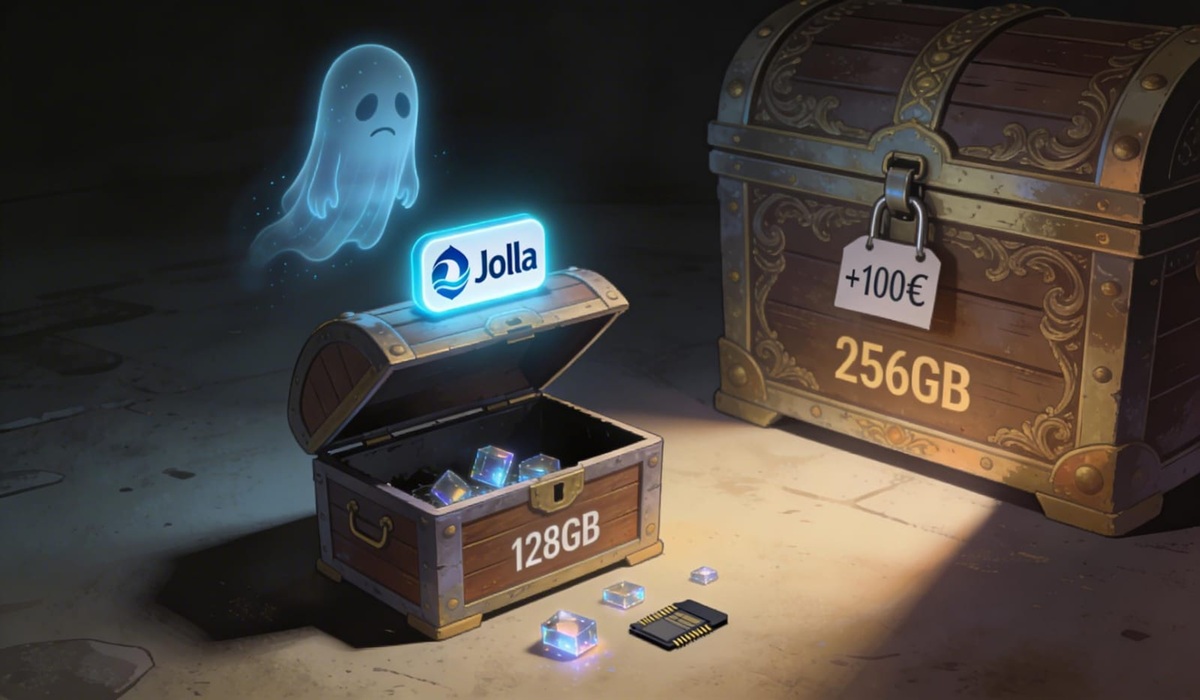
Jolla has announced a significant change to the configuration of its latest device, the Jolla Phone (2026), in response to increasing industry pressures, particularly related to the surge in memory component prices.
This step reflects the challenges faced by small-scale manufacturers amid fluctuations in the global supply chain, forcing the company to compromise between specifications and selling price.
Storage Reduced, Price Unchanged
Jolla has confirmed that starting from the latest production batch titled “Sep-II”, the base model of the Jolla Phone (2026) now comes with 8GB RAM and 128GB internal storage.
This configuration represents a reduction compared to the previous version, which offered larger storage. Nevertheless, the device’s price remains at 649 Euros, or approximately 700 US dollars.
The company cites the sharp rise in memory component prices as the main reason behind this decision. The situation is even described as an unprecedented challenge in the smartphone industry.
Upgrade Options Still Available
For users wanting higher specifications, Jolla still provides upgrade options. Consumers can add 100 Euros to obtain a configuration with 12GB RAM and 256GB storage.
Thus, the price for the highest variant now reaches around 749 Euros, equivalent to 808 US dollars.
Configuration and Price Evolution
The above data shows changes in configuration from the pre-sale period to the latest batch. Initially, the device was offered with high specifications (12GB/256GB) at a promotional price that was lower.
However, upon official launch, the base configuration was lowered to 8GB/256GB with a higher price. Now, in the Sep-II batch, storage has been further reduced to 128GB without a price change.
Key Specifications of Jolla Phone (2026)
The Jolla Phone (2026) continues to rely on the Linux-based Sailfish OS, which is the company’s main hallmark. The device is also powered by the MediaTek Dimensity 7100 chipset to support daily performance needs.
Although other core specifications remain unchanged, the reduction in storage capacity has become the main focus because it directly impacts the value received by consumers.
Jolla’s decision reflects the pressures now felt across the smartphone industry, especially for players in the niche segment.
Although it has received positive responses from the Sailfish OS user community, the reality of global semiconductor prices has forced the company to make adjustments.
For consumers, this means the initial price remains stable, but the value of the offered specifications has declined. Users now face a choice between an independent operating system ecosystem and compromises on the hardware side.
This step by Jolla also affirms that global market dynamics can directly influence product development direction, even after the device has been officially launched to the public.