
Jokowi Responds to Gibran Not Sitting Next to President Prabowo
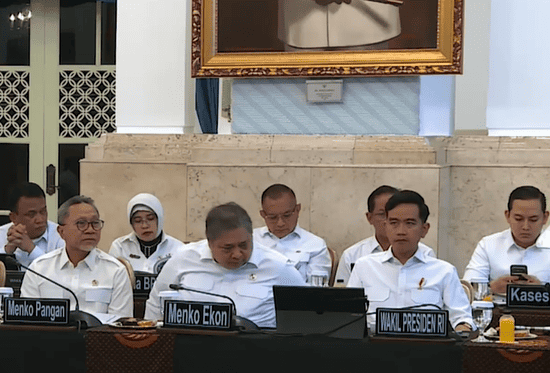
Indonesia’s 7th President Joko Widodo (Jokowi) has also paid attention to the controversy surrounding the seating position of Vice President Gibran Rakabuming Raka, who was not seated beside President Prabowo Subianto during the Plenary Cabinet Session (SKP) at the State Palace on 20 July.
According to Jokowi, the rules regarding the vice president’s position in state events are already clearly stipulated in the constitution and its derivative regulations. He asked all parties to refer to the applicable rules.
“(Regarding) sitting in a different position from the president, the vice president’s position is constitutionally clear, it is already clear. And the Protocol Law is already clear, just follow it,” said Jokowi when answering reporters’ questions on Wednesday (12/8/2026).
Although he emphasised the importance of complying with the rules, the former Governor of DKI Jakarta did not elaborate further on the specific articles or points in the state regulations governing the seating arrangement. He merely reiterated that existing procedures should be followed.
In addition to responding to the protocol matter, Jokowi also dismissed speculation about a rift in the relationship between President Prabowo Subianto and Vice President Gibran Rakabuming Raka following the seating position incident. He asserted that coordination and the relationship between the two remain harmonious.
“Their relationship is fine,” Jokowi said briefly.
As is known, the SKP moment on 20 July drew public attention due to an unusual change in the seating formation. The following are details of the formation differences that became the subject of discussion:
In the session, President Prabowo’s table was placed singly in the centre, facing all cabinet members. Gibran Rakabuming Raka, who usually sits to the right of the President, this time appeared to sit in the same row as the cabinet ministers, which sparked various speculations in the public sphere regarding state protocol and the relationship between the two leaders. (WJ/I-1)