
Jokowi Attends 81st Indonesian Independence Day Ceremony in Traditional Balinese Attire
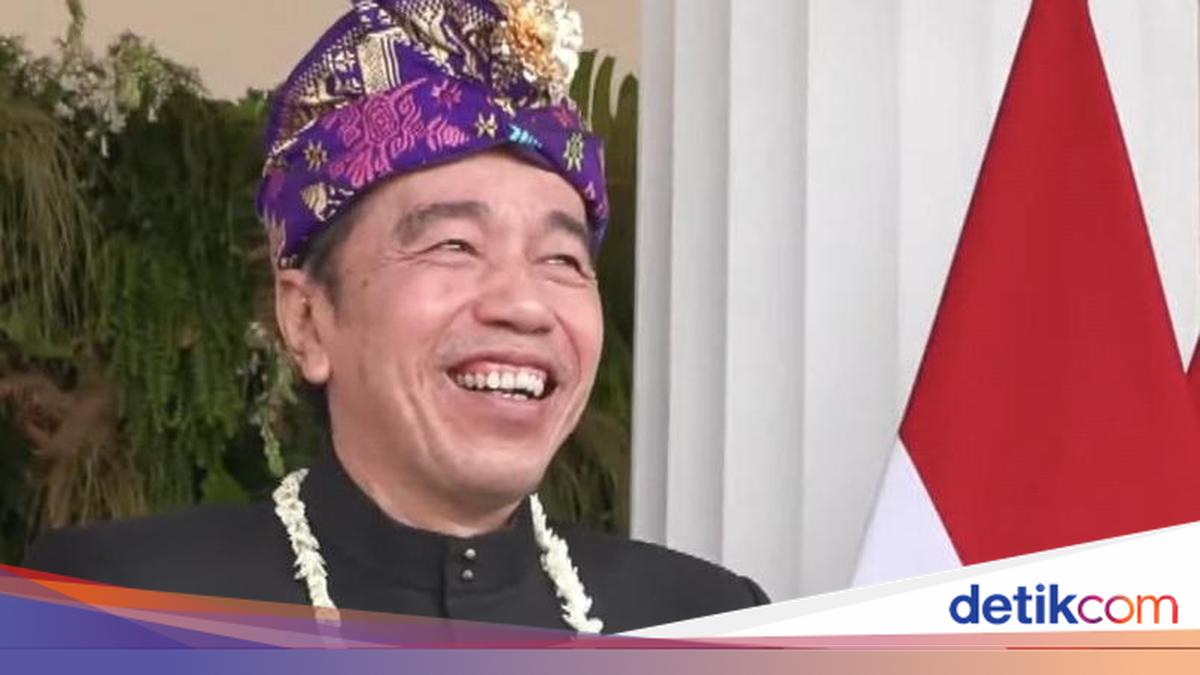
Seventh President Joko Widodo (Jokowi) attended the ceremony commemorating the 81st anniversary of Indonesia’s independence. Jokowi was present wearing Balinese traditional attire known as payas madya.
According to Bali Governor Regulation No. 79 of 2018 concerning the Day of Wearing Balinese Traditional Attire, Article 4 stipulates that the elements of Balinese traditional dress for men must at least consist of a destar (udeng), shirt, kampuh, sash, and kamen.
In his appearance, Jokowi was seen wearing a purple udeng adorned with a gold rose-like ornament in the centre.
Jokowi also wore a long-sleeved black safari shirt with black and gold buttons. On the left side of his chest there was a small pin shaped like a kris.
Meanwhile, the kampuh or saput worn by Jokowi appeared to be Balinese songket fabric. The garment featured a variety of motifs and colours, such as blue, orange, green, and pink, set against a dark brown background.
Underneath, Jokowi wore a light brown kamen. His appearance was completed with plain black slip-on shoes.
Getting to Know Balinese Traditional Attire
The following are three types of Balinese traditional clothing and their functions, as reported from the Ministry of Education and Culture website and the book Encyclopaedia of Archipelago Clothing: Aceh to D. I. Yogyakarta (2021) by R. Toto Sugiarto et al.
- Payas Agung
The most complete and luxurious-looking Balinese traditional attire is Payas Agung. In the past, this clothing was worn by the brahmana, ksatriya, and waisya classes.
This attire is now used by brides and grooms in wedding ceremonies. Payas Agung represents beauty, and its bright colours symbolise happiness and joy.
Each region has its own distinctive characteristics, yet still adheres to the established conventions. For example, the Payas Agung of the Medeeng Singaraja (Buleleng) tradition differs from the Payas Agung of the Asak Karangasem tradition.
The bride wears a tapih or sinjang prada in colours other than yellow and white, a kamen prada, a prada belt, a toros belt, and a yellow prada sash.
Meanwhile, the groom wears accessories including a gelung agung and rumbing in the ears, a badong, nagasatru and kana bracelets, and a red-eyed ring. The clothing worn consists of a kancut prada cloth, kampuh prada, and umpal prada.
Payas Agung is also worn by the manggala/pangarep who is consecrated in a manusa yadnya ceremony and as the yajamana in other ceremonies.
- Payas Madya
Payas Madya is a mid-level traditional attire. According to various sources, this clothing is commonly called Payas Madya and its form is neither too luxurious nor too simple.
Madya traditional attire is usually worn by the Balinese people to attend traditional ceremonies. In general, Madya traditional clothing is worn by the Balinese in a number of religious ceremonies, such as Hindu holy days, cremation ceremonies, and prayers at temples.
- Payas Alit/Payas Nista
Payas alit or payas nista is the simplest Balinese traditional attire and can be worn daily, including for daily traditional ceremonies at temples.
What is typically worn consists only of a kebaya and songket. Men also wear only a white shirt accompanied by a kamen and udeng.
Source: jawawa.id (https://jawawa.id/newsitem/jokowi-attends-81st-indonesian-independence-day-ceremony-in-traditional-balinese-attire-1786949482)
Originally published by detikBali (https://www.detik.com/bali/berita/d-8622233/jokowi-tampil-dengan-busana-adat-bali-saat-upacara-hut-ke-81-ri-di-istana), translated from Indonesian