
Joint Task Force Conducts Raid and Mass Urine Tests at Negara Detention Centre
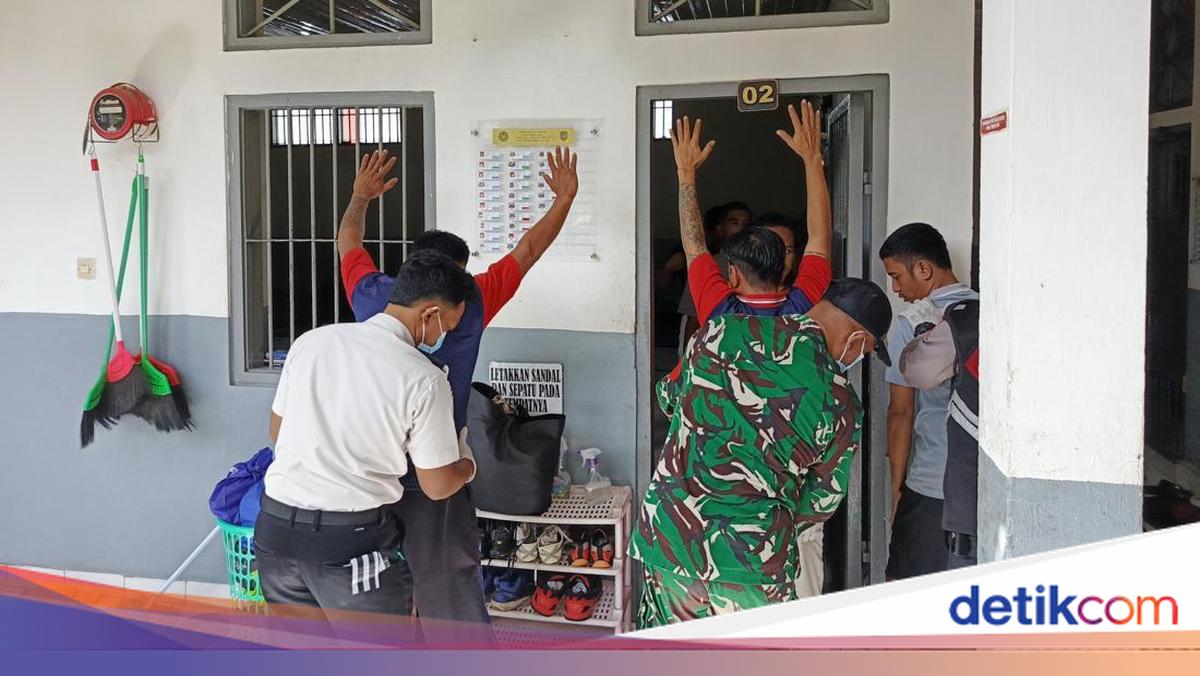
The Negara Class IIB State Detention Centre (Rutan) carried out a search operation in the inmates’ residential blocks on Monday (6/4/2026). In addition to screening for prohibited items, the joint task force also conducted mass urine tests amid the centre’s current overcapacity condition, known as overload. Observations at the location revealed that the search involved personnel from BNNK Buleleng, Kodim 1617/Jembrana, and Polres Jembrana. Officers meticulously inspected every corner of the living quarters, from personal belongings to building crevices. “The search operation was conducted in 6 out of the total 14 rooms available. This is a demonstration of our commitment to maintaining security and order within the detention centre,” stated the Head of Rutan Negara, I Gusti Agus Putra Mahendra, on Monday (6/4/2026). During the raid, officers discovered several prohibited items in the cells, including breakable objects, metal spoons, playing cards, and nails. Mahendra emphasised that these items would be immediately destroyed. “Items found during the search will be destroyed. Inmates involved in possessing these items will be followed up in accordance with applicable standard operating procedures,” he asserted. Beyond the physical search, the medical team from BNNK Buleleng conducted urine tests on residents and detention centre staff. A total of 35 employees and 56 inmates were randomly selected for urine sampling. The results showed all samples were negative for narcotics abuse. Mahendra described this step as early detection and support for the Ministry of Law and Human Rights’ Acceleration Programme. “We also tested staff and inmates in narcotics cases with urine tests. We want to ensure that the Negara Detention Centre environment is completely free from drug abuse, both by inmates and staff,” he added. Rutan Overload 200 Percent On the other hand, Mahendra revealed the severely cramped conditions at Rutan Negara. With an ideal capacity for only 71 people, the centre is currently housing 200 inmates. This means overcapacity exceeding 200 percent. Of that number, the majority, or 108 people, are inmates in narcotics cases. “It’s extremely overloaded. Our capacity is 71 people, but currently there are 200. Our efforts are mainly transfers between detention centres and prisons, but overall in Bali, the situation is the same (overload),” Mahendra concluded.