
Joint Efforts to Advance Villages through Kopilaborasi
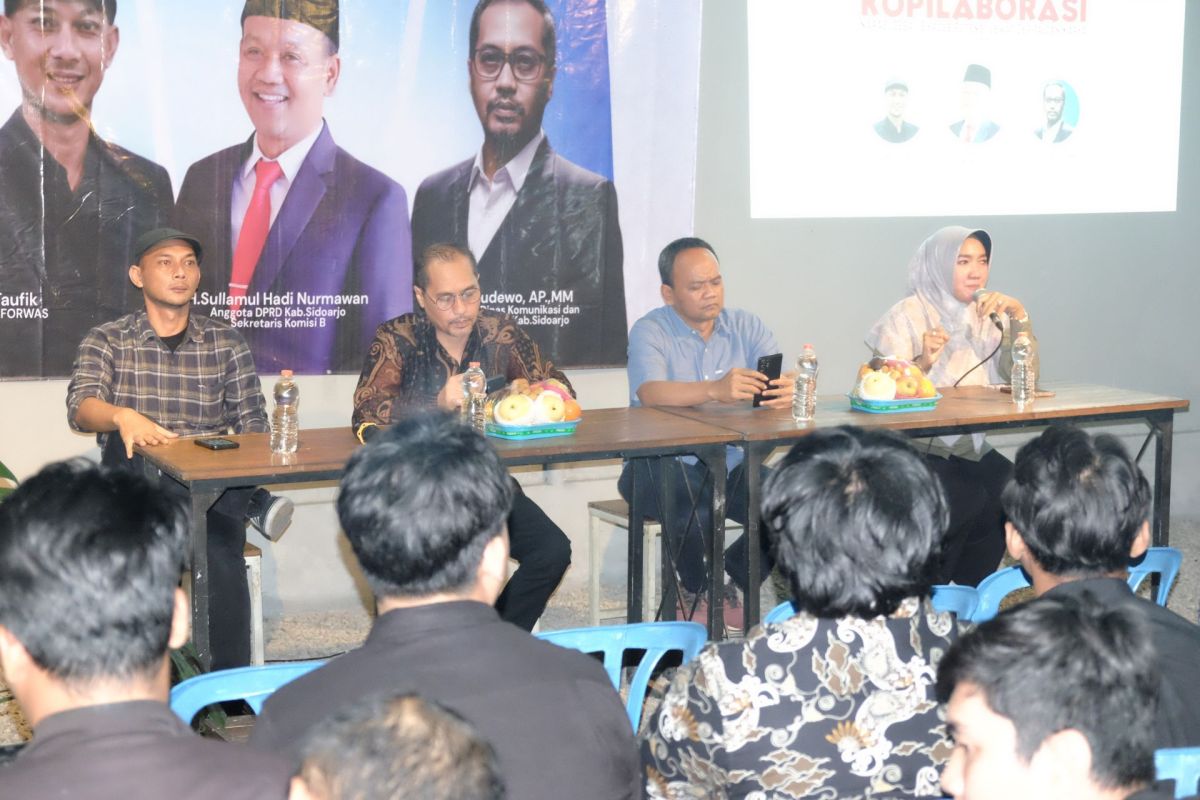
The Sidoarjo Regency Government (Pemkab) in East Java is giving serious attention to promoting village potentials through a series of events titled Kopilaborasi. Kopilaborasi is a programme to move forward together, with aspirations drawn from village communities in a relaxed atmosphere while drinking coffee.
The programme, organised by the Sidoarjo Regency Communications and Informatics Office (Diskominfo), collaborates with Commission B of the local Regional People’s Representative Council (DPRD) and the Sidoarjo Journalists’ Forum.
The first event of the programme was held in the Keloposepuluh Village area, Sukodono Subdistrict, Sidoarjo, on Wednesday, 22 April 2026, attended by around 100 people who enjoyed brewed coffee while sharing their voices with a single hope: to turn local potentials into resources for village advancement.
Under the theme “Village Narrative: Exposing Potentials through Stories and Works”, youths from various villages in the area took turns explaining what they have done to highlight the uniqueness and potentials of their respective villages.
A youth from Jogosatru Village, Sukodono Subdistrict, named Ilyas, highlighted the tourism potential of his village, which he believes is often overlooked by the wider community, even by the villagers themselves.
That potential is the Pasar Legi Jogosatru, which, as its name suggests, only appears on Legi days in the Javanese calendar each month.
He, along with other youths in his village, often visits the market, which opens from dawn until just before noon, to gather materials—from Sidoarjo’s signature foods like lontong kupang to various daily necessities—which he then captures to create content for social media.
Ilyas’s efforts have gradually borne fruit. Not a few of the photo and video contents he produces have gone viral, increasingly attracting visitors from various parts of Sidoarjo to the market.
Now, his village is shedding negative stigmas, such as being a “thug village” that once stuck, or the viral phenomenon of an elderly woman throwing faeces onto a neighbour’s yard in 2023. Now, the area is seen as a village with a positive image and potentials worth exploring.
The second event, held a week later on Wednesday (29/4) in the same location, featured the theme “Sport Tourism: Branding Football Fields as Village Economic Icons”.
This time, the forum invited youths who often play football on the village field to voice what can be done to boost the village economy through the field, including the potential for developing young players from Sidoarjo.
As a speaker, representing community elements who are also active football players in friendly matches in his village, the Chairman of Forwas, M Taufik, explained what he and the youths of Keloposepuluh Village have done to advance village potentials through sports and its facilities as tourism objects.
Taufik stated that Sidoarjo is showing new momentum in managing village football fields, in line with policies allocating direct budgets to villages, enabling improvements in sports facilities while encouraging local economic potentials.
In recent years, several fields that were previously in poor condition have transformed into more representative ones, even generating income through professionally managed rental systems by the villages.
The management of the Keloposepuluh Village field serves as a real example of successful village-based management. Besides massive physical improvements and quality enhancements over the past five years, the managers have also implemented promotional strategies via social media, increasing appeal to renters from various groups.
The management of the field in that village falls under the Village-Owned Enterprise (BUMDes), so all income obtained can be managed back for village interests, including facility development and community activities.