
Joint Effort Clears Blanket of Water Hyacinth from Saguling Reservoir
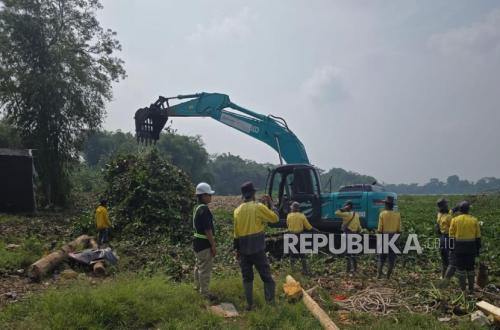
A joint team of personnel is working together to clear water hyacinth blanketing the waters of the Saguling Reservoir in West Bandung Regency, West Java. Heavy equipment has been deployed to remove the invasive plant over the coming days. The clean-up involves PLN Indonesia Power UBP Saguling, the Indonesian National Armed Forces (TNI), the Cililin District Muspika, the Danramil, and volunteers. Community health centres, Jabar Bergerak, Wanareksa, the Ambulance Community, and representatives from the Health Service were also placed on standby at the site. Senior Manager of PLN Indonesia Power UBP Saguling, Doni Bakar, stated that the water hyacinth clearance commenced at 08:00 WIB and will continue until Saturday, 13 June 2026, using excavators. ‘The clearance process involves various stakeholders and volunteer elements, making the activity more effective, targeted, and able to reach affected areas,’ Doni said when confirmed on Tuesday (9/6/2026). The clearance is part of PLN’s commitment to supporting environmental sustainability and maintaining the comfort of communities around the power plant’s operational area. The company received reports from residents regarding mosquito breeding caused by the rampant water hyacinth in the Saguling Reservoir waters. According to Doni, the activity was carried out as a follow-up to residents’ reports concerning the spread of mosquitoes that had begun to disturb the surrounding community. ‘The accumulation of water hyacinth can be a contributing factor to mosquito breeding, so swift and collaborative steps are needed to handle the situation on the ground,’ Doni stated. Furthermore, the build-up of water hyacinth in the Saguling Reservoir has the potential to disrupt electricity production from the Hydroelectric Power Plant, which is a renewable energy facility that supports peak loads in the Java-Bali system and functions as a system frequency regulator by implementing load frequency control (LFC). ‘Through this collaboration, PLN Indonesia Power UBP Saguling together with stakeholders is striving to deliver a real solution to the community’s complaints. Not only focusing on clearance, this synergy is also a form of shared concern for environmental health, residents’ comfort, and ecosystem sustainability,’ he said. PLN Indonesia Power UBP Saguling expressed appreciation to all parties involved and contributing to the activity. This cross-sector collaboration is expected to continue as a joint measure to protect the environment, prevent potential public health disturbances, and strengthen the good relationship between the company, government, communities, and local residents. Doni said that with this water hyacinth clearance, it is hoped that environmental conditions in Karang Tanjung Village will become cleaner, healthier, and more comfortable for the community. ‘PLN Indonesia Power UBP Saguling will continue to strive to be present in the community through programmes and real actions that provide benefits for the environment and residents around the power plant’s operational area,’ he said. Previously, Awang Widiati (58), a Cililin resident, said the water hyacinth covering the Saguling Reservoir waters was disrupting residents’ activities, such as farming and fishing. ‘Usually, people farm and there are fish ponds, but now it has stopped because of the water hyacinth. Now even boats struggle to pass, it’s impossible,’ she said. Additionally, she noted the increasing amount of water hyacinth has impacted mosquito growth, with swarms encroaching on residential areas. The mosquito swarms typically begin to ‘terrorise’ residents as the sun sets and disappear again in the morning. ‘Now there are many mosquitoes since the water hyacinth increased, whereas before there were none. They usually start appearing around 4 pm and disappear again in the morning,’ Awang said.