
Johnson Controls Joins Sustainable Tropical Data Centre Testbed 2.0 to Strengthen Next-Generation AI Infrastructure
As Singapore works to increase its data centre capacity, STDCT 2.0 is examining strategies to expand AI utilisation efficiently amidst resource constraints, including power, water, and space.
Johnson Controls is contributing expertise in thermal management, control systems, engineering, and operations to investigate ways to reduce power and water consumption while simultaneously increasing computing capacity. The results of this collaborative research will inform the development of more efficient infrastructure designs for Singapore and other tropical markets.
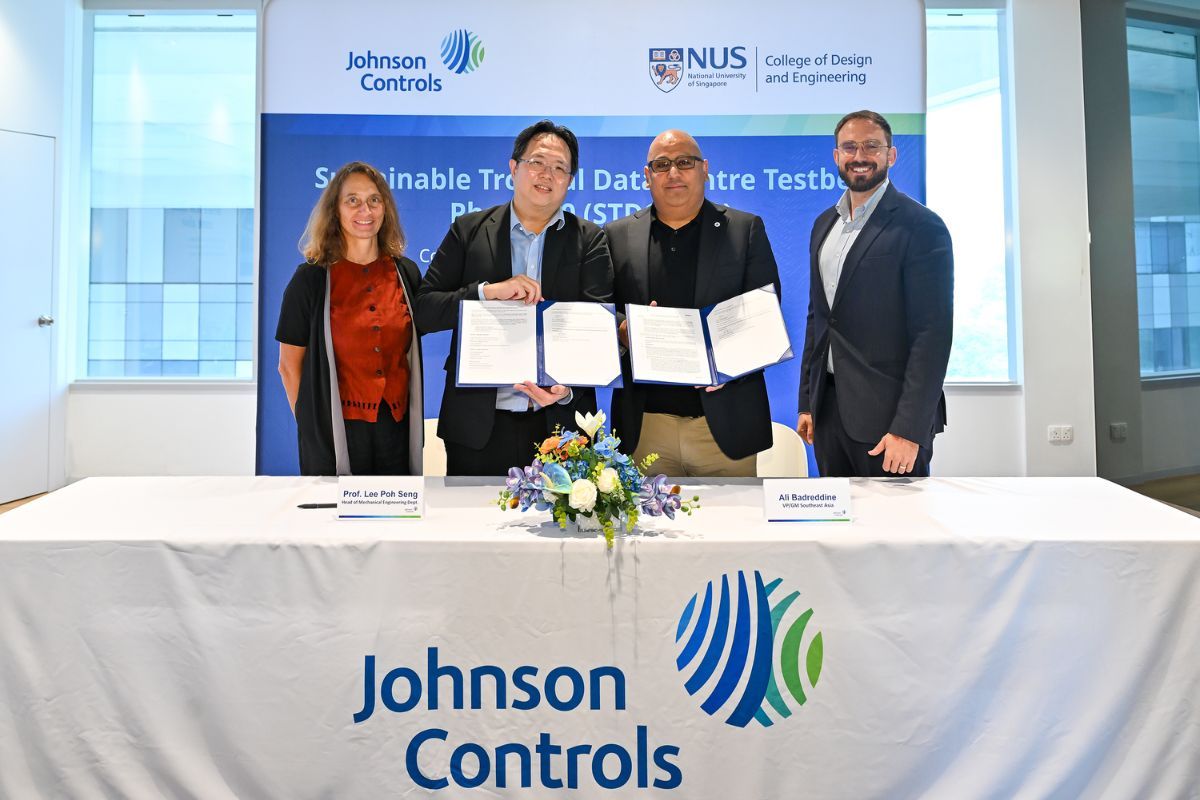
Singapore, (ANTARA/PRNewswire) — Johnson Controls (NYSE: JCI), a global provider of thermal management solutions, building systems for critical facilities, energy efficiency, and decarbonisation, has joined the Sustainable Tropical Data Centre Testbed (STDCT) 2.0 at the College of Design and Engineering (CDE), National University of Singapore (NUS). This programme arrives as Singapore continues to expand its low-carbon digital infrastructure, including an additional 200 MW allocation of data centre capacity. STDCT 2.0 will test next-generation AI and data centre technologies in tropical weather. Johnson Controls will contribute thermal management technology, intelligent control systems, engineering expertise, and operational experience to support the development of infrastructure capable of running AI at scale with higher efficiency and lower resource consumption.
Located on Jurring Island, STDCT 2.0 brings together industry and academia to test emerging AI and data centre technologies under tropical conditions. The programme is part of a broader initiative alongside JTC Corporation and industry partners to establish Jurring Island as a testing ground for next-generation, low-carbon infrastructure ready to support AI. High temperature and humidity present specific challenges to cooling system performance, making the need for efficient and reliable infrastructure increasingly critical. The research findings will serve as input for the development of data centre designs in Singapore and other tropical markets.
Addressing AI Infrastructure Challenges
Johnson Controls is helping data centre operators overcome several key hurdles in responsible AI development, including power availability, water consumption, and infrastructure capacity. Through its integrated thermal management technology portfolio, Johnson Controls optimises the entire thermal ecosystem to increase efficiency while expanding computing capacity by leveraging existing power and infrastructure resources. In design simulations, this approach has the potential to slash non-IT energy consumption by up to 50% compared to conventional cooling methods.
Johnson Controls is also developing additional AI computing capacity by utilising energy that was previously wasted as heat. In a 1-gigawatt capacity data centre design, Johnson Controls’ reference absorption chiller design has the potential to convert 57% of the energy typically wasted as heat from on-site power generation facilities into productive cooling. This approach could generate an additional 97 MW of AI computing capacity from existing power infrastructure, while reducing the electricity required for cooling by up to 44%.
“Johnson Controls recognises that advanced computing needs a new approach to infrastructure,” said Austin Domenici, President, Data Centre Solutions, Johnson Controls. “The increase in AI workloads means that success indicators depend not only on computing capability, but also on the efficiency of managing supporting resources. Johnson Controls possesses expertise across the thermal ecosystem to help customers increase efficiency, save resource consumption, and add computing capacity. Through this collaboration, we can test and validate new approaches to infrastructure that can support the future development of AI.”
Building an Innovation Platform for the Future
In addition to testing next-generation technologies, STDCT 2.0 will also support research, human resource development, and industry collaboration. Johnson Controls and NUS CDE will expand opportunities in advanced research, workforce training, innovation, and knowledge sharing to support sustainable growth in the data centre sector.
“AI growth is driving new infrastructure needs in Asia Pacific. Therefore, the development of research, human resources, and industry collaboration will be vital factors in meeting this growth responsibly,” said Ali Badreddine, Vice President and General Manager for Southeast Asia Business and Asia Pacific Data Centre Solutions, Johnson Controls. “STDCT 2.0 brings these various elements together to drive the development of infrastructure ready to support AI needs in Singapore and the wider Asia Pacific region.”
“AI is fundamentally changing the boundaries of data centre design. Increased rack density is now creating immense loads on cooling systems, power supplies, control systems, and resource use efficiency,” said Professor Lee Poh Seng, Programme Director, Sustainable Tropical Data Centre Testbed, and Head of the Department of Mechanical Engineering, NUS CDE. “STDCT 2.0 does not just test technologies individually, but also evaluates how these various systems can be integrated and optimised as a single infrastructure platform under operational conditions in tropical weather. Johnson Controls brings extensive expertise in thermal management, control systems, and infrastructure for critical facilities to this collaboration. We are working together to translate research findings into validated, ready-to-deploy solutions to increase computing capacity amidst resource constraints, including power and water. This collaboration also aims to strengthen capabilities, the talent base, and leadership in the region.”
Source: jawawa.id (https://jawawa.id/newsitem/johnson-controls-joins-sustainable-tropical-data-centre-testbed-2-0-to-strengthen-next-generation-ai-1790744867)
Originally published by Antara (Indonesian) (https://www.antaranews.com/berita/5764299/johnson-controls-bergabung-dengan-sustainable-tropical-data-centre-testbed-20-perkuat-infrastruktur-ai-generasi-baru), translated from Indonesian