
Joglosemarkerto Train Serves 1.22 Million Passengers as Central Java–DIY Mobility Grows 10.72%
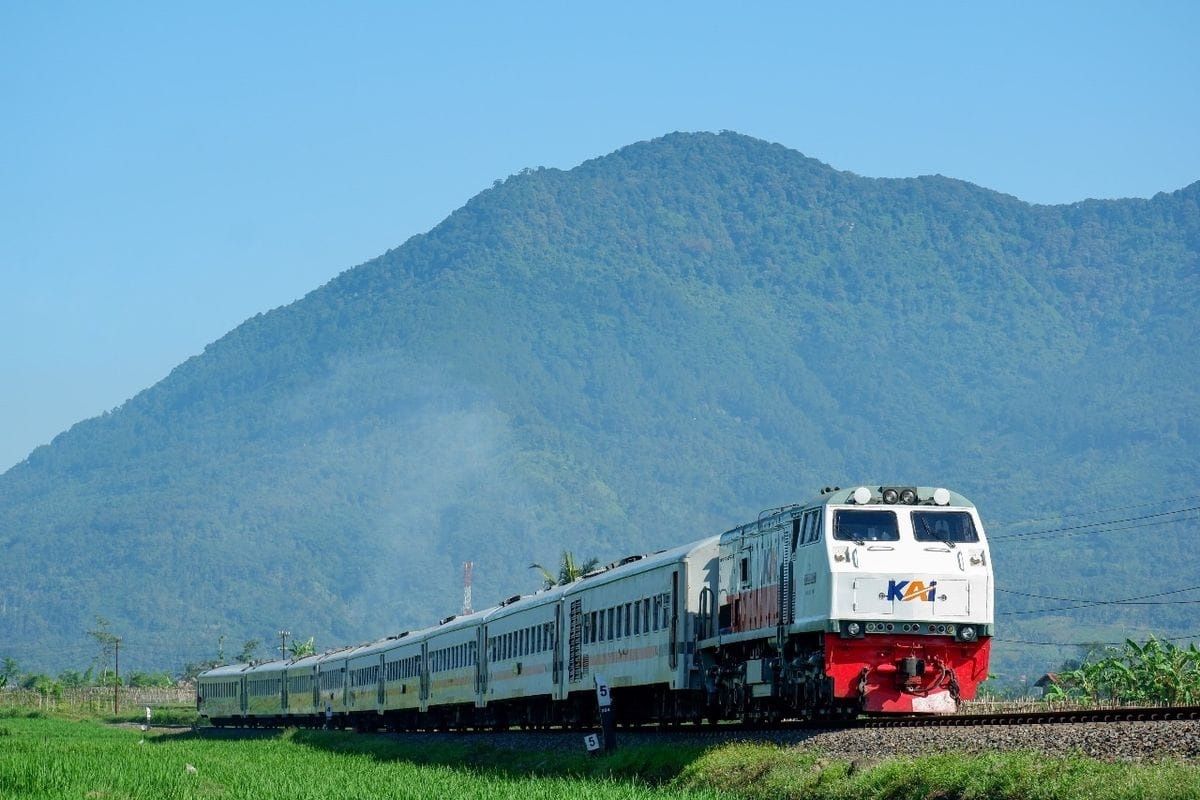
Inter-city mobility in Central Java and the Special Region of Yogyakarta (DIY) continues to expand amid high levels of economic, educational and tourism activity. State-owned railway operator PT Kereta Api Indonesia (Persero), or KAI, recorded 1,226,727 passengers on the Joglosemarkerto train from January to October 2026, an increase of 10.72% from 1,107,996 in the same period in 2025. The growth points to rising demand for regional connectivity through a rail service linking several cities in a single network.
The number of Joglosemarkerto passengers rose by 118,731 from a year earlier. In October 2026 alone, the service carried 122,308 passengers, up 20.47% from 101,529 in October 2025. The stronger growth in October than across the cumulative period indicates increased use of the service towards the end of the period under review.
KAI Vice President of Corporate Communications Anne Purba said the growth underscored the importance of inter-city connections for people in Central Java and DIY.
“Joglosemarkerto served more than 1.22 million passengers in ten months. Growth of 10.72% reflects the continuing expansion in demand for regional travel,” Anne said.
The Joglosemarkerto runs on a circular route linking Solo, Yogyakarta, Purwokerto, Tegal, Pekalongan and Semarang. According to KAI’s route patterns, train KA 187 operates between Solo Balapan, Semarang Tawang, Tegal and Purwokerto before returning via Solo Balapan to Semarang Tawang, while KA 193 runs from Solo Balapan to Purwokerto, Tegal and Semarang Tawang before returning to Solo Balapan. The network allows passengers to travel between various cities, choosing routes and stopping stations according to their needs.
The service’s role is linked to the character of Central Java and DIY as a region whose educational, trading, service and tourism activities are interconnected. Yogyakarta and Solo have concentrations of educational institutions and cultural tourism; Semarang is a centre for trade and services; while Purwokerto, Tegal and Pekalongan have economic activity and tourism potential that support inter-city travel. Rail connectivity offers a travel option for students, workers, businesspeople, tourists and people visiting family.
The growth in mobility is in line with tourism activity in Central Java. Statistics Indonesia’s Central Java office recorded 13.79 million domestic tourist trips to the province in August 2026, up 25.80% from August 2025. The figure illustrates the scale of tourist movement in an area also served by the Joglosemarkerto, although it covers all modes of transport and not rail passengers alone.
High use of the Joglosemarkerto is reflected in the performance of its individual services. From January to October 2026, KA 187 Joglosemarkerto carried 452,057 passengers, while KA 193 recorded 427,414. The two services ranked first and second among commercial long-distance train services by passenger volume. Their performance points to strong demand along a regional corridor connecting cities across Central Java and DIY.
The circular route also allows seats to be used by successive passengers along the line. When a passenger gets off at a station, the seat can be occupied by someone travelling to the next city. This pattern of partial journeys enables the train to serve more passengers across different city pairs on a single trip, making capacity utilisation more dynamic.
“One Joglosemarkerto journey can serve many city pairs. Passenger turnover along the route is an important feature in managing the capacity of an agglomeration service,” Anne said.
Joglosemarkerto’s 10.72% growth also exceeded the 9% increase in KAI’s total long-distance and local train passengers from January to October 2026. Nationwide, KAI carried 49,932,764 passengers across those services, up from 45,814,275 in the same period a year earlier. The comparison shows that Joglosemarkerto’s growth was relatively higher amid the broader expansion in inter-city mobility.
“Central Java and DIY have strong travel links between their cities. KAI continues to assess demand patterns, capacity and Joglosemarkerto’s service so that it better meets passengers’ needs,” Anne said.