
Joglosemarkerto Train Passengers Reach 458,000 by April 2026
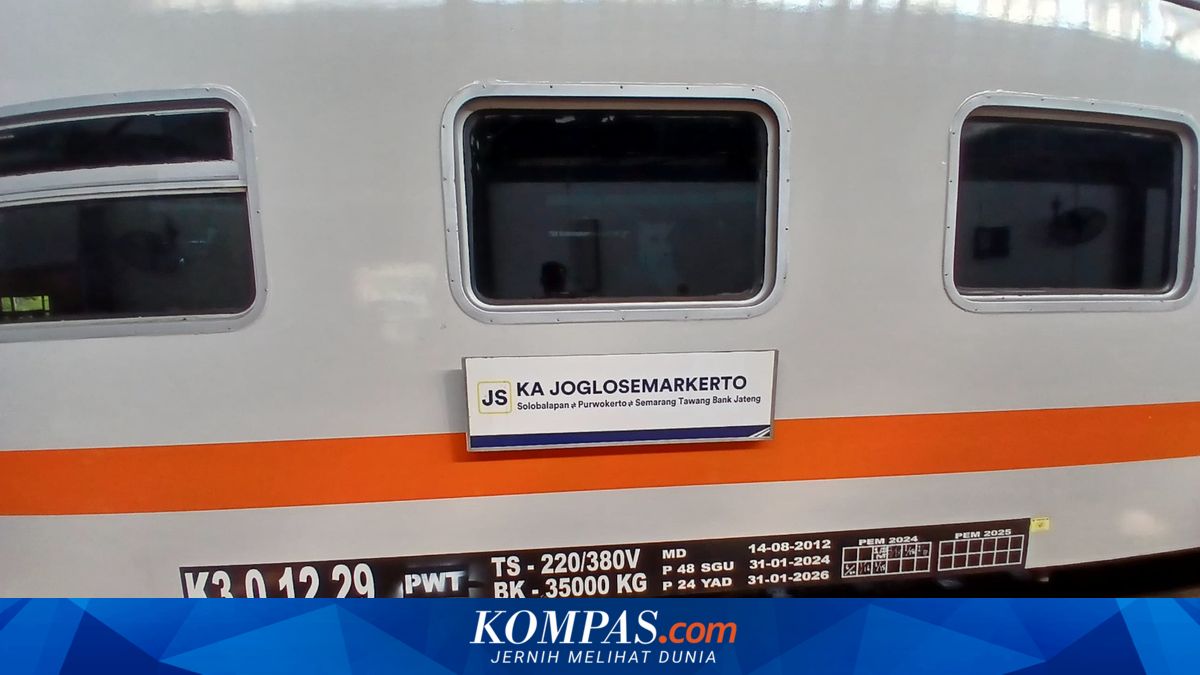
Jakarta — PT Kereta Api Indonesia (Persero) recorded 458,938 Joglosemarkerto train passengers from January to April 2026. The figure represents an 11.41 percent increase from the same period in 2025, when 411,931 passengers were recorded.
Anne Purba, Vice President for Corporate Communications at KAI, said the growth in Joglosemarkerto passengers indicates that intercity travel demand in Central Java and the Special Region of Yogyakarta (DIY) is rising, particularly in education, tourism and the interconnected economy.
‘Mobility is becoming more efficient because passengers can travel intercity without needing to change trains, whether for education, work, tourism, or other economic activities,’ added Anne.
Anne noted that the Special Region of Yogyakarta and Central Java have long been known as hubs of education, tourism, and economic activity in Indonesia. She said thousands of students from various regions come each year to Yogyakarta, Solo, Semarang, Purwokerto, and Tegal to pursue education, work, or run businesses.
According to data from the Central Statistics Agency (BPS) for 2025, the Gross Enrollment Ratio (GER) for higher education in the Special Region of Yogyakarta reached 74.7 percent, the highest in Indonesia and far above the national average. Meanwhile, Central Java is among the provinces with the largest concentration of higher education institutions in Indonesia, located in cities such as Semarang, Surakarta, Purwokerto, and Salatiga.
‘This condition creates highly dynamic intercity mobility, ranging from students, workers, tourists to businesspeople,’ explained Anne. The high volume of passengers demonstrates strong connectivity across the Solo, Semarang, Tegal and Purwokerto corridors, which are centres of activity for people in Central Java.
‘KAI sees that travel patterns for Joglosemarkerto passengers are increasingly diverse,’ she said. She added that many passengers use this service for educational trips to Yogyakarta and Solo, known as student cities, while others use the train for business and trading activities toward Semarang, Pekalongan, Tegal, and Purwokerto.