
Jlantah Dam Strengthens Central Java Food Security, Irrigates Thousands of Hectares
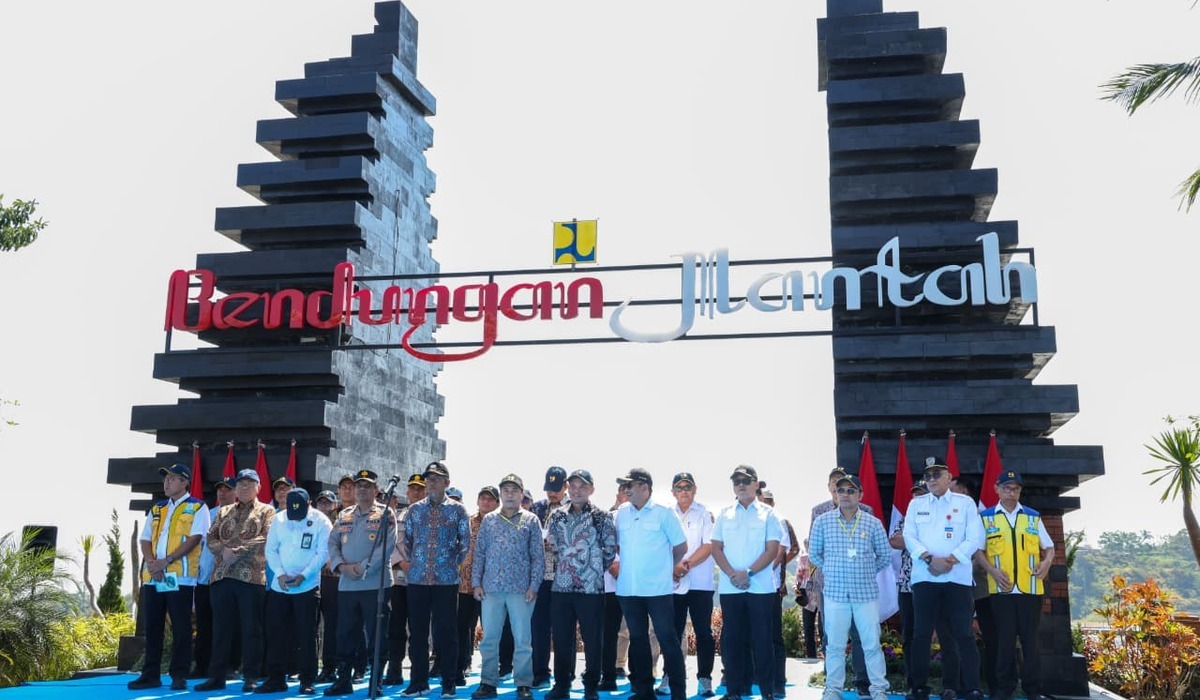
The Jlantah Dam in Tlobo Village, Jatiyoso District, Karanganyar Regency, was officially inaugurated by President Prabowo Subianto in an online ceremony on Friday, 10 July 2026. Central Java Regional Secretary Sumarno attended the location in person, stating that the dam’s construction represents tangible support from the central government for strengthening water resource infrastructure in Central Java. The dam is expected to provide significant benefits for the agricultural sector, flood control, and the supply of raw water to the community, thereby strengthening food security in the region.
Sumarno explained that the dam has the capacity to irrigate approximately 1,500 hectares of existing agricultural land while also supporting the development of around 229 hectares of new rice fields. With the water supply from the dam, agricultural land in the area is expected to be cultivated three times a year, yielding an average of six tonnes of unhusked rice per hectare each planting season. The Jlantah Dam is estimated to support production of up to around 27,000 tonnes of rice annually. ‘This will certainly increase rice production capacity and strengthen food security, especially in Karanganyar Regency and its surrounding areas,’ he said.
In addition to supporting the agricultural sector, the Jlantah Dam will also provide raw water to the community with a capacity of around 125 litres per second. Sumarno noted that this water availability will help meet the basic needs of the community while improving the quality of clean water services. Furthermore, the dam is designed to support the utilisation of new and renewable energy through a hydroelectric power plant, ensuring its benefits are felt not only by the agricultural sector but also the energy sector.
Although it has been inaugurated, Sumarno mentioned that follow-up work still needs to be completed, namely the construction of an irrigation network so that the dam’s benefits can be felt optimally. He revealed that the Central Java Provincial Government, together with the Karanganyar Regency Government, has coordinated with the Ministry of Public Works to propose the construction of the irrigation network through a Presidential Instruction. Meanwhile, the presence of the Jlantah Dam in Karanganyar Regency has brought significant changes to the agricultural sector, particularly for farmers in Tlobo Village. Previously only able to plant rice twice a year, farmers can now conduct three planting seasons with more optimal harvests.
The coordinator of the Tlobo Village Water User Farmers Group, Sugeng, said that before the dam was built, water availability was a major problem, especially during the dry season. ‘In the past, before the dam was built, farmers could only manage two planting seasons. The third planting season could not be harvested due to water shortages. After the dam was built, we can now have three planting seasons,’ he said. Sugeng explained that before the dam operated, farmers even had to take turns managing the distribution of irrigation water every week so that all land received a supply. However, these efforts were still unable to overcome water limitations during the dry season. He noted that conditions are now different for farmers. During June and July, which were previously the most drought-prone periods, water flow is now consistently available. Sugeng expressed his appreciation to the government through the River Basin Agency for building the Jlantah Dam, fulfilling the farmers’ hopes for a reliable water supply. ‘We thank the River Basin Agency because what the community hoped for has finally been fulfilled,’ he said. Nevertheless, Sugeng hopes the government will not stop at building the main dam. He requested that the irrigation network downstream also receive attention because there are two small weirs that are damaged. He hopes that repairing the irrigation network will further optimise the benefits of the Jlantah Dam, so that the water supply can reach all agricultural areas down to the downstream regions.