
JKN Referral System Overhaul Could Slash Treatment Costs by 50%
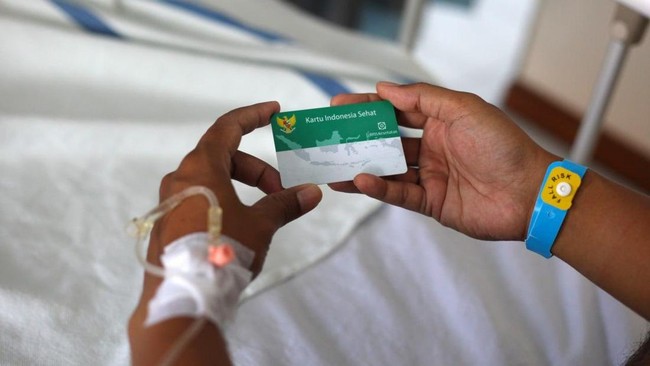
The overhaul of the referral system within the National Health Insurance (JKN) programme is expected to significantly reduce both patient waiting times and treatment costs. Dr Mohammad Andi Yassin, President Director of the Jakarta Heart Hospital, stated that the current tiered referral system will shift towards a competency-based model. Previously, patients typically had to pass through primary health facilities before being referred step-by-step to hospitals based on their class or type, from type D to type A.
“Starting in 2026, several hospitals have been appointed and, God willing, the system will go live in 2027, where all referrals will be directly based on the patient’s service needs,” he said on CNBC Indonesia’s Profit programme on Thursday.
Under this scheme, primary health facilities will assess patient needs and determine which facility has the competence matching the patient’s condition. For example, if a patient requires treatment at a cardiac hospital with specific service capabilities, they can be referred directly to that facility without moving from one hospital tier to the next. This change is considered crucial because the tiered referral process can lengthen a patient’s journey to receive treatment. Based on Ministry of Health data, a patient under the previous system could require more than two weeks from the start of the service process to the completion of treatment.
“Previously, with tiered referrals, one patient could take more than two weeks to complete treatment,” he noted. Through competency-based referrals, this time is expected to be cut to less than one week. Beyond time savings, the change also holds the potential for significant efficiency gains for BPJS Kesehatan’s financing. He explained that in the tiered system, costs are incurred at every stage of service a patient passes through. By directing patients straight to the service centre that meets their needs, several of these stages can be eliminated. “By cutting directly to the intended centre, it can cut costs by up to 50%,” he said. These savings become significant when applied to a large number of patients, particularly for heart disease, which currently carries the highest healthcare financing burden.
On the other hand, hospitals also face the challenge of continuing to provide quality service amid demands for healthcare financing efficiency. He stressed that cost savings must not be made by sacrificing quality or patient safety. “From the hospital side, the first stage of all this is that we must survive without sacrificing quality. Patients must not become victims,” he stated. One approach that can be taken is implementing lean management and kaizen principles, identifying parts of hospital operations that can be made more efficient without lowering service quality. Efficiency, he said, cannot be achieved by simply cutting all cost components uniformly. “We have to carefully, surgically remove. We can reduce this by 5%, we can reduce that by 5%. And when we add it all up, it will have a very significant impact in terms of efficiency,” he explained. This efficiency can be achieved through various means, from selecting appropriate generic drugs and shortening patient length of stay to improving service flow. Simultaneously, the healthcare service paradigm is also beginning to shift from volume-based care to value-based healthcare. Under this concept, hospitals no longer merely pursue a high number of medical procedures but also consider service quality, treatment outcomes, patient satisfaction and safety, and adherence to medical guidelines. “If your hospital’s capability is at the basic or intermediate level, then work at the basic or intermediate level. If the disease requires referral to a higher-level hospital, then it must be referred. Once again, everything is for the patient and a good outcome,” Andi concluded.
Source: jawawa.id (https://jawawa.id/newsitem/jkn-referral-system-overhaul-could-slash-treatment-costs-by-50-1786092701)
Originally published by CNBC Indonesia (https://www.cnbcindonesia.com/lifestyle/20260807113840-33-757378/sistem-rujukan-jkn-dirombak-biaya-pengobatan-bisa-turun-hingga-50), translated from Indonesian