
JKN Participants in DIY Reach 90 Per Cent, BPJS Kesehatan Pushes for Healthcare Facility Equality
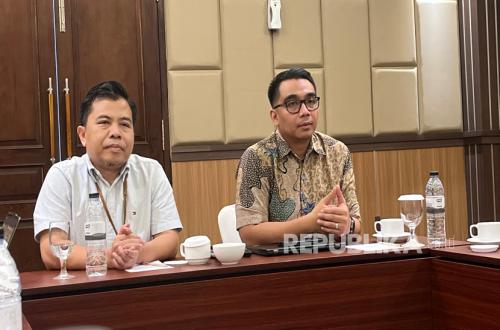
BPJS Kesehatan continues to strengthen the implementation of the National Health Insurance (JKN) programme in the Special Region of Yogyakarta (DIY), amidst increasing service utilisation and healthcare costs. To date, the active participation rate for JKN in DIY has reached over 90 per cent.
The Head of the Yogyakarta Branch of BPJS Kesehatan, Subkhan, stated that this achievement demonstrates that more members understand the benefits and mechanisms of using JKN. On the other hand, the increase in service utilisation presents a challenge, as it must be balanced with the readiness of healthcare facilities and funding.
“Yogyakarta is extraordinary. The active rate of JKN participants is already above 90 per cent. Not many provinces have an active participation rate above 90 per cent,” said Subkhan during a Media Gathering for the Yogyakarta and Sleman branches on Friday (2/10/2026).
Subkhan noted that the number of JKN participants in DIY has reached 3,711,283 people. Of this total, 92.7 per cent, or 3,442,814 participants, are active and can utilise JKN coverage. To support these services, BPJS Kesehatan collaborates with 392 First-Level Healthcare Facilities (FKTP) and 7lar 74 Advanced Referral Healthcare Facilities (FKRTL).
Increased public understanding has driven higher service utilisation. In 2025, there were 15.78 million instances of JKN service usage recorded in DIY. This has subsequently impacted the increase in benefit costs paid by BPJS Kesehatan, rising from Rp 4.75 trillion in 2024 to Rp 5.28 trillion in 2025.
“Therefore, the challenge lies in financing. We want this funding not to become an issue anymore because this is social security. We want to ensure participants can still receive services and healthcare facilities can be paid according to regulations,” he said.
Subkhan also mentioned that the high cost of services is influenced by catastrophic diseases. In 202ability, financing for catastrophic diseases reached approximately Rp 1.8 trillion, or 34.09 per cent of the total healthcare costs in DIY. Heart disease was the largest contributor at Rp 694.5 billion, followed by cancer at Rp 382.6 billion and kidney failure at Rp 169.9 billion. Other notable conditions include stroke, liver cirrhosis, haemophilia, and thalassaemia.
Another challenge remains the equitable distribution of facilities and healthcare workers, particularly in areas far from city centres. In Gunungkidul, for instance, healthcare facilities are still heavily concentrated in Wonosari and its surroundings. Similar conditions are also a concern in mountainous regions and other areas requiring additional healthcare facilities.
“Our hope is to encourage all parties, both government and private, to play a role, especially in the equitable distribution of healthcare facilities and medical personnel. This is our current focal point,” he said.
Meanwhile, the Head of the Sleman Branch of BPJS Kesehatan, Wahyudi Putra Pujianto, added that high JKN utilisation must be balanced with sustainable financing through participant compliance in paying premiums. He noted that the sustainability of JKN requires a spirit of mutual cooperation (gotong royong) from both healthy and sick participants.
“The sustainability of the JKN Programme is a shared responsibility that requires the active role of all participants through compliance in paying premiums,” said Wahyudi.
In addition to participant activity and financing, Wahyudi did not deny that BPJS Kesehatan still faces challenges regarding service access and queues. Consequently, BPJS is encouraging the use of the Mobile JKN Application for online queue registration, both at FKTP and hospitals after participants obtain a referral.
BPJS Kesehatan is also strengthening administrative services through WhatsApp (PANDAWA), which is accessible 24 hours a day. This channel can be used for various administrative needs, including reactivating membership, adding or removing family members, and filing complaints.
Wahyudi added that another issue that needs addressing is the difference in perception regarding emergency conditions in healthcare facilities. BPJS Kesehatan is also encouraging the mapping of FKTPs that provide 24-hour services or inpatient care so that participants have alternative services when they need treatment outside of standard service hours.
“The ongoing problem is the difference in perception of emergencies between doctors, healthcare workers, and participants. We will attempt to map and optimise first-level healthcare facilities that offer inpatient and 24-hour services,” said Wahyudi.
“Hopefully, a solution can be found soon.”
He added that BPJS Kesehatan continues to evaluate its partner healthcare facilities, including when potential violations or fraud are discovered. The approach is directed not only towards imposing consequences but also towards changing behaviour to ensure the quality of service to participants is maintained.
Source: jawawa.id (https://jawawa.id/newsitem/jkn-participants-in-diy-reach-90-per-cent-bpjs-kesehatan-pushes-for-healthcare-facility-equality-1791187072)
Originally published by Republika (https://rejogja.republika.co.id/berita/tmfahj291/peserta-jkn-di-diy-capai-90-persen-bpjs-kesehatan-dorong-pemerataan-faskes), translated from Indonesian