
JJS Builds Retaining Wall to Protect Citaman Spring in Final Stage of Package 3
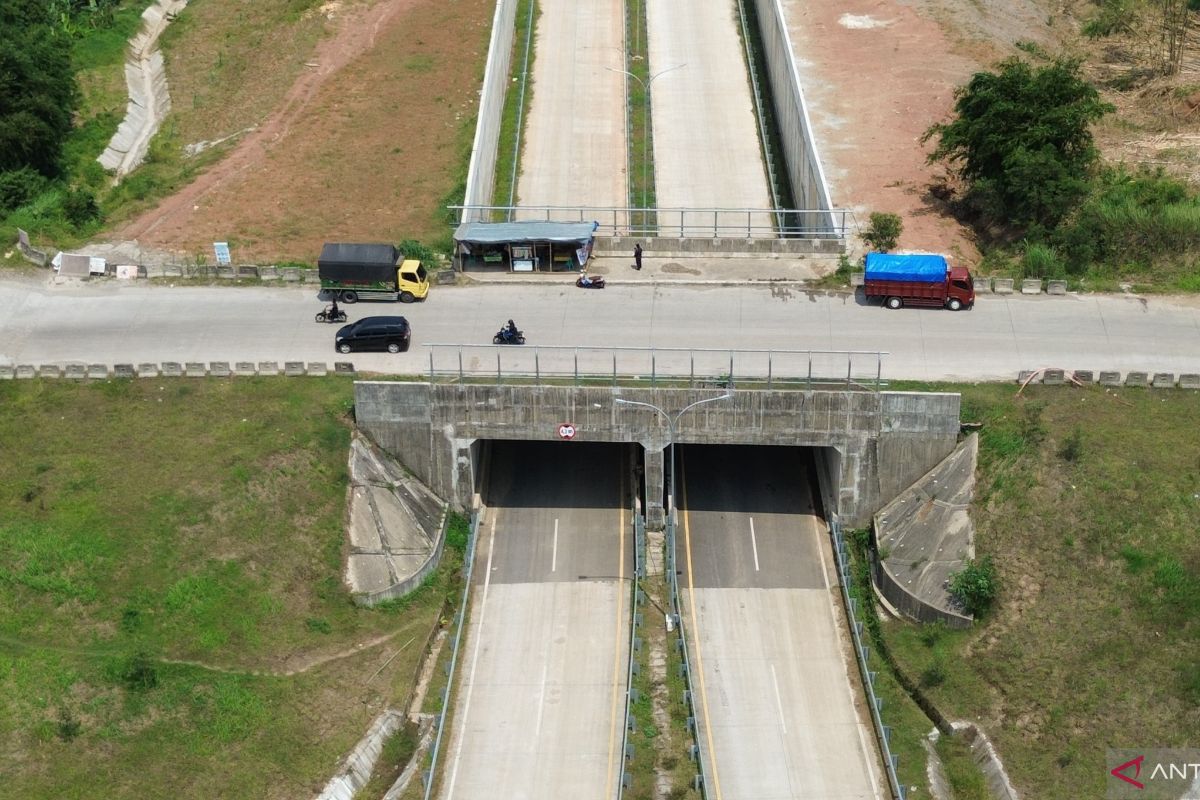
PT Jasamarga Japek Selatan (JJS) is constructing a retaining wall to protect the Citaman spring in Karawang Regency, West Java, marking the final stage of the third package of the toll road construction project.
Package 3 is the longest section of the South Jakarta-Cikampek (Japek) toll road development, stretching 31.25 kilometres from Sukabungah, Bekasi Regency, to Sadang, Purwakarta. This represents half of the total 62-kilometre project connecting Jati Asih, Bekasi City, to Sadang.
“As of the first week of June 202目前, progress has reached 95 per cent. The road section itself is complete, with only some finishing works remaining. This includes the retaining wall, which is part of the final five per cent of the work currently being finalised,” said the Project Leader for Package 3 of PT JJS, Shibgatullah Mahmuda, in Bekasi Regency on Friday.
The construction of this retaining wall was previously proposed by residents of Kampung Citaman, Tamansari Village, Pangkalan District, Karawang Regency. “Without a retaining wall, residents are concerned about soil shifts that could impact the environment, including the Citaman spring, which is used daily by the community,” he said.
The company accepted the residents’ proposal, although the construction of the retaining wall was already included in the scope of work. Of the four retaining walls being built, three have been completed.
One retaining wall, which functions to protect the Citaman spring, is still under construction. The eight-metre-high infrastructure project is targeted for completion by the end of this year.
“There are four sides to the retaining wall, namely A, B, C, and D, with a height of eight metres. Currently, sides B, C, and D are finished. Side A is in the construction phase,” he added.
The company has also completed the installation of four massive concrete box culverts, each measuring 8x6 metres, at the site. This was implemented as an alternative to the originally planned bridge, which was feared might damage the surrounding environment, particularly the nearby spring.
“Initially, a bridge was recommended, but we reassessed it. We were concerned that building a bridge might disrupt the spring due to the necessary drilling. Furthermore, there was a risk that drilling could release silt and contaminate the spring, so we changed the plan. The construction of the retaining wall and box culverts was also approved by the relevant departments and the BBWS (River Basin Organisation),” he said.
In addition to the spring, residents have also expressed concerns regarding the impact of the toll road construction on other areas, including paddy fields. Regarding this, Shibgatullah encouraged residents to convey their aspirations to the contractors on the ground, noting that the company has instructed contractors to maintain continuous coordination with the community.
“Since the work contract clauses stipulate that the contractor must handle any impacts that occur, residents are welcome to approach the contractor. We are also encouraging the contractor to continue coordinating with the residents,” he said.
The Package 3 section of the South Japek Toll Road has previously been completed and has been opened functionally during the Eid al-Fitr homecoming seasons in recent years to reduce congestion, particularly from the direction of Bandung towards Jakarta.
In addition to completing Package 3, work on Package 2 (Sukabungah-Setu, spanning 22.1 kilometres, including the Burangkeng Interchange connected to the JORR 2 Toll Road) and Package 1 (Setu-Jati Asih, 9.3 kilometres) is also being accelerated.