
Jimly: President decides to limit police positions outside the institution
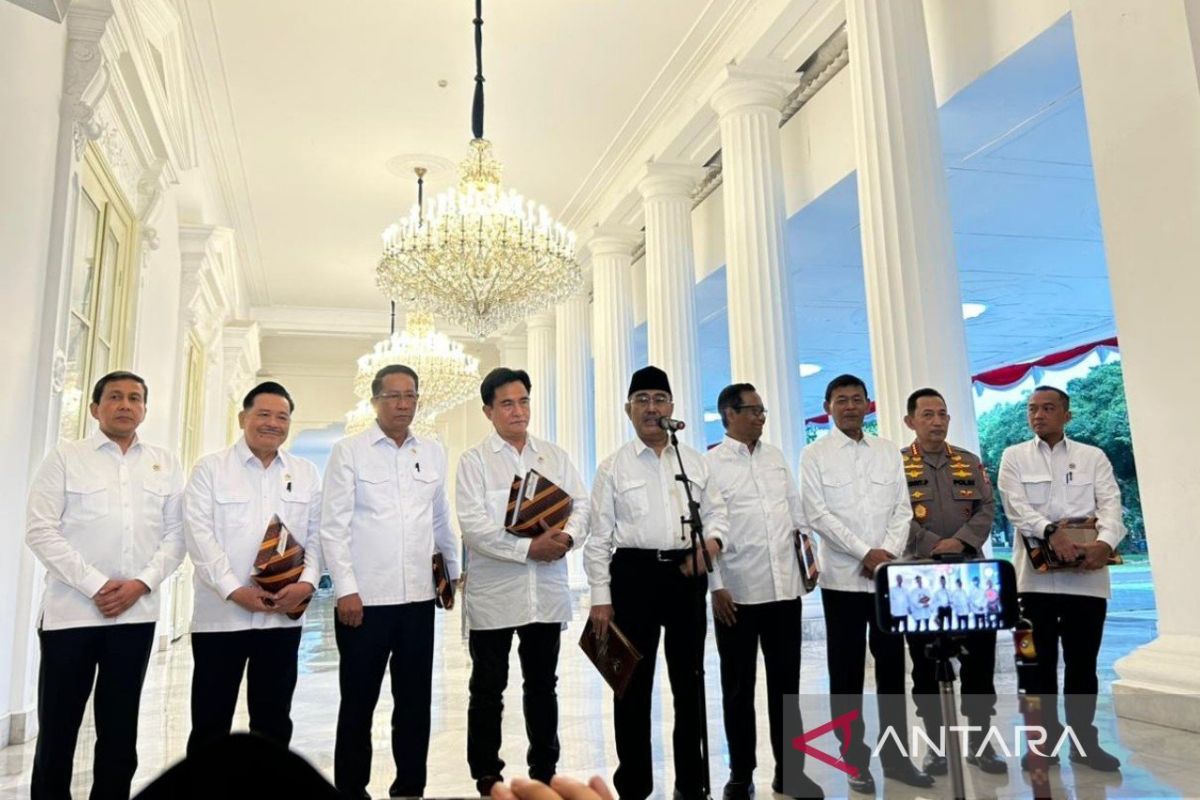
Jakarta (ANTARA) - Chairman of the Commission for Accelerating Police Reform (KPRP) Jimly Asshiddiqie revealed that President Prabowo Subianto has decided that restrictions on positions that can be held by Polri members outside the police institution must be regulated in a limited manner.
This was stated by Jimly after the Commission for Accelerating Police Reform submitted a book of recommendations to President Prabowo at Merdeka Palace, Jakarta, on Tuesday.
“The last point concerns the regulation of restrictions on positions that can be held by Polri outside the police structure. So, it was decided by the President that specific positions must be determined in a limited way, like in the TNI Law,” said Jimly at Merdeka Palace, Jakarta, on Tuesday.
Jimly explained that these restrictions will be regulated in a limited manner by specifying certain positions that may be filled by Polri members, similar to the provisions in the law governing the TNI.
According to him, previously there were no clear boundaries regarding positions outside the institution that could be held by Polri members.
He added that the restriction provisions will be included in a government regulation or a law currently being prepared by the relevant ministry under the coordination of the Coordinating Ministry for Law, Human Rights, Immigration, and Corrections.
“It must be included in the Government Regulation or in the law that will soon be completed by the responsible ministry under the coordination of the Coordinating Minister,” said Jimly.
This strengthening will be regulated in the revision of the law currently being prepared for discussion with the DPR.
KPRP, according to Jimly, also reported differences in views regarding the mechanism for appointing the National Police Chief.
However, after discussion, it was decided that the mechanism would follow the current practice, namely appointment by the President with DPR approval.
“After discussing the pros and cons, the President directed that it should remain as it is now, so the National Police Chief is still appointed by the President with DPR approval, as in the current practice for both Polri and the TNI Commander,” he said.
In the study, KPRP stated that the establishment of a new ministry to oversee Polri would not bring many benefits.
“The President also asked, we explained our conclusion, the benefits compared to the harms. The harms are greater, so we don’t propose it,” said Jimly.
He emphasised that KPRP’s main focus is to strengthen Polri’s institutional reform through regulatory revisions and internal improvements, not the creation of new institutions.
According to him, the commission proposes revisions to the Law on Polri, which will then be followed up through government regulations, presidential regulations, and presidential instructions to ensure that the agreed reform recommendations can be implemented concretely by the police ranks.
“We propose revisions to the Law on Polri, which will then be followed up with government regulations, presidential regulations, and presidential instructions that instruct the National Police Chief and all ranks to implement the agreed recommendations,” said Jimly.