
Jembrana customary leader welcomes solar power plant development in Bali
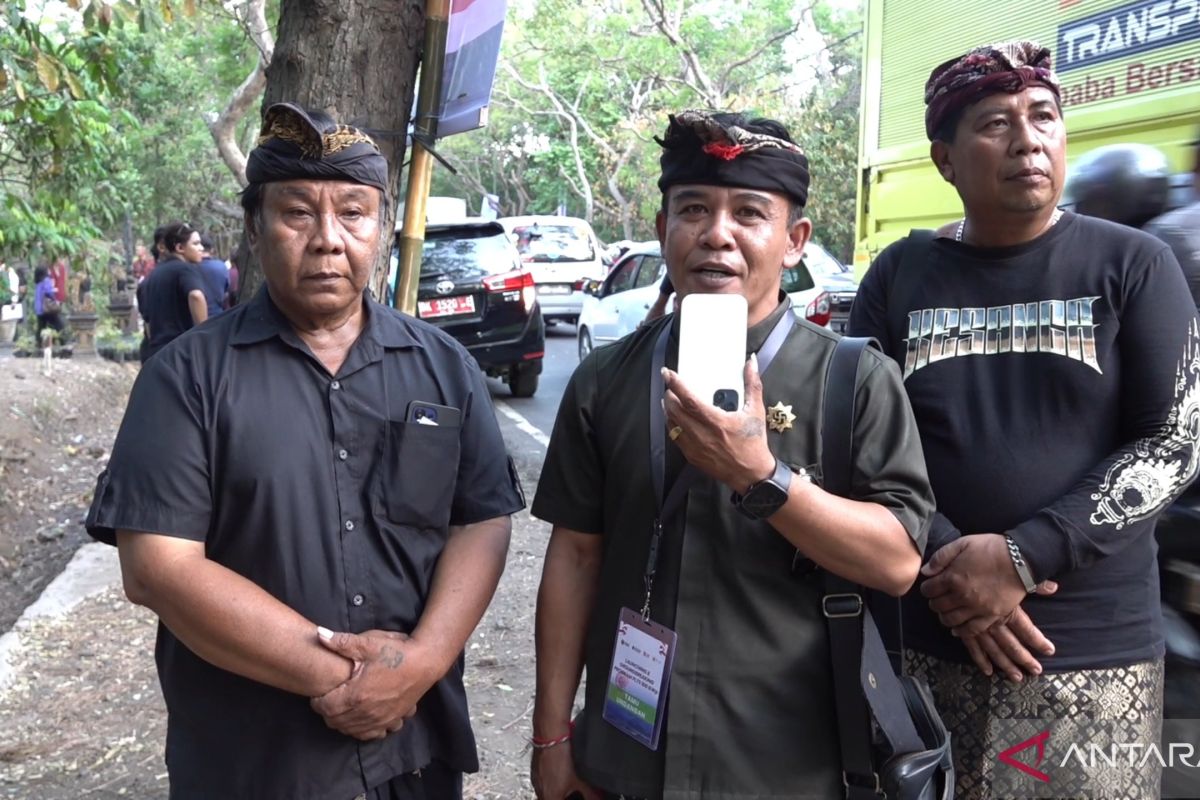
Traditional community leader in Jembrana Regency, Bendesa Adat Tegalcangkring I Ketut Suarna, speaking on behalf of his community, expressed gratitude for the construction of the Solar Power Plant (PLTS) at the Java-Bali Crossing Operation Monument in Gilimanuk.
Suarna said in Jembrana on Tuesday that the 100 Gigawatt peak (GWp) target set by President Prabowo Subianto, with the Gilimanuk PLTS being built at 300 MWp along with a 1,000 MWh battery energy storage system (BESS), brings new hope for regional progress.
“We as the traditional community in Jembrana in particular are very, very grateful to the government, in this case Mr Prabowo (President of the Republic of Indonesia Prabowo Subianto), for building solar panels in our area, which will be able to help residents, especially in Jembrana,” he said.
As a traditional community leader, Ketut Suarna assessed that the construction of this clean energy infrastructure is not merely an alternative source of electricity.
The presence of this renewable energy project is seen as a concrete step capable of addressing the need for national energy self-sufficiency while also meeting the needs of communities at the regional level.
He expressed hope that the development of solar panels will not stop at the current scale, but will continue to be expanded so that its benefits can be felt by more residents.
It is believed that the wider the development of solar energy, the greater the positive impact received by the community, not only limited to the availability of electricity but also potentially opening up new economic activity opportunities and absorbing local labour in Jembrana Regency.
“Until eventually, especially in our area in Jembrana, all people who cannot work will be able to work and benefit from these solar panels,” he said.
In addition to providing a boost to the local economy and employment sector, the presence of this solar energy project is also accompanied by the hope that national development will continue to reach areas far from the centre of government.
Equitable development is an important point so that communities in remote areas can feel the impact directly.
Therefore, the traditional community hopes that the central government can continue to give full attention to the remote corners of Indonesia.
“Hopefully Mr President can lead fairly, by visiting the remote areas of Indonesia,” said Ketut Suarna.
He added that the sustainability of government development programmes is expected to increasingly touch the lives of traditional communities in Bali as a whole, in order to provide broader space for strengthening the local economy and improving the welfare of traditional communities in the future.
For information, the development of 300 MWp at the Gilimanuk PLTS is estimated to be capable of producing annual energy of 470 GWh, and the operation of this facility can save fossil fuels of up to 151 thousand kilolitres (kL) of fuel per year.
The electricity generated will be connected directly to the 150 kV Negara-Gilimanuk high-voltage overhead line (SUTT) interconnection system.